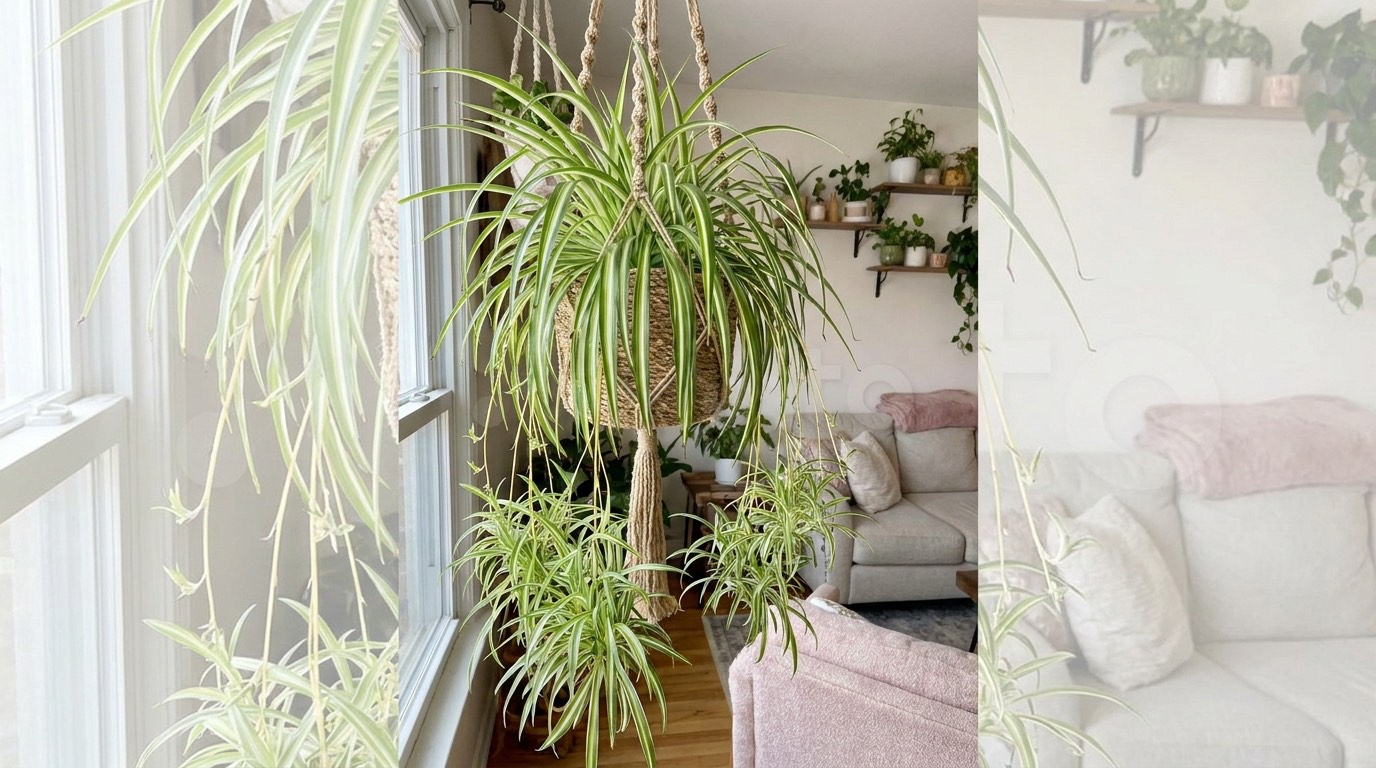
The spider plant (Chlorophytum comosum) is one of the friendliest houseplants there is — quick-growing, hard to kill, and endlessly generous. Its arching striped leaves look great spilling from a shelf or hanging pot, and once established it sends out little "spiderettes" — baby plants you can snip off and grow into brand-new plants for free.
Here's how to keep it thriving.
Why it makes babies
Once a spider plant is happy and slightly root-bound, it produces long stems tipped with tiny plantlets. Each of these is a ready-made new plant — just root it in water or soil. A mature spider plant can supply you with gifts for years.
Light
Spider plants like bright, indirect light, which brings out the boldest variegation (the creamy stripes). They also tolerate medium and lower light, though growth slows and the stripes fade. Keep them out of harsh direct sun, which scorches the leaves.
Watering
Water when the top inch of soil feels dry — usually about once a week, less in winter. Water thoroughly, let it drain, and empty the saucer.
Spider plants are sensitive to the fluoride and chlorine in tap water, which can cause brown leaf tips. If your tap water is heavily treated, use filtered or rainwater, or let tap water sit out overnight before using it.
Soil, pot, and humidity
Use any well-draining potting mix in a pot with drainage. Spider plants grow fast and enjoy being slightly root-bound (which encourages babies), so repot every year or two when roots fill the pot — see how to repot a houseplant. Average household humidity is fine.
Making free plants
This is the fun part:
- Snip a plantlet from the end of a stem, ideally one with small roots already showing.
- Set it in a small glass of water, or press it into moist soil.
- Keep it in bright indirect light; roots develop within a couple of weeks.
- Once rooted in water, pot it up in soil.
Spider plant care in five points
- Bright indirect light for the best stripes; low light is tolerated.
- Water when the top inch is dry, then drain fully.
- Brown tips? Try filtered water — they dislike fluoride and chlorine.
- Let it get slightly root-bound to encourage baby plantlets.
- Root the babies in water or soil for endless free plants.
Common problems
- Brown leaf tips — most often from fluoride/chlorine in tap water, or dry soil. Switch to filtered water and keep watering consistent.
- Pale, faded leaves — too much direct sun or too little light overall.
- No babies — the plant may be too young, or needs more light and to become a little root-bound.
- Yellowing leaves — usually overwatering. See why are my plant's leaves turning yellow?
Frequently Asked Questions
Why does my spider plant have brown tips?
Brown tips are usually caused by the fluoride and chlorine in tap water building up, or by inconsistent watering. Try watering with filtered or rainwater (or tap water left out overnight), and keep the soil evenly but not overly moist.
How do I grow the baby spider plants?
Snip a plantlet from the end of a stem — one with small roots showing is ideal — and either set it in a glass of water or press it into moist soil. Keep it in bright indirect light, and it will root within a couple of weeks, ready to pot up.
How much light does a spider plant need?
Bright, indirect light is best and gives the strongest variegation, but spider plants tolerate medium and lower light too. Avoid harsh direct sun, which can scorch the leaves and fade their color.
Are spider plants safe for pets?
Yes — spider plants are non-toxic to cats and dogs, which makes them one of the safest choices for pet households. Some cats like to nibble the dangling leaves, but they won't be harmed.