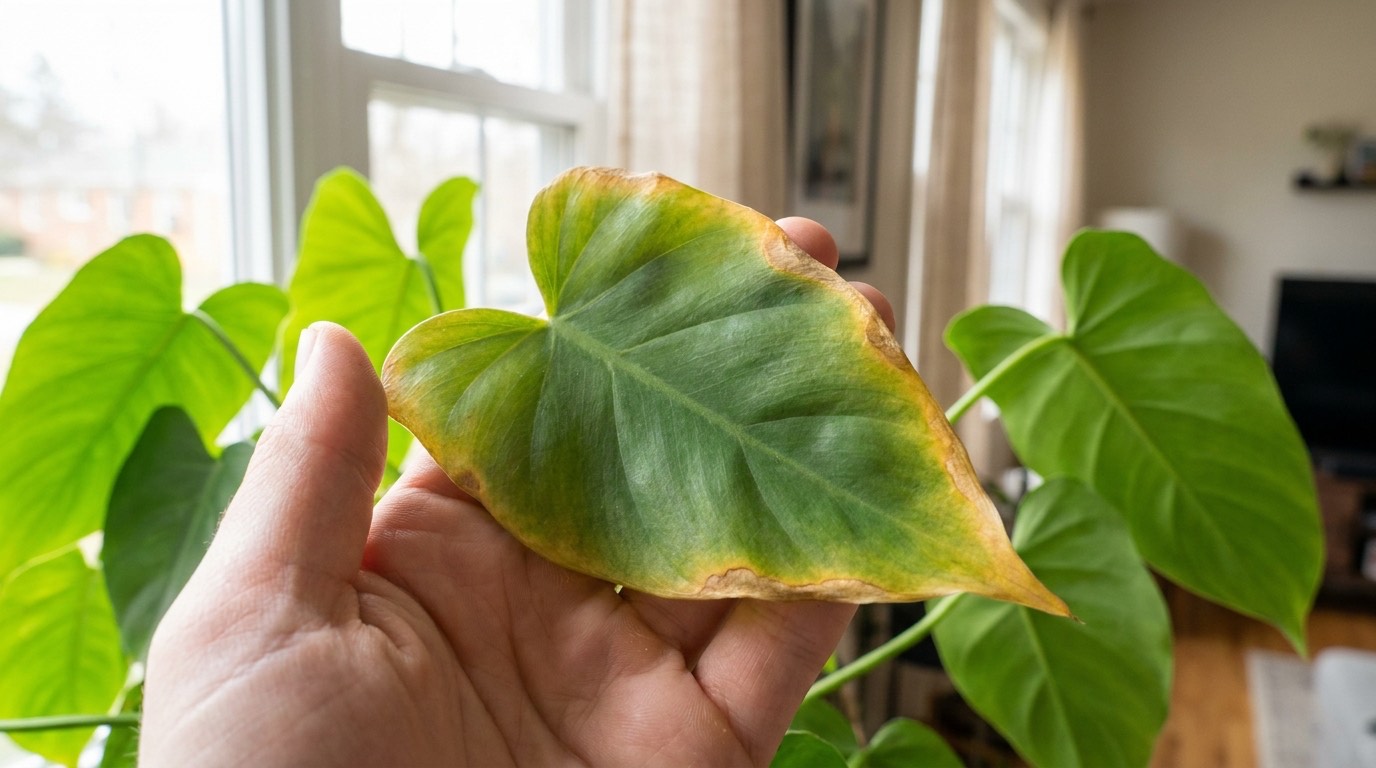
Yellow leaves (the technical name is chlorosis) are the single most common thing that worries new plant owners — and the most misread. A yellow leaf isn't a diagnosis; it's a symptom, and several very different problems all produce it. The trick is reading the pattern: which leaves, how fast, and what the soil is doing.
Work through these seven causes in order — they're roughly ranked from most to least common for indoor plants.
First, don't panic
A single old leaf at the very bottom of the plant turning yellow and dropping is completely normal — plants shed their oldest leaves as they grow. Worry only when it's spreading, fast, or hitting new growth.
1. Overwatering (the number one cause)
If lots of leaves are yellowing, feeling soft or limp, and the soil is wet, overwatering is almost certainly your answer. Roots need air as well as water; sitting in soggy soil, they suffocate and begin to rot, and the plant can't take up nutrients — so leaves yellow even though there's plenty of water.
The fix: Stop watering. Check the pot has drainage holes and never let it stand in a saucer of water. Let the top inch or two of soil dry out before watering again. Feel the soil before every water — this one habit prevents most houseplant deaths.
2. Underwatering
The opposite extreme also yellows leaves, but the clues differ: the soil is bone dry and pulling away from the pot's edge, and leaves are crisp or wilting rather than soft.
The fix: Water thoroughly until it runs from the drainage holes, and if the soil has gone hard and water runs straight through, sit the whole pot in a basin of water for half an hour to rehydrate it fully.
3. Too little light
A plant not getting enough light can't photosynthesise properly and will slowly pale and yellow, often dropping lower leaves and growing leggy and stretched toward the window.
The fix: Move it somewhere brighter — but gradually, to avoid shock. Most "low-light-tolerant" plants merely survive low light; they thrive in bright, indirect light.
4. Nutrient deficiency
If new leaves are yellowing while the veins stay green, or a plant hasn't been repotted or fed in a very long time, it may simply be hungry. Nitrogen, iron and magnesium shortages each show a slightly different pattern, but the general fix is the same.
The fix: Feed with a balanced houseplant fertilizer during the growing season (spring and summer), following the label's dilution. Refresh tired, compacted soil by repotting.
5. Cold drafts or heat stress
Sudden yellowing (sometimes with brown patches) on the side facing a window, an air-conditioner, or a heater often means temperature stress. Most houseplants come from stable tropical climates and dislike sudden swings.
The fix: Move the plant away from drafty windows, radiators and vents. Aim for stable, room-temperature conditions.
6. Pests
Check the undersides of leaves and the leaf joints. Fine webbing (spider mites), tiny white flies, or small brown bumps (scale) all sap the plant and cause stippled yellowing.
The fix: Isolate the plant so pests don't spread, wipe leaves down, and treat with insecticidal soap or a diluted neem-oil spray, repeating weekly until they're gone.
7. Natural aging or a recent move
Plants shed old leaves, and they also "sulk" for a few weeks after being bought, repotted or moved — dropping a leaf or two as they adjust. This is normal and passes.
The fix: Nothing. Keep care consistent and let the plant settle. Resist the urge to repot, feed and relocate all at once.
How to diagnose in 30 seconds
- Feel the soil first. Wet + soft yellow leaves = overwatering. Dry + crisp leaves = underwatering.
- Look at which leaves. Oldest/bottom = often normal or watering. Newest = often light or nutrients.
- Check the undersides for pests before assuming it's care.
- Change one thing at a time and wait two weeks. Chasing every possible cause at once just adds shock.
When to stop worrying
A yellow leaf will not turn green again — that leaf has done its job, and you can remove it once it's mostly yellow. What matters is whether new growth comes in healthy. Fix the underlying cause, and the fresh leaves will tell you you've got it right.
Frequently Asked Questions
Should I remove yellow leaves from my plant?
Once a leaf has turned mostly yellow it won't turn green again, so you can remove it — but fix the underlying cause first (usually watering or light). What matters is that new growth comes in healthy.
Do yellow leaves mean too much or too little water?
Both can cause yellowing. Feel the soil: soft yellow leaves with wet soil point to overwatering, while crisp yellowing with bone-dry soil points to underwatering.
Why are the bottom leaves turning yellow first?
A single old leaf at the very bottom yellowing and dropping is usually normal aging. Widespread lower-leaf yellowing more often signals overwatering or a nutrient shortage.