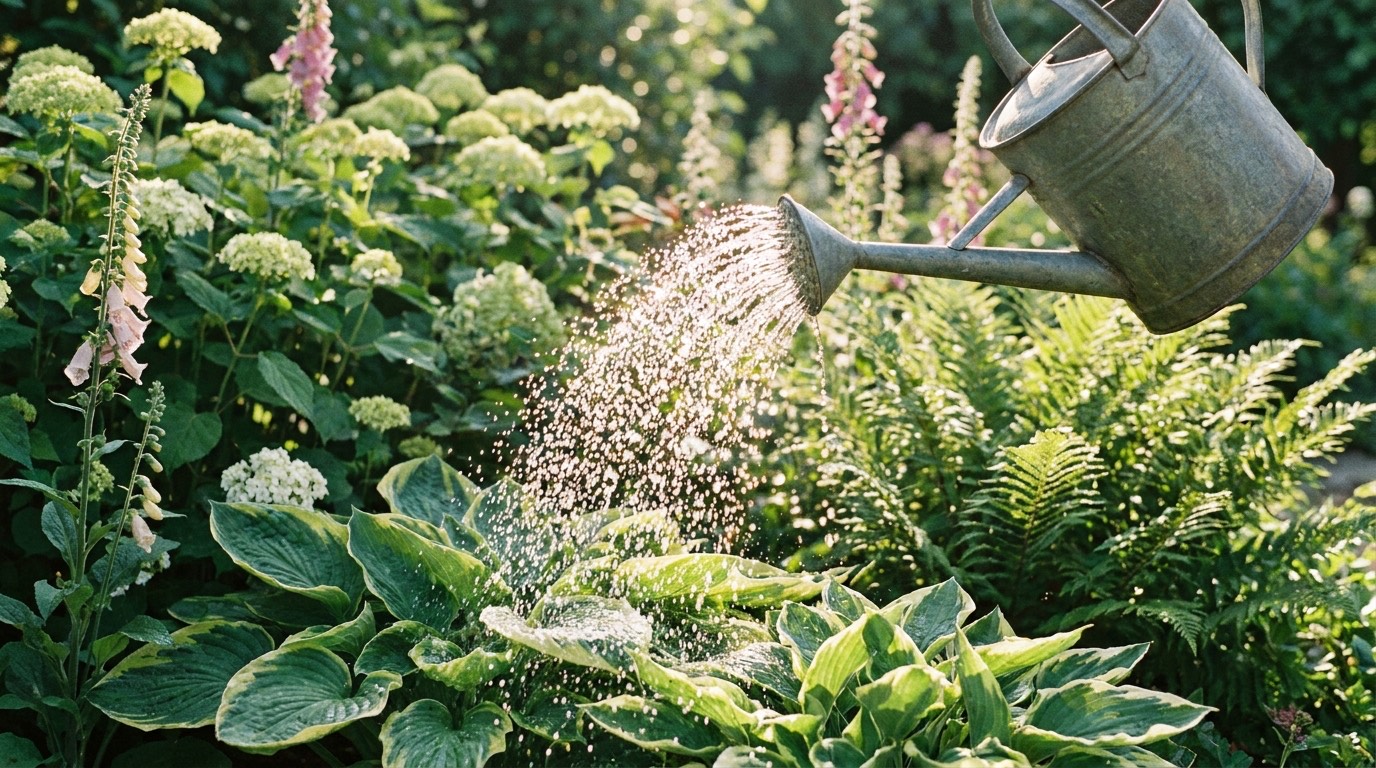
It's the most-asked gardening question, and the honest answer frustrates people: it depends. Anyone who gives you a fixed schedule — "water every Sunday" — is setting you up to either drown or parch your plants, because the right amount changes with the weather, the plant, the pot and the season.
The good news: there's one simple principle that replaces every schedule, and once it clicks, you'll never kill a plant by watering again.
The one rule to remember
Check the soil, then decide. Push a finger into the soil to the second knuckle. If it's dry at your fingertip, water. If it's still moist, wait. This single habit beats any calendar — do it before every watering and you've learned the most important skill in gardening.
Why "little and often" is usually wrong
The instinct to give plants a small sip every day does more harm than good. Shallow, frequent watering only wets the top layer, so roots stay near the surface where they dry out and cook. It also keeps the surface constantly damp — an invitation to disease and fungus gnats.
Water deeply and less often instead. A thorough soak drives water down, and roots follow it, growing deep and drought-resilient. Then let the soil dry appropriately before the next deep water. Deep and infrequent beats shallow and frequent almost every time.
How to water well
- Water the soil, not the leaves. Aim at the base of the plant. Wet foliage invites disease and wastes water to evaporation.
- Soak thoroughly. For pots, water until it runs freely from the drainage holes. For beds, water long enough to wet the soil several inches down.
- Then wait. Let the soil dry to the depth that plant likes before watering again — check with your finger.
- Water in the morning. Plants take it up before the heat of the day, and leaves dry quickly, reducing disease.
What changes how often you water
The "it depends" comes down to a handful of factors. Learn to adjust for these and you'll get it right anywhere:
- The plant. Succulents and cacti want to dry out fully; ferns and leafy greens like steady moisture; established shrubs need far less than seedlings.
- Pots vs. ground. Containers dry out far faster than open ground and may need daily water in summer. In-ground plants have a huge soil buffer and need watering much less once established.
- Weather and season. Hot, dry, windy days multiply water use. In cool or dormant seasons, most plants need a fraction of their summer water — overwatering in winter is a classic houseplant killer.
- Soil and drainage. Free-draining sandy soil dries fast; heavy clay holds water long. Improving soil with compost helps it hold the right amount.
- Stage of growth. Newly sown seeds and young transplants need consistent moisture; mature, established plants are far more forgiving.
Reading your plants
Plants tell you what they need, if you learn the signs. Thirsty plants wilt, and their leaves go dull, limp or crisp at the edges. Overwatered plants also wilt — confusingly — but their leaves are soft and yellowing, and the soil is wet. When in doubt, feel the soil: wet soil plus a droopy plant means stop watering, not add more.
Watering in five points
- Finger test before every water — moist means wait.
- Deep and infrequent, never shallow and daily.
- At the base, in the morning.
- Pots dry fast; the ground holds water — treat them very differently.
- Most plants die from overwatering, not under — when unsure, wait a day.
A quick note on houseplants
Indoor plants are the ones people most often overwater, because there's no sun and wind to dry the soil and no drainage into the ground. Always use pots with drainage holes, never leave a plant standing in a saucer of water, and dial watering right back in the darker, cooler months. For a fuller diagnosis of what watering problems look like, see our guide on why plant leaves turn yellow.
Frequently Asked Questions
How often should I water my garden?
There's no fixed schedule — check the soil first. Push a finger a couple of inches down and water only if it's dry there. In-ground beds often need a deep soak once or twice a week, while pots may need water daily in summer heat.
Is it better to water in the morning or evening?
Morning is best. Plants take up water before the heat of the day and the leaves dry quickly, which reduces disease. Evening watering leaves foliage damp overnight and invites fungus.
How do I know if I'm overwatering?
Overwatered plants often have soft, yellowing leaves and constantly wet soil, and they may wilt even though the soil is damp. When the soil feels wet, wait rather than watering more.
How much water do plants need?
Most gardens want the equivalent of about an inch of water per week, delivered as deep, infrequent soaks rather than daily sprinkles so roots grow down. Adjust up in heat and down in cool or rainy weather.