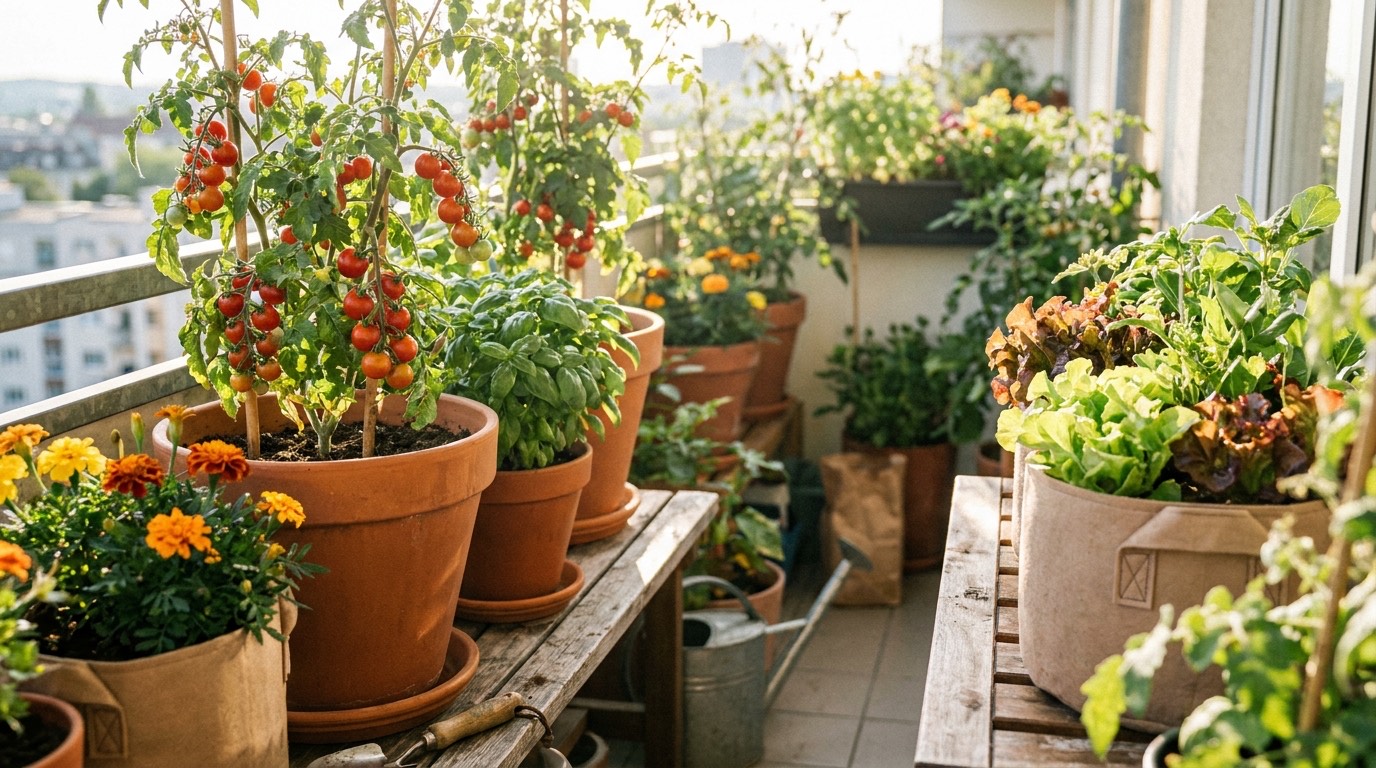
You don't need a garden to grow things. Some of the most productive, satisfying gardens are a cluster of pots on a balcony, a few grow bags on a patio, or a window box outside a kitchen. Containers give you control over soil, sun and water, they're easy on your back, and you can start with just one.
Here's everything a beginner needs to get a container garden thriving.
The one thing that kills more container plants than anything else
Drainage. Every pot must have holes in the bottom so water can escape. A gorgeous pot with no holes is a plant coffin — roots sit in trapped water and rot. If a pot has no holes, drill some, or use it as a decorative outer cover for a plain plastic pot with holes.
Choosing containers
Almost anything that holds soil and drains can be a container — terracotta, glazed ceramic, plastic, fabric grow bags, even a repurposed bucket with holes drilled in.
- Bigger is more forgiving. Small pots dry out and overheat fast. A larger pot holds more moisture and gives roots room, so beginners should size up where possible.
- Match the pot to the plant. Herbs and salad are happy in something small; tomatoes, peppers and zucchini want a large pot of at least 12 to 16 inches across (5 gallons or more).
- Terracotta breathes (and dries faster — good for herbs); plastic and glazed pots hold moisture longer (good for thirsty plants and hot spots).
- Fabric grow bags are cheap, drain and aerate brilliantly, and fold away over winter — an ideal low-cost starting point.
Use the right soil
Fill containers with potting mix — never soil dug from the garden. Garden soil compacts into a dense, airless block in a pot, drains badly and can bring in pests and weeds. A good multipurpose potting mix is light, holds moisture and air together, and gives roots what they need.
What to grow (the easy winners)
Almost anything can grow in a pot with the right size and sun. For a first season, start with these:
- Herbs — basil, mint, parsley, chives and thyme thrive in pots by a sunny door.
- Salad leaves — quick, shallow-rooted and perfect for window boxes; cut and come again.
- Cherry tomatoes — one plant in a big pot crops for months in full sun. See our tomato guide.
- Peppers and chile peppers — compact, ornamental and happy in containers in a warm, sunny spot.
- Green onions and radishes — fast, easy fillers for gaps between bigger plants.
- Strawberries — made for pots and hanging baskets, and they look lovely trailing over the edge.
- Compact flowers — marigolds, nasturtiums and alyssum add color and bring in pollinators.
Watering: the container gardener's main job
This is the biggest difference from growing in the ground: pots dry out much faster, sometimes needing water every day in hot weather. The limited soil can't buffer moisture the way open ground does.
- Check daily in warm weather by pushing a finger into the top inch or two of soil.
- Water thoroughly until it runs from the drainage holes, then let the surface dry before the next water.
- Group pots together to create a more humid microclimate and slow drying.
- Consider self-watering containers or a simple drip system if you travel or forget — it removes the main way container gardens fail.
Feeding
Because you water often, nutrients wash out of container soil faster than from a bed. After the first month or so, start feeding every week or two during the growing season with a liquid feed — a balanced one for leafy plants and herbs, a high-potassium (tomato) fertilizer for anything flowering or fruiting.
Container gardening in five rules
- Drainage holes, always. No exceptions.
- Go big — larger pots forgive missed waterings.
- Potting mix, not garden soil.
- Water often and check daily in summer.
- Feed regularly, because watering flushes nutrients away.
Making the most of small space
Think vertically: a trellis, wall pockets, railing planters and hanging baskets multiply your growing area without taking up floor space. Put the thirstiest, sun-loving plants where they'll get the most light, and tuck shade-tolerant salads and herbs into the corners that get less.
Frequently Asked Questions
What vegetables grow best in containers?
Herbs, salad leaves, cherry tomatoes, peppers, green onions, radishes, and strawberries all thrive in pots. Give fruiting crops like tomatoes a large container of at least 5 gallons.
How often do I need to water container plants?
Far more often than plants in the ground — sometimes daily in summer heat, because pots dry out fast. Check the top inch or two of soil daily in warm weather and water when it's dry.
Do container plants need special soil?
Yes. Use a bagged potting mix, never garden soil, which compacts into an airless block in a pot and drains badly. Every container also needs drainage holes.