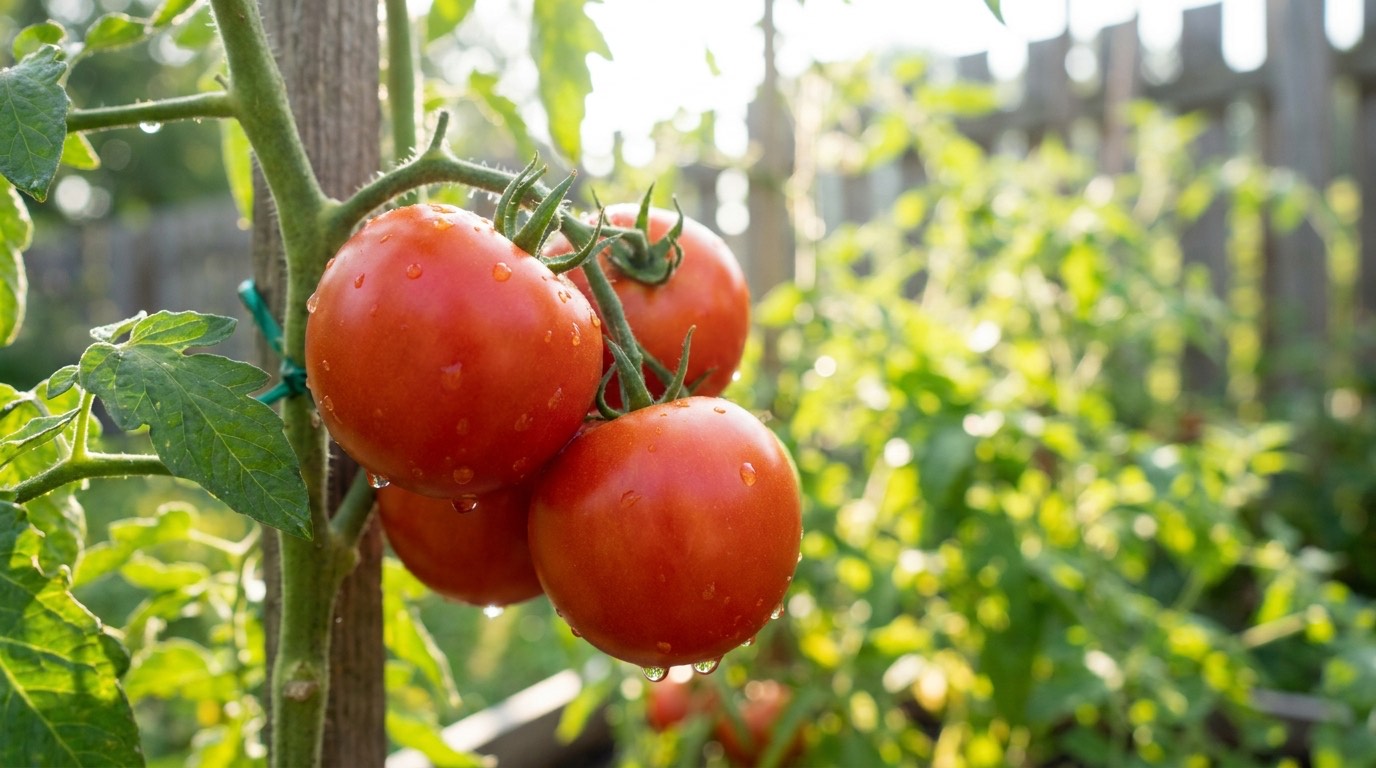
If you grow one thing this year, make it tomatoes. A sun-warmed tomato picked from your own plant tastes nothing like the pale ones from the store, and a single healthy plant can hand you 10 to 20 pounds of fruit over a season. They're also forgiving enough for a first-timer, as long as you get a few basics right.
This guide walks you through the whole journey — from a seed on a windowsill to a plant heavy with fruit — and flags the mistakes that quietly sink most beginners.
Short on time or space?
Skip sowing from seed and buy young plants ("starts") from a nursery in spring. You'll lose some variety choice, but you'll skip six weeks of indoor care and still get a full harvest. A single plant in a large pot on a sunny balcony works beautifully.
Choose the right type first
Before anything else, know which of the two types you're growing — it changes everything about how you'll grow it.
- Determinate (bush) tomatoes grow to a set size, then set most of their fruit in one big flush. They're compact, need little staking, and suit pots and small spaces. Great if you want a batch for sauce.
- Indeterminate (vining/cordon) tomatoes keep growing and fruiting all season until frost. They need support and regular pruning, but reward you with a long, steady harvest.
If you're gardening in containers or on a balcony, start with a determinate or a dwarf variety. If you have a bed and a sunny fence or stakes, an indeterminate cherry tomato is the most generous, beginner-friendly plant there is.
Sowing from seed
Start seeds indoors about 6 to 8 weeks before your last expected frost. Not sure when that is? Look up your average last-frost date by ZIP code (it's tied to your USDA hardiness zone) — it's the single most useful date in your gardening year. In frost-free zones (roughly zone 10+), sow whenever nights stay above 50°F.
- Fill small pots or trays with damp seed-starting mix and firm it gently.
- Sow seeds about ¼ inch deep — two per cell — and cover lightly.
- Keep them warm (70–77°F is ideal) and in bright light. A sunny windowsill works; a simple grow light works better and prevents leggy, stretched seedlings.
- Keep the mix just moist, never soggy. Seedlings usually appear in 5–10 days.
- Once each seedling has its first pair of true leaves, snip off the weaker of the two so one strong plant remains per cell.
When seedlings are a few inches tall, pot them up into slightly larger pots. Tomatoes can grow roots along their buried stem, so plant them a little deeper each time — it builds a stronger root system.
Hardening off and planting out
Don't rush your plants outside. About a week before planting out, start hardening off: put the plants outdoors in a sheltered spot for a couple of hours the first day, then a little longer each day. This toughens them up so the move doesn't shock them.
Plant out only once all danger of frost has passed and nights are reliably above 50°F. Choose the sunniest spot you have — tomatoes want 6 to 8 hours of direct sun. Dig in plenty of compost or well-rotted manure, and plant deep, burying up to two-thirds of the stem with the lower leaves removed. Space plants about 18 to 24 inches apart.
Watering: the make-or-break skill
More tomato problems trace back to watering than to anything else. The goal is deep and consistent moisture — not a little every day, and not a drought followed by a flood.
- Water the soil, not the leaves. Wet foliage invites disease.
- Water deeply two or three times a week rather than a splash daily, so roots grow down.
- Mulch around the base with straw or compost to hold moisture and steady the supply.
Erratic watering is the direct cause of two classic problems: blossom end rot (a sunken black patch on the base of the fruit) and split skins. Keep the moisture even and you'll avoid both.
Feeding
Tomatoes are hungry plants. Once the first fruits have set, feed every week or two with a high-potassium tomato fertilizer — the kind labeled for tomatoes at any garden center. Potassium drives flowering and fruiting; too much nitrogen gives you a jungle of leaves and little fruit.
Supporting and pruning
Indeterminate types need support from the start — a sturdy stake, a spiral, or strings run to a wire above. Tie the main stem loosely as it grows.
These vining types also need pinching out: the small shoots ("suckers") that appear in the joint between the main stem and a leaf branch. Pinch them out while small so the plant puts its energy into fruit rather than endless foliage. Determinate bush types don't need this — leave them be.
The three mistakes that catch beginners
- Not enough sun. Tomatoes need real, direct sun — 6 hours minimum. A shady spot gives you leaves and few tomatoes.
- Inconsistent watering. Feast-or-famine watering causes blossom end rot and splitting. Deep, even, mulched.
- Too much nitrogen. A lush green plant with no fruit is usually over-fed on nitrogen. Switch to a high-potassium fertilizer once flowers appear.
Harvesting
Pick tomatoes when they're fully colored and give slightly to a gentle squeeze — that's when flavor peaks. Twist gently or snip with the little stem attached. At the end of the season, bring any last green tomatoes indoors; they'll ripen on a windowsill, or beside a banana to speed things up.
Frequently Asked Questions
How long do tomatoes take to grow from seed?
Most tomatoes take about 60 to 80 days from transplanting to the first ripe fruit, plus 6 to 8 weeks of indoor growing from seed beforehand — so plan on roughly three to four months total, depending on the variety and your climate.
Why are my tomatoes not turning red?
Tomatoes largely stop ripening when temperatures climb above about 85°F, so a heat wave can pause the color change. Give them time, avoid over-feeding with nitrogen, and if frost is coming, pick fruit at the first blush and ripen it indoors.
How much sun do tomatoes need?
Tomatoes need at least 6 hours of direct sun a day, and 8 or more is better. Too little sun gives you leafy plants with very little fruit.
Should I prune my tomato plants?
Prune indeterminate (vining) types by pinching out the small side shoots that form between the main stem and a leaf branch. Determinate (bush) types don't need pruning — leave them be.