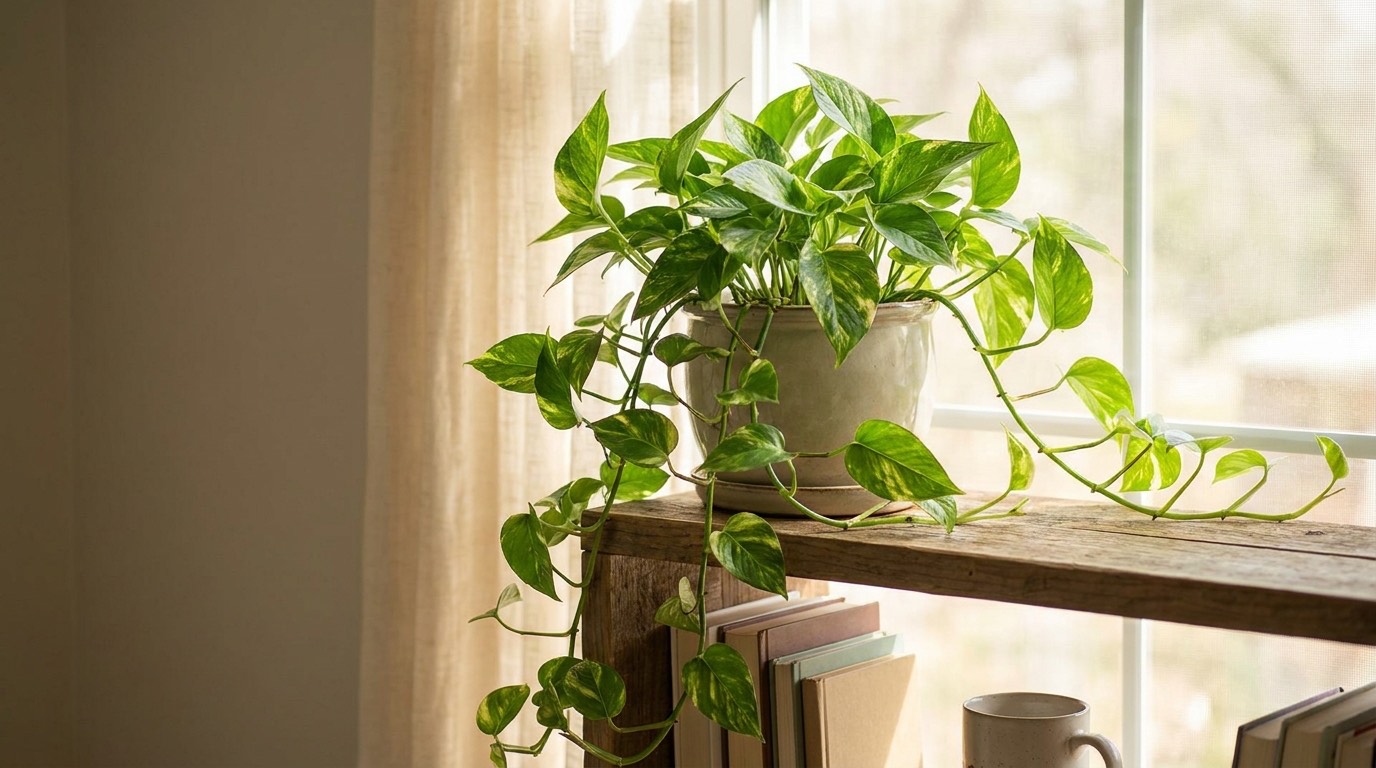
Pothos (sometimes sold as "devil's ivy") is the plant that turns doubters into houseplant people. Those long, heart-shaped trailing vines look great tumbling off a shelf, it grows fast enough to feel rewarding, and it's almost impossible to kill. Even better, it practically begs to be propagated — one plant can become a whole collection.
Here's how to keep it lush.
The plant that tells you what it needs
Pothos is unusually communicative. It droops noticeably when thirsty and perks back up within hours of watering, so it's easy to learn its rhythm. Watch the leaves and it will teach you exactly when to water.
Light
Pothos adapts to a wide range of light:
- Bright, indirect light gives the fullest growth and the best variegation (the creamy or yellow markings).
- Medium to low light is fine — solid green varieties handle low light especially well.
- Avoid harsh direct sun, which scorches the leaves.
If a highly variegated pothos starts turning mostly green, it's asking for more light. Move it brighter and the pattern usually returns on new growth.
Watering
Water when the top inch of soil feels dry. For most homes that's about once a week, less in winter.
- Check the top inch with your finger.
- When dry, water thoroughly until it drains from the bottom, then tip out the saucer.
- Let it drain — pothos hates sitting in water.
If the leaves go limp and the whole plant droops, it's thirsty; water it and it'll bounce back fast. If leaves yellow and feel soft, you're overwatering.
Soil, pots, and feeding
Any standard well-draining potting mix works, in a pot with a drainage hole. Feed with a diluted houseplant fertilizer once a month in spring and summer; skip winter. Repot every year or two when roots fill the pot — see how to repot a houseplant.
Keep it full and bushy
Pothos naturally grows long, single vines. To keep it looking full rather than straggly:
- Pinch or trim the tips regularly — the plant branches from where you cut.
- Don't throw away the cuttings — root them and tuck them back into the same pot to thicken it up.
- Rotate the pot every few weeks so it grows evenly toward the light.
Propagating: free plants forever
This is where pothos shines:
- Cut a vine just below a node (the little brown bump where a leaf meets the stem — that's where roots form).
- Put the cutting in a glass of water, node submerged, leaf above.
- Set it in bright indirect light and change the water weekly.
- In 2–4 weeks you'll have roots. Once they're an inch or two long, pot the cutting in soil.
Pothos care in five points
- Almost any light works — brighter means faster, fuller growth.
- Water when the top inch is dry, then let it drain fully.
- Trim the tips to keep it bushy instead of stringy.
- Root cuttings in water for endless free plants.
- Feed monthly in the growing season only.
Common problems
- Yellow leaves — most often overwatering; let it dry out more between waterings. An occasional yellow older leaf is normal. See why are my plant's leaves turning yellow?
- Brown, crispy leaf tips — dry air or inconsistent watering.
- Long, bare vines with few leaves — too little light; move it brighter and trim to encourage branching.
- Limp, drooping plant — usually just thirsty, occasionally rot from overwatering (check whether the soil is bone dry or soggy).
Frequently Asked Questions
How often should I water a pothos?
Water when the top inch of soil is dry — usually about once a week, and less in winter. Pothos droops dramatically when thirsty and recovers within hours of watering, so it's easy to read.
Can pothos grow in low light?
Yes. Solid-green pothos varieties tolerate low light very well. Heavily variegated types keep their markings better in brighter indirect light, but all pothos survive in medium to low light.
How do I make my pothos fuller?
Trim the tips regularly to force branching, root the cuttings, and plant them back into the same pot. Giving it brighter light and rotating the pot also keeps growth even and bushy rather than leggy.
Is pothos toxic to pets?
Yes, pothos is toxic to cats and dogs if chewed or eaten, causing mouth irritation and stomach upset. Hang it or place it out of reach of pets.