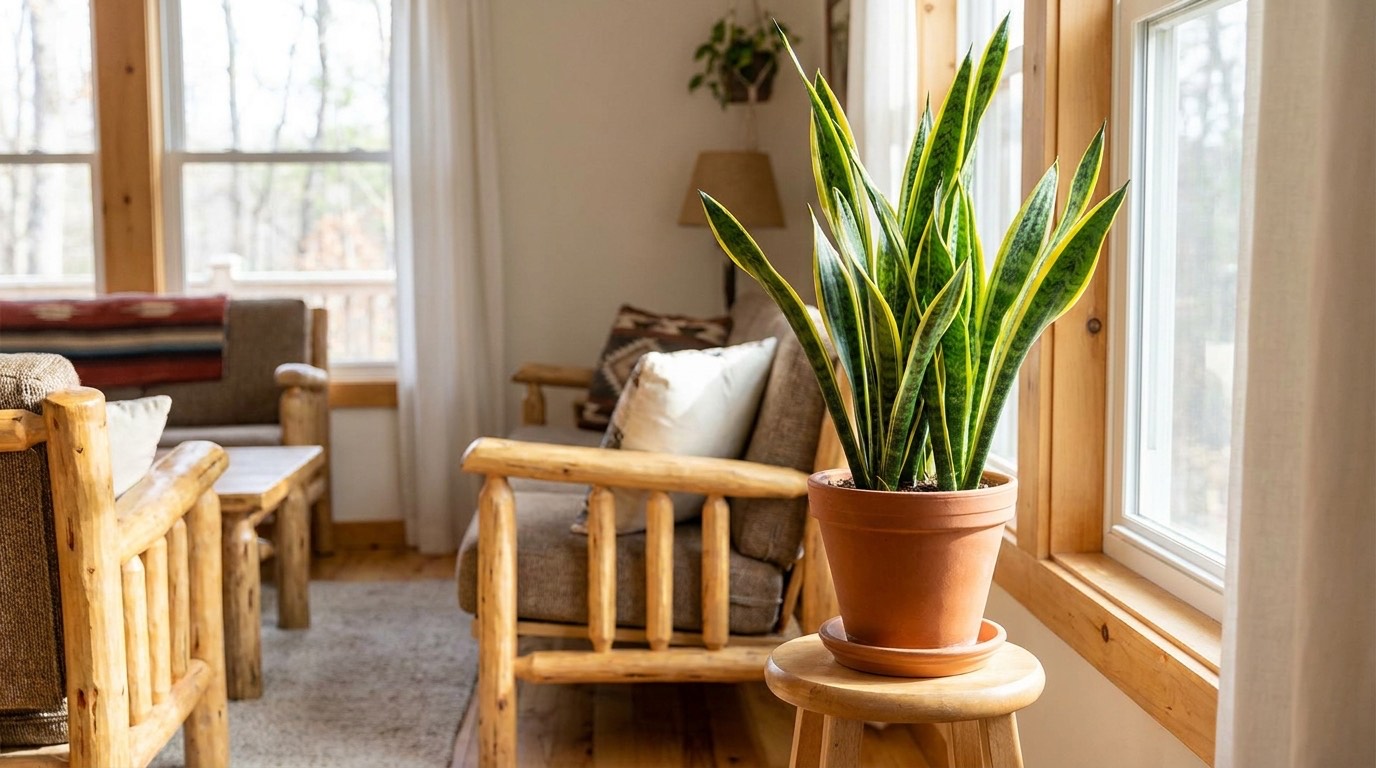
If you've killed houseplants before and sworn them off, the snake plant is the one to try next. It tolerates low light, shrugs off missed waterings, and keeps growing in conditions that would flatten a fussier plant. It's the plant we hand every nervous beginner — and the one you'll still have thriving years from now.
Here's everything you actually need to know.
Why it's so forgiving
The snake plant (botanically Sansevieria, now Dracaena trifasciata) is a succulent that stores water in its thick, upright leaves. That built-in reservoir is why it can go weeks without water — and why the fastest way to kill one is to treat it like a thirsty plant.
Light: it's genuinely flexible
Snake plants grow in almost any light:
- Bright, indirect light is ideal — they'll grow fastest here.
- Medium or low light is fine; they just grow more slowly.
- A few hours of direct sun is tolerated once acclimated, but harsh all-day sun through glass can scorch the leaves.
This is why they work in offices, bathrooms, and dim hallways where nothing else survives. If you only have a dark corner, a snake plant is your best bet — pair it with our guide to the best low-light houseplants for dark rooms.
Watering: less is more
This is the whole game. Water only when the soil is completely dry — all the way to the bottom. In practice that's about every 2–4 weeks, less in winter.
- Push a finger deep into the soil (or lift the pot — a dry pot is noticeably light).
- If there's any moisture, wait.
- When fully dry, water thoroughly until it runs from the drainage holes, then empty the saucer.
Overwatering is the number-one killer. A snake plant that sits in soggy soil will rot from the roots up. When in doubt, wait another week — a thirsty snake plant recovers instantly; a rotted one usually doesn't.
Soil and pots
Use a fast-draining cactus or succulent mix, and always plant in a pot with a drainage hole. Regular potting soil holds too much water for a succulent. Terracotta pots are a great choice because they wick away extra moisture. Snake plants actually like being a little root-bound, so you only need to repot every 2–3 years — see how to repot a houseplant when the roots start circling or the pot bulges.
Temperature and feeding
Normal room temperatures (60–85°F) are perfect. Keep it away from cold drafts and windows below 50°F. Feeding is optional — a diluted houseplant fertilizer once or twice during spring and summer is plenty. Don't feed in winter.
Propagating: free plants
Snake plants are easy to multiply. The simplest way: when repotting, pull the root ball apart into sections, each with a few leaves and roots, and pot them separately. You can also root a leaf cutting in water or soil, though division is faster.
Snake plant care in five points
- Any light works — bright indirect is best, low light is fine.
- Water only when bone dry, roughly every 2–4 weeks.
- Overwatering is the only real danger — err on the side of drought.
- Use cactus mix and a pot with drainage.
- Feed lightly in summer, not at all in winter.
Common problems
- Yellow, mushy leaves at the base — overwatering and rot. Let it dry out completely; in bad cases, unpot, cut away any soft rotted roots, and repot in fresh dry mix. (More causes in why are my plant's leaves turning yellow?)
- Wrinkled, curling leaves — underwatered, finally. Give it a thorough drink.
- Drooping, splaying leaves — usually too little light or too much water.
- Brown, crispy tips — often inconsistent watering; keep to a rhythm.
Frequently Asked Questions
How often should I water a snake plant?
Only when the soil is completely dry, which is usually every 2 to 4 weeks — and even less in winter. It's far safer to underwater than overwater. If you're unsure, wait a few more days.
Can a snake plant live in low light?
Yes. Snake plants tolerate low light better than almost any other houseplant, which is why they thrive in offices and dim rooms. They'll grow more slowly than in bright light, but they'll stay healthy.
Why are my snake plant's leaves falling over?
Splaying, floppy leaves are usually caused by too little light, overwatering, or both. Move it somewhere brighter and cut back on water. Leaves that are already bent won't stand back up, but new growth will come in upright.
Are snake plants toxic to pets?
Yes, snake plants are mildly toxic to cats and dogs if eaten, causing nausea. Keep them out of reach of pets that like to chew on leaves.