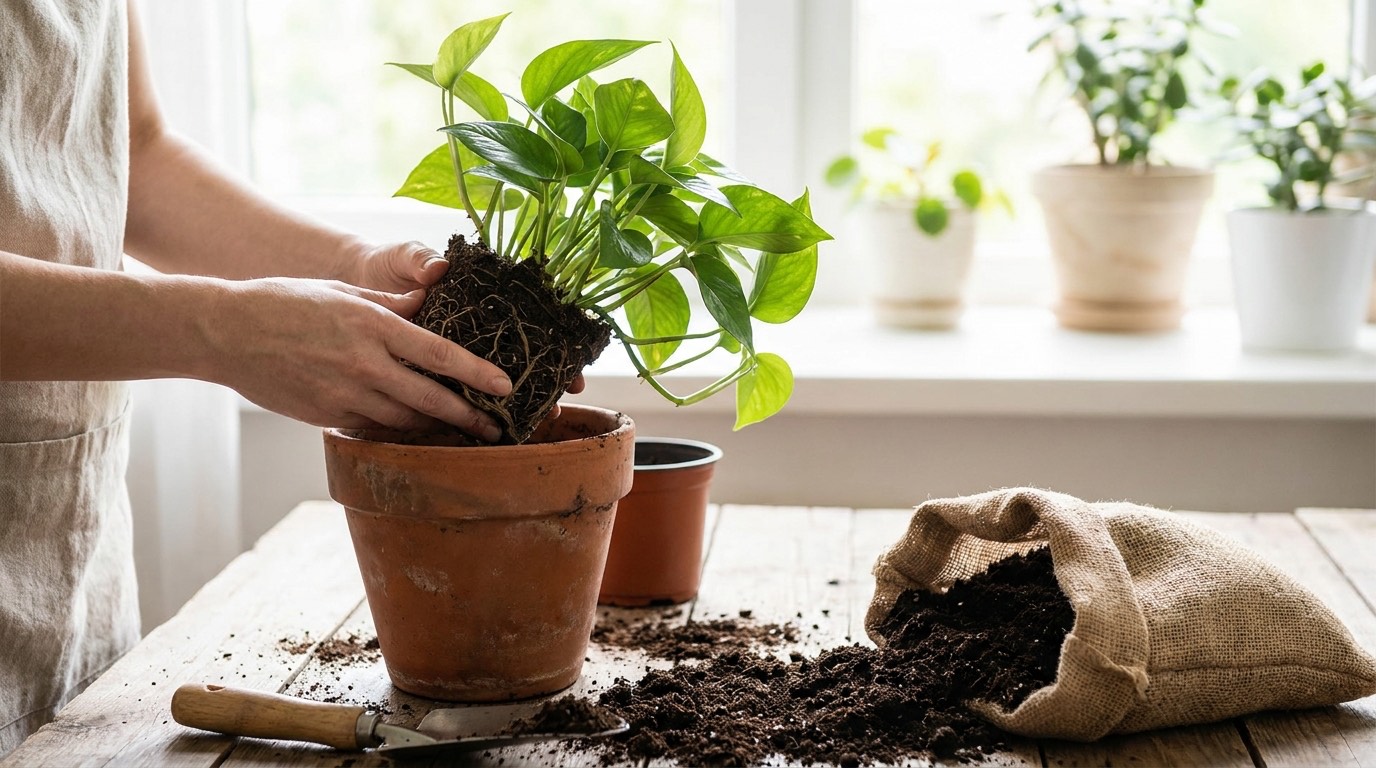
Every houseplant eventually outgrows its pot. When it does, the roots run out of room, the old soil stops holding nutrients and water, and growth quietly stalls. Repotting fixes all of that in about ten minutes — and it's far less scary than beginners expect. Do it right and your plant barely notices; do it at a bad time or the wrong way and it sulks for weeks.
Here's exactly how, and when.
"Repotting" isn't always a bigger pot
There are two jobs people call repotting. Potting up = moving to a bigger pot because the plant outgrew the old one. Refreshing = taking the plant out, replacing tired soil, and returning it to the same pot to renew the soil without a size jump. Know which one you're doing.
When to repot
Signs a plant is ready:
- Roots growing out the drainage holes or circling the surface.
- Water runs straight through without soaking in, or the plant dries out constantly.
- Growth has stalled despite good light and care.
- It's been 1–2 years in the same pot.
The best time is spring, at the start of the growing season, so the plant recovers fast. Avoid repotting a plant in bloom or one that's already stressed.
Choose the right pot and soil
- Go up just one size — about 1–2 inches wider in diameter. A pot that's too big holds excess wet soil around the roots and invites rot.
- The pot must have drainage holes. A decorative pot with none becomes a root-rot trap.
- Use fresh potting mix, not garden soil. Match it to the plant — a regular mix for most, a fast-draining cactus/succulent mix for those.
The steps
- Water the plant a day before — a hydrated plant slides out and handles the move better.
- Ease it out. Tip the pot, support the base, and gently slide the plant free. Squeeze a flexible pot or run a knife around a rigid one; never yank the stem.
- Loosen the roots. Tease apart circling roots with your fingers. If they're a tight "root-bound" mass, gently pull them loose or make a few shallow vertical cuts so new roots grow outward.
- Add fresh mix to the new pot so the plant will sit at the same depth as before.
- Center the plant and fill around it with mix, firming gently. Leave about an inch below the rim for watering.
- Water thoroughly to settle the soil, then top up any that sinks.
Aftercare
Put the plant back in its usual spot and hold off on fertilizer for 4–6 weeks — fresh mix already has nutrients, and feeding stressed roots can burn them. Keep watering normal. A little wilting or a dropped leaf for a week is normal "transplant sulk"; it passes.
Repot without the shock
- Only size up 1–2 inches — bigger isn't better.
- Fresh potting mix, pot with drainage.
- Loosen root-bound roots so they grow outward.
- Water in, then wait to fertilize for a month or so.
Frequently Asked Questions
How do I know if my plant needs repotting?
The clearest signs are roots growing out of the drainage holes or circling the soil surface, water running straight through, and stalled growth. Most houseplants need repotting every one to two years.
What size pot should I move up to?
Just one size — about 1 to 2 inches larger in diameter. Jumping to a much bigger pot surrounds the roots with soggy, unused soil that leads to root rot.
When is the best time to repot houseplants?
Early spring, at the start of the growing season, so the plant recovers quickly. Avoid repotting plants that are flowering, dormant, or already stressed.