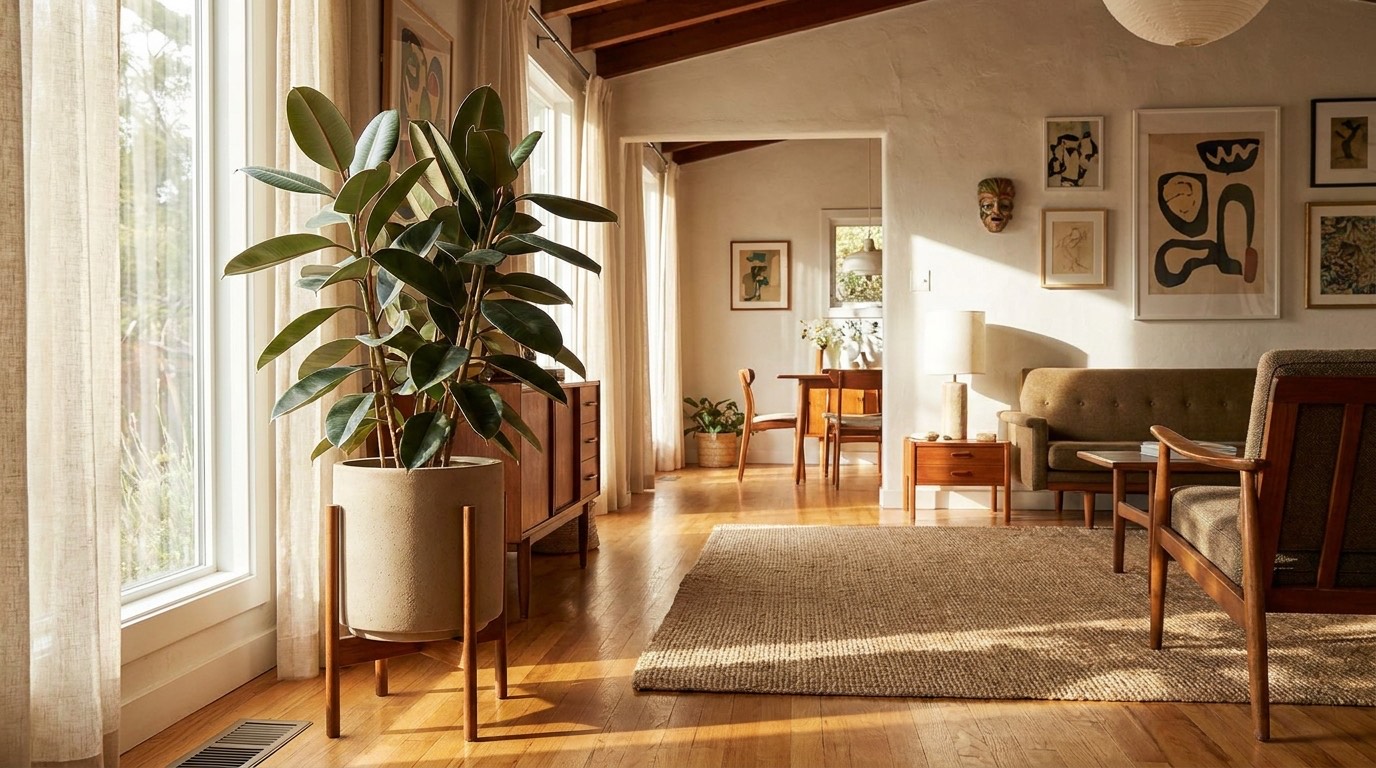
The rubber plant (Ficus elastica) is the statement houseplant for people who want drama without the fuss. Its large, thick, glossy leaves — often deep green or burgundy — grow into an impressive indoor tree, and it's noticeably more forgiving than its famously temperamental cousin, the fiddle-leaf fig. Give it decent light and consistent watering, and it rewards you handsomely.
Here's how.
Consistency is the key
Rubber plants dislike sudden change — a big move, a cold draft, or an erratic watering schedule can make them drop leaves. Pick a good spot, settle into a steady routine, and they're genuinely easy.
Light
Rubber plants want bright, indirect light:
- Bright indirect light near a window gives strong growth and, in variegated types, the best color.
- They tolerate medium light, but growth slows and leggy stems can develop.
- Avoid harsh direct sun, which scorches the leaves, and deep shade, which makes them sparse.
Rotate the plant occasionally so it grows evenly.
Watering
Water when the top inch of soil is dry — usually about once a week in summer, less in winter. Water thoroughly, let it drain, and empty the saucer.
Rubber plants are sensitive to overwatering, which causes yellowing leaves and drop. Let the top inch dry out reliably between waterings, and cut back noticeably in winter.
Soil, feeding, and leaf care
Use a well-draining potting mix in a pot with drainage. Feed with a diluted houseplant fertilizer once a month in spring and summer. Their big leaves collect dust, which blocks light — wipe them gently with a damp cloth every so often to keep them glossy and photosynthesizing well. Repot every year or two as it grows — see how to repot a houseplant.
Shaping and height
Rubber plants naturally grow tall and upright. To encourage branching or control height, you can prune the top — cut just above a leaf node, and the plant will branch below the cut. (Note the milky sap that leaks from cuts can irritate skin, so wear gloves.)
Rubber plant care in five points
- Bright, indirect light for strong growth and color.
- Water when the top inch is dry, less in winter.
- Consistency matters — avoid sudden moves and drafts to prevent leaf drop.
- Wipe the big leaves of dust to keep them glossy.
- Prune the top to branch out or control height.
Common problems
- Dropping leaves — usually a sudden change: a move, a cold draft, or over/underwatering. Settle it into a steady routine.
- Yellowing leaves — most often overwatering; let the soil dry more. See why are my plant's leaves turning yellow?
- Brown leaf edges — dry air or inconsistent watering.
- Leggy, sparse growth — too little light; move it brighter, and prune to encourage branching.
Frequently Asked Questions
Why is my rubber plant dropping leaves?
Leaf drop is usually a reaction to sudden change — being moved to a new spot, a cold draft, or inconsistent watering. Rubber plants like stability, so settle it into a steady location and watering routine, and the drop should stop.
How often should I water a rubber plant?
Water when the top inch of soil is dry, which is usually about once a week in summer and less in winter. Water thoroughly and let it drain. Overwatering is a common problem, causing yellowing and leaf drop, so let the top layer dry between waterings.
How much light does a rubber plant need?
Bright, indirect light is ideal for strong growth and good leaf color. Rubber plants tolerate medium light but grow slower and can get leggy. Keep them out of harsh direct sun, which scorches the leaves.
Is a rubber plant toxic to pets?
Yes, rubber plants are mildly toxic to cats and dogs, and the milky sap can irritate skin. Keep them away from pets that chew on plants, and wear gloves when pruning.