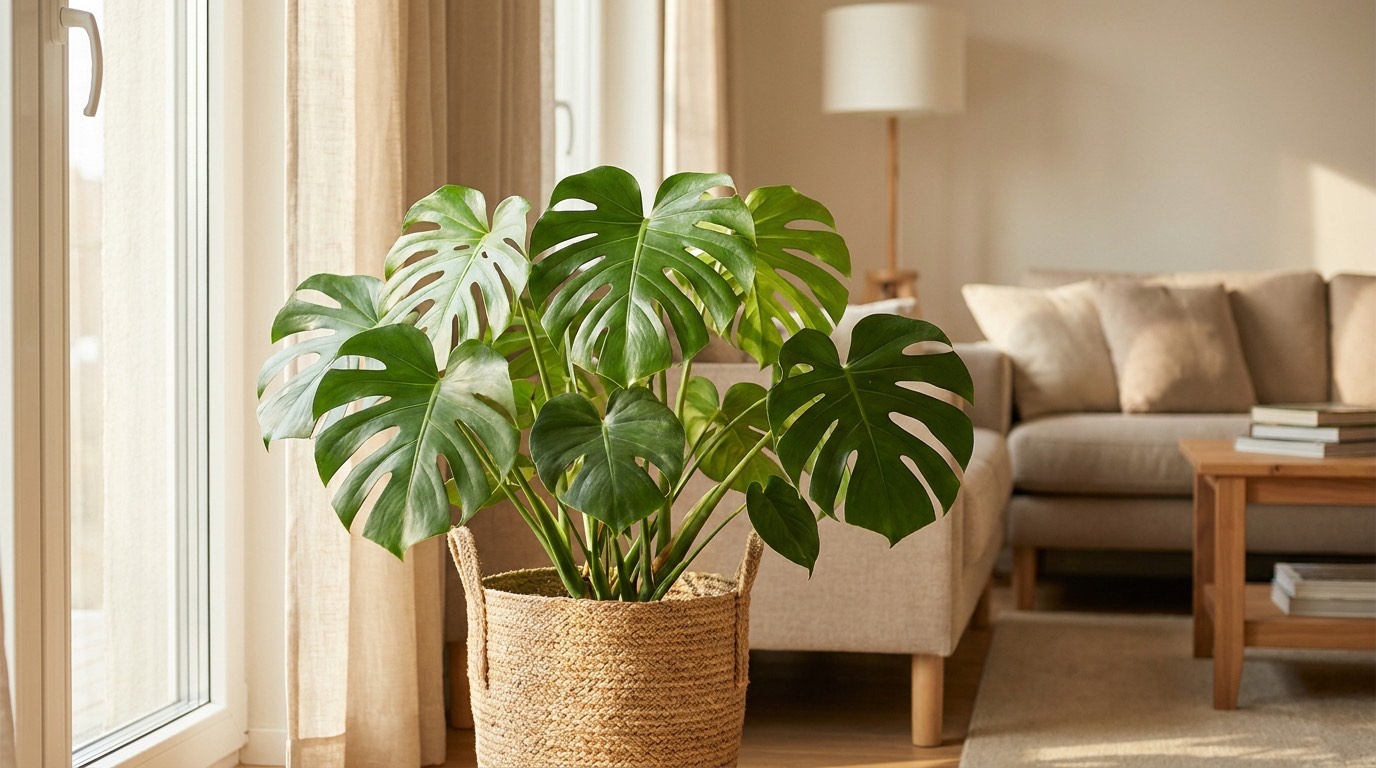
The monstera (Monstera deliciosa, or "Swiss cheese plant") is the houseplant everyone recognizes — those huge, glossy leaves split with natural holes. It looks like a tropical statement piece, but it's genuinely easy to care for. Give it bright light, water it properly, and let it climb, and it grows into a spectacular indoor centerpiece.
Here's how.
Why the holes matter
Those famous splits and holes (called fenestrations) develop as the plant matures and gets enough light. A young or under-lit monstera has plain, solid heart-shaped leaves. So if you're waiting for the dramatic Swiss-cheese look, the answer is almost always: more light and time.
Light
Monsteras want bright, indirect light — near a sunny window but out of harsh direct rays, which scorch the leaves.
- Bright indirect light gives fast growth and the big, split leaves.
- Medium light is tolerated but growth slows and leaves stay smaller and less fenestrated.
- Deep shade leads to leggy, sparse growth with plain leaves.
Rotate the plant every couple of weeks so it grows evenly rather than leaning toward the window.
Watering
Water when the top 1–2 inches of soil feel dry — typically about once a week, less in winter.
- Check the soil with your finger.
- When the top couple of inches are dry, water thoroughly until it drains from the bottom.
- Empty the saucer — monsteras hate soggy roots.
Yellowing leaves usually mean overwatering; crispy brown edges often mean underwatering or dry air. When unsure, wait a day or two.
Soil, pot, and humidity
Use a chunky, well-draining mix — a standard potting mix with added orchid bark and perlite is ideal, giving the roots air. Always use a pot with drainage. Monsteras are tropical and enjoy some humidity, but they adapt fine to average homes; grouping plants together or occasional misting helps if your air is very dry. Normal room temperatures (65–85°F) suit them; keep them away from cold drafts.
Give it something to climb
In the wild, monsteras climb tree trunks, and this is the secret to big, healthy leaves indoors. Provide a moss pole or trellis and gently tie the stems to it as the plant grows. A supported, climbing monstera produces noticeably larger and more fenestrated leaves than one left to sprawl.
Feeding and repotting
Feed with a diluted houseplant fertilizer once a month in spring and summer; skip winter. Repot every 1–2 years when roots grow out of the drainage holes or circle the pot — step up one pot size. See how to repot a houseplant.
Those aerial roots the plant sends out are normal — you can tuck them into the pot, guide them onto the moss pole, or simply leave them.
Monstera care in five points
- Bright, indirect light for growth and split leaves.
- Water when the top 1–2 inches are dry, then drain fully.
- Use a chunky, well-draining mix and a pot with drainage.
- Give it a moss pole to climb for bigger leaves.
- Feed monthly in the growing season, not in winter.
Common problems
- New leaves have no holes — usually too little light, or the plant is still young. Move it brighter and be patient. Climbing support helps too.
- Yellow leaves — most often overwatering; let it dry more between waterings. See why are my plant's leaves turning yellow?
- Brown, crispy leaf edges — dry air, underwatering, or inconsistent watering.
- Leggy growth with big gaps between leaves — reaching for light; move it closer to a window.
Frequently Asked Questions
Why doesn't my monstera have holes in its leaves?
The splits and holes develop as the plant matures and gets enough light. Young plants and under-lit ones produce plain, solid leaves. Move your monstera to brighter indirect light, give it a moss pole to climb, and new leaves should begin to fenestrate as it grows.
How often should I water a monstera?
Water when the top 1–2 inches of soil are dry, which is usually about once a week and less in winter. Water thoroughly until it drains out the bottom, then empty the saucer. Overwatering, which causes yellow leaves and root rot, is the most common mistake.
Does a monstera need a moss pole?
It doesn't strictly need one, but a moss pole or trellis makes a big difference. Monsteras are natural climbers, and a supported plant grows larger, more dramatic, more fenestrated leaves than one left to sprawl across the floor.
Is a monstera toxic to pets?
Yes, monsteras are toxic to cats and dogs if chewed or eaten, causing mouth irritation and stomach upset. Place them where curious pets can't reach the leaves.