The end of the growing season isn't just cleanup — it's the single best investment you can make in next year's garden. An afternoon or two of fall tasks means healthier soil, fewer pests and diseases overwintering, protected plants, and a flying start come spring. Think of it as putting the garden to bed properly.
Here's the checklist.
Tidy with a light touch
Modern advice has shifted: you don't need to strip the garden bare. Leaving some seed heads and leaf litter feeds birds and shelters beneficial insects over winter. The goal is to remove problems (diseased plants, spent crops) while leaving helpful habitat — a "messy but managed" middle ground.
1. Clear out spent and diseased plants
Pull finished annual vegetables and flowers once they're done. This matters most for diseased or pest-ridden plants — remove and dispose of them (don't compost diseased material), since many pests and fungal spores overwinter on old foliage and re-infect next year. Healthy spent plants can go on the compost pile. See composting for beginners.
2. Feed the soil
Fall is the best time to improve your soil, because it has all winter to break down:
- Spread a layer of compost or well-rotted manure over your beds.
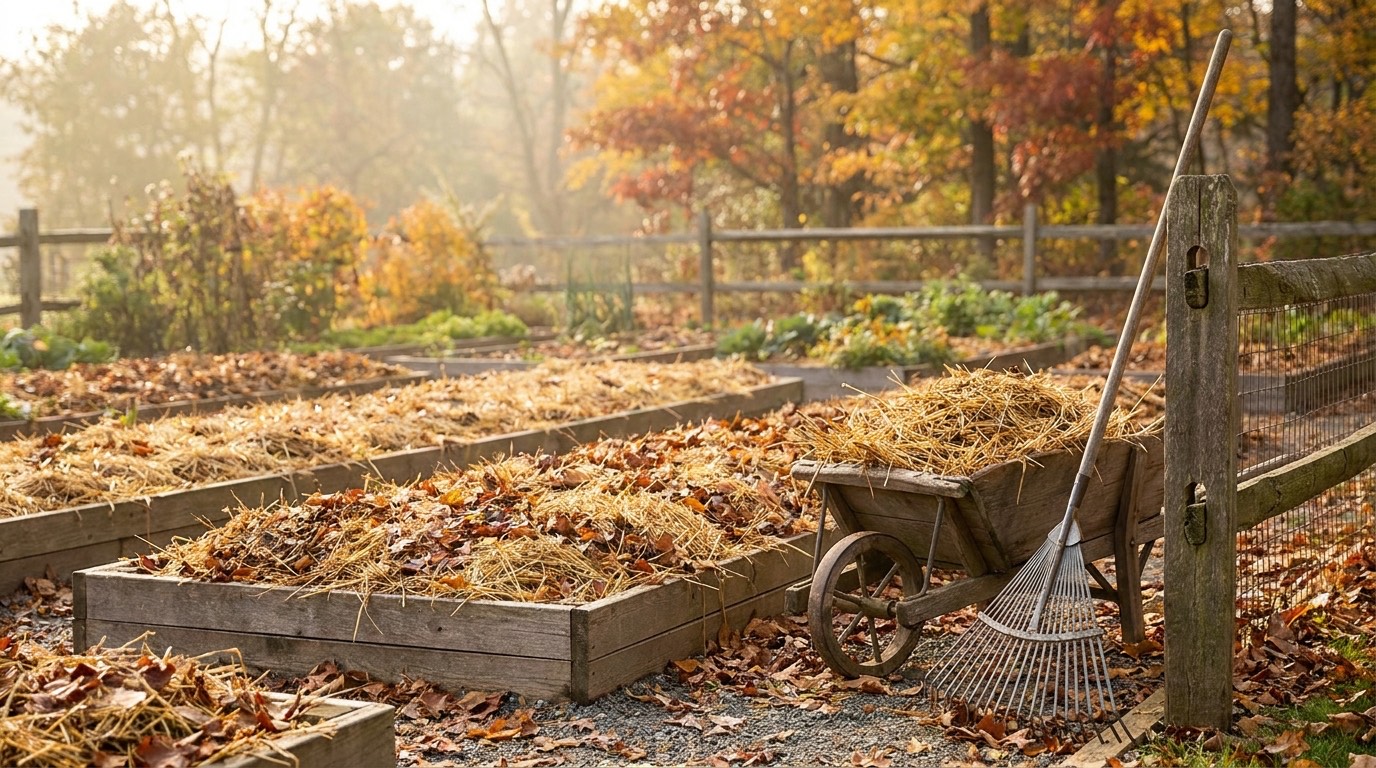
- Mulch bare soil with shredded leaves, straw, or compost to protect it from erosion and feed the soil life. See how to mulch your garden.
- Consider sowing a cover crop (like clover or rye) on empty vegetable beds to protect and enrich the soil.
Working on your soil now means richer ground ready to plant in spring.
3. Protect perennials and tender plants
- Mulch around perennials and the base of shrubs and roses to insulate the roots through freezes.
- Move tender potted plants into a sheltered spot, a garage, or indoors before the first hard frost.
- Wait to cut back many perennials until spring — their standing stems and seed heads shelter wildlife and protect the crown.
Not sure how cold your winter gets? Check your USDA hardiness zone.
4. Plant for next year
Fall is planting season for some of the best crops:
- Spring bulbs like tulips and daffodils go in now to bloom in spring — see how to grow tulips and spring bulbs.
- Garlic is planted in fall for a summer harvest.
- Trees and many shrubs establish well when planted in cool fall soil.
5. Clean and store your tools
An often-skipped but valuable step: clean the soil off your tools, wipe metal parts, and store them dry to prevent rust. Empty, clean, and store pots and containers, and drain and coil hoses before a freeze so they don't crack. Well-kept tools last for years and are ready the moment spring arrives.
Winterizing the garden in five points
- Remove diseased and spent crops (but leave some habitat).
- Feed and mulch the soil so it improves over winter.
- Mulch perennials and bring tender plants under cover.
- Plant bulbs and garlic now for next year.
- Clean and store tools, pots, and hoses before the freeze.
A note on leaving some mess
Resist the urge to make everything spotless. Hollow stems, leaf piles, and seed heads shelter ladybugs, native bees, and other beneficial insects through winter, and seed heads feed birds. A garden that's tidy in the beds but a little wild at the edges is healthier — and less work — than one scrubbed bare.
Frequently Asked Questions
What should I do in my garden before winter?
Clear out diseased and spent plants, spread compost and mulch to protect and feed the soil, mulch around perennials and bring tender potted plants under cover, plant spring bulbs and garlic, and clean and store your tools, pots, and hoses. It's about removing problems while protecting soil and roots.
Should I cut back all my perennials in fall?
Not necessarily. Cut back anything diseased, but leaving many perennials standing over winter protects their crowns and provides seed heads for birds and shelter for beneficial insects. You can tidy them up in spring instead. It's healthier for wildlife and less work.
Is it good to mulch the garden in fall?
Yes — fall is an ideal time to mulch. A layer of shredded leaves, straw, or compost protects bare soil from erosion, insulates plant roots against freezes, suppresses winter weeds, and breaks down to enrich the soil, giving you better ground to plant in come spring.
What can I plant in the fall?
Fall is the time to plant spring-flowering bulbs like tulips and daffodils, garlic for a summer harvest, and many trees and shrubs, which establish well in cool soil. You can also sow cover crops on empty vegetable beds to protect and enrich the soil over winter.