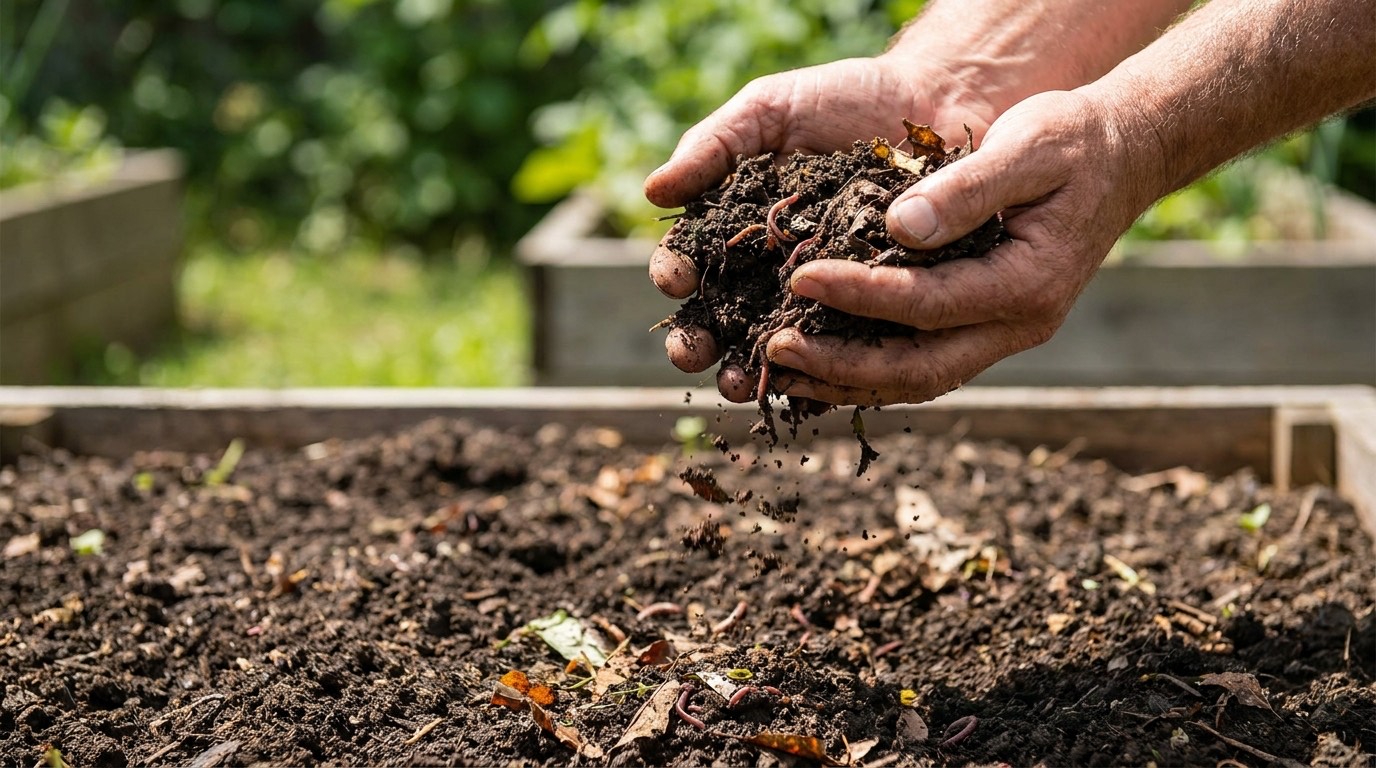
Here's a secret experienced gardeners know: you don't grow plants, you grow soil — and good soil grows the plants for you. Most beginner struggles (weak plants, poor harvests, constant watering) trace back to the dirt, not the gardener. The good news is that almost any soil can be transformed, and the fix is usually the same one simple thing.
Here's how to understand what you've got and make it better.
When in doubt, add compost
Whatever's wrong with your soil — too heavy, too sandy, too tired — compost is the answer. It loosens clay, helps sand hold water, and feeds the living organisms that make soil work. If you remember one thing from this guide, it's: add compost, then add more next season.
Know your soil type
Grab a handful of moist soil and squeeze it:
- Clay soil forms a sticky ribbon that holds its shape. It's rich in nutrients but drains poorly, compacts hard, and warms slowly in spring.
- Sandy soil feels gritty and falls apart. It drains fast and warms early but doesn't hold water or nutrients.
- Loam — the ideal — is crumbly, holds together loosely, and breaks apart easily. It's the balance every gardener is working toward.
The remarkable part: the fix for both clay and sand is the same — add organic matter.
Add organic matter (the master fix)
Organic matter is decomposed plant and animal material, and it's what turns dead dirt into living soil:
- Compost — homemade or bagged. The all-purpose soil improver.
- Well-rotted manure — rich and excellent, but let it age first (fresh manure burns plants).
- Leaf mold — rotted autumn leaves, a free soil conditioner.
- Worm castings — a concentrated, gentle boost.
Spread a 2- to 3-inch layer over your beds and either work it into the top few inches or simply let it break down on top. Do this every year and your soil gets better indefinitely.
Test and adjust pH (if plants struggle)
Soil pH controls whether plants can actually take up nutrients. Most vegetables and flowers prefer slightly acidic to neutral soil (about 6.0–7.0). A cheap test kit or your local extension office will tell you where you stand.
- Too acidic (low pH)? Add garden lime.
- Too alkaline (high pH)? Add elemental sulfur or plenty of compost.
Don't chase pH unless plants are actually struggling — for most gardens, adding compost keeps it in a healthy range on its own.
Protect the soil you've built
Bare soil erodes, bakes, and loses life. Keep it covered:
- Mulch beds with straw, shredded leaves, or wood chips to hold moisture, block weeds, and feed the soil as it breaks down.
- Avoid walking on beds — compaction squeezes out the air roots need. This is the whole reason raised beds and defined paths work so well.
- Plant cover crops or just leave roots in the ground over winter to keep soil life fed.
Better soil in five moves
- Add 2–3 inches of compost every year — the universal fix.
- Same solution for clay and sand: organic matter.
- Mulch to protect the surface and feed the soil.
- Don't compact beds — keep your feet on the paths.
- Only chase pH if plants are actually struggling.
The no-dig approach
You don't have to break your back double-digging. Many gardeners now use the no-dig method: lay compost and mulch on top of the soil and let worms and rain work it down naturally. It preserves soil structure and the underground life that does the real work — and it means less effort for you, with better results over time.
Frequently Asked Questions
How do I improve clay soil?
Add generous organic matter — 2 to 3 inches of compost or well-rotted manure worked into the top few inches, repeated yearly. This opens up the dense structure so water drains and roots can grow. Avoid working clay when it's wet, which compacts it further.
What is the fastest way to improve garden soil?
Spread a thick layer of compost over your beds and mix it into the top few inches. Compost delivers nutrients, improves both drainage and moisture retention, and feeds soil life immediately — it's the single highest-impact thing you can do.
Can I plant directly in bagged compost or topsoil?
Compost alone is too rich and holds too much water for most plants long-term; mix it with existing soil or use a blended "garden soil" or "raised bed" mix. Plain bagged topsoil is usually too dense on its own — improve it with compost too.