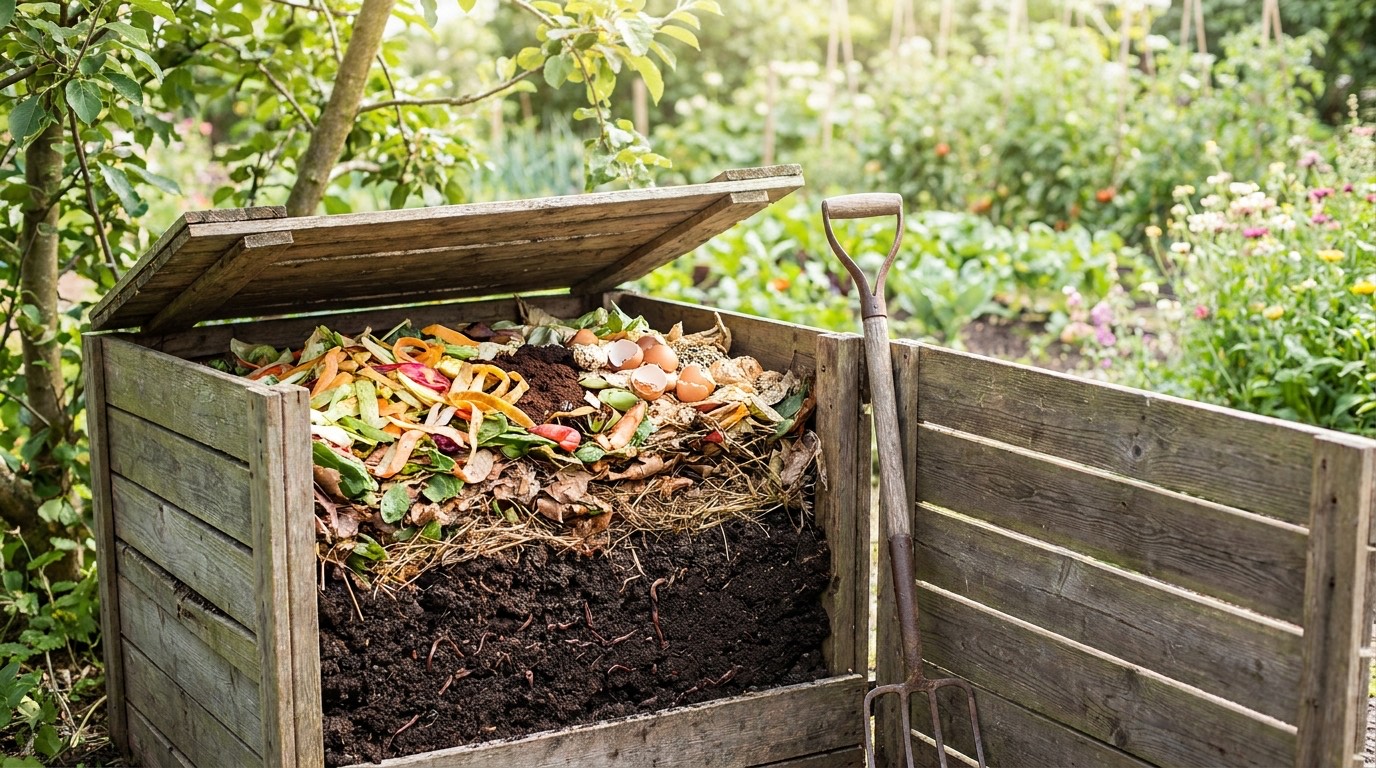
Compost is the closest thing gardening has to magic: you pile up kitchen scraps and yard waste, wait, and nature turns it into dark, crumbly, sweet-smelling material that plants love. It's the single best thing you can add to any soil — it feeds plants, improves drainage in clay and moisture-holding in sand, and it's completely free. As a bonus, composting keeps a third of your household trash out of the landfill.
It's also much simpler than the internet makes it look. Here's the beginner's version.
The only rule you really need
Balance "greens" and "browns." Greens are wet, nitrogen-rich scraps (food waste, fresh grass). Browns are dry, carbon-rich material (dead leaves, cardboard, paper). Aim for more browns than greens — roughly two to three parts brown to one part green. Too many greens and it goes slimy and smelly; plenty of browns keeps it sweet.
Choose a spot or a bin
You don't need to buy anything, but you have options:
- An open pile in a corner of the yard — free and works fine.
- A simple bin — a plastic compost bin or a wire/wood enclosure keeps it tidy and holds heat.
- A tumbler — a barrel you spin; faster and rodent-resistant, but costs more.
- No yard? A small countertop worm bin (vermicomposting) or a municipal food-scrap program handles apartment composting.
Put a pile in a level spot with some shade so it doesn't dry out, ideally on bare soil so worms and microbes can move in.
What to compost (and what to skip)
Greens (nitrogen): fruit and vegetable scraps, coffee grounds and filters, tea, fresh grass clippings, plant trimmings.
Browns (carbon): dry leaves, shredded cardboard and paper, straw, wood chips, paper egg cartons.
Keep out: meat, fish, dairy, and oily or greasy food (they smell and attract pests); pet waste; diseased plants; and anything treated with weed killer. Backyard piles also don't get hot enough for "compostable" plastics.
Build and maintain the pile
- Start with a layer of browns for airflow at the bottom.
- Alternate greens and browns as you add material — every time you toss in kitchen scraps (greens), cover them with a handful of browns.
- Keep it about as damp as a wrung-out sponge — add water if it's dry, add browns if it's soggy.
- Turn it with a fork every week or two to add air, which speeds everything up and prevents smells.
How long it takes
A turned, well-balanced pile can produce finished compost in 2 to 6 months; a neglected pile gets there in a year or so on its own — either way, it works. You'll know it's ready when it's dark, crumbly, and smells like fresh earth, with the original scraps no longer recognizable.
Composting made simple
- More browns than greens — that one ratio prevents most problems.
- Keep it damp, not wet, like a wrung-out sponge.
- Turn it now and then for faster, sweeter compost.
- No meat, dairy, or pet waste in a backyard pile.
How to use finished compost
Spread finished compost as a 1–2 inch layer on top of beds and gently work it in, mix it into planting holes and containers, or use it as a nutrient-rich mulch around plants. There's almost no way to use too much. Do this each season and your soil — and everything growing in it — gets better every year.
Frequently Asked Questions
What can you put in a compost bin?
Fruit and vegetable scraps, coffee grounds, tea, and fresh grass (greens), plus dry leaves, shredded cardboard, paper, and straw (browns). Avoid meat, dairy, oily food, pet waste, and diseased plants.
Why does my compost smell bad?
A bad smell almost always means too many greens and not enough air — the pile has gone soggy and anaerobic. Mix in plenty of dry browns (leaves, cardboard) and turn it to add air, and the smell clears up.
How long does compost take to be ready?
A well-balanced pile that you turn regularly can be ready in 2 to 6 months. A pile you simply leave alone takes about a year. It's done when it's dark, crumbly, and smells like earth.