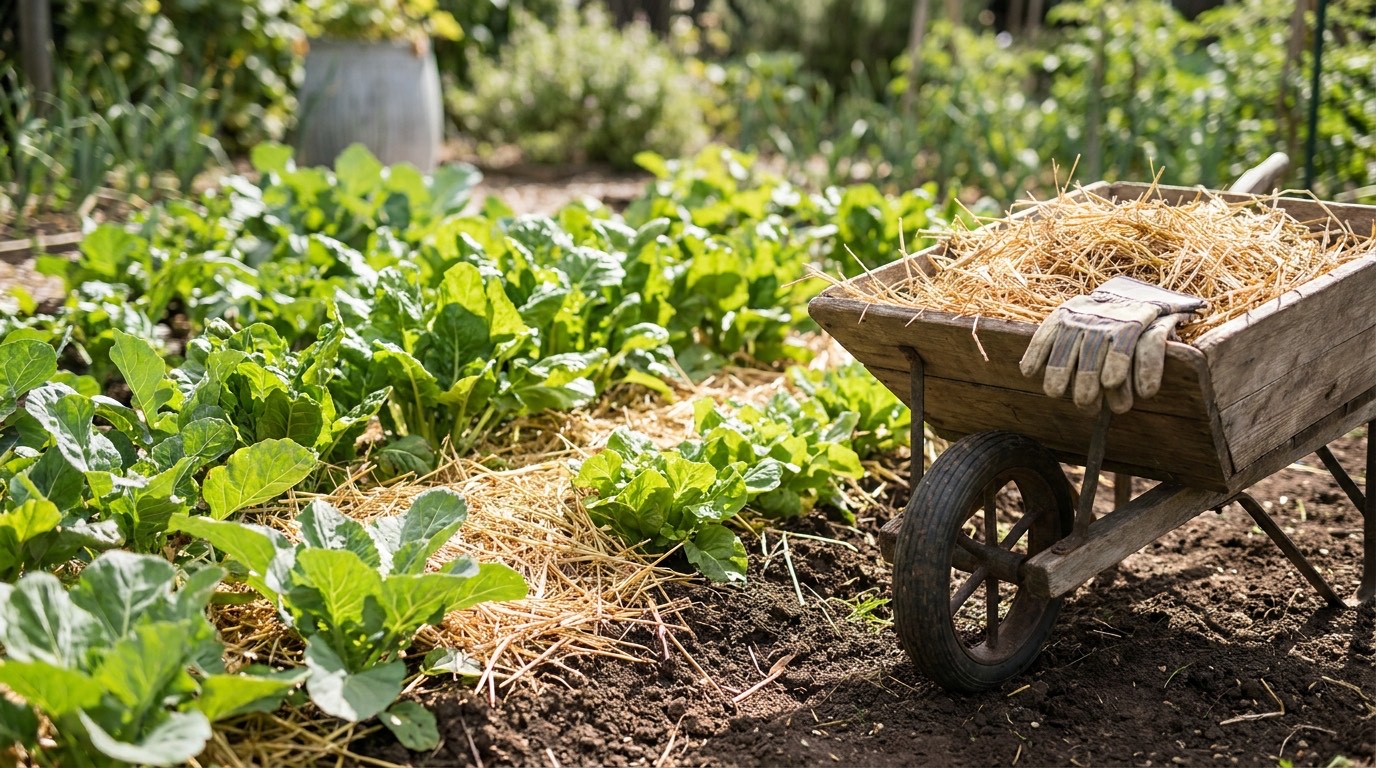
If there's one habit that makes gardening dramatically easier, it's mulching. A simple layer of material over your soil means less watering, far fewer weeds, and steadily richer ground — for almost no effort and little cost. Experienced gardeners mulch everything; beginners often skip it and wonder why their beds dry out and sprout weeds.
Here's how to do it right.
What mulch actually is
Mulch is any material spread over the soil surface — not dug in, just laid on top. It works like a blanket: it shades the soil (holding moisture and blocking weeds), buffers temperature swings, and, if it's an organic material, slowly breaks down to feed the soil beneath.
Why mulch is worth it
A good layer of mulch does four jobs at once:
- Holds moisture — shaded soil dries out far more slowly, so you water much less.
- Blocks weeds — most weed seeds can't sprout without light, and the ones that do pull easily from soft, mulched soil.
- Steadies temperature — it keeps roots cooler in summer heat and protects them in winter cold.
- Feeds the soil — organic mulches rot down into rich organic matter, improving the soil over time. (More on that in how to improve your garden soil.)
Organic vs. inorganic mulch
Organic mulches break down and feed the soil — the best choice for most gardens:
- Shredded bark or wood chips — long-lasting, great for paths, shrubs, and perennial beds.
- Straw — cheap and ideal for vegetable gardens and around strawberries.
- Shredded leaves — free in fall, excellent for beds.
- Compost — feeds heavily while it mulches, perfect for vegetable beds.
- Grass clippings — free, but apply in thin layers so they don't mat.
Inorganic mulches (gravel, landscape fabric, stone) don't feed the soil and are better for permanent paths and decorative areas than for growing beds.
How to apply it
Mulching is simple, but a few details matter:
- Weed first — pull existing weeds before you mulch.
- Water the soil if it's dry, since mulch will slow future watering from reaching it.
- Spread 2–3 inches deep for most materials — enough to block light, not so much that it smothers.
- Keep it off the stems — leave a few inches of clear space around plant stems and tree trunks. Piling mulch against stems traps moisture and causes rot.
- Top it up as organic mulch breaks down, usually once or twice a year.
The one mistake to avoid
The classic error is the "mulch volcano" — piling mulch in a mound against a stem or tree trunk. It looks tidy but traps moisture against the bark, invites rot and pests, and can kill the plant. Always keep mulch pulled back a few inches from anything living, so the base of the plant can breathe.
Mulching in five points
- Mulch cuts watering and weeding dramatically — it's the easiest win in the garden.
- Choose organic mulches (bark, straw, leaves, compost) to feed the soil as they break down.
- Apply 2–3 inches deep over weeded, watered soil.
- Keep mulch off stems and trunks — no volcanoes.
- Top it up once or twice a year as it decomposes.
When to mulch
The two best times are spring, after the soil has warmed and you've planted, to lock in moisture for summer; and fall, to protect roots and suppress winter weeds. You can refresh mulch any time it thins out.
Frequently Asked Questions
How thick should mulch be?
About 2–3 inches deep for most materials. That's enough to block sunlight from weed seeds and hold in moisture, without smothering the soil or your plants. Finer materials like grass clippings should go on thinner so they don't mat and block water.
What is the best mulch for a vegetable garden?
Straw, shredded leaves, and compost are excellent for vegetable beds because they're easy to work with and break down to feed the soil. Compost does double duty by fertilizing as it mulches. Avoid dyed wood mulches around edibles.
Can I put mulch right up against plant stems?
No. Keep mulch a few inches away from plant stems and tree trunks. Piling it against them traps moisture, encourages rot and pests, and can kill the plant — the so-called "mulch volcano" is a common and damaging mistake.
Does mulch really reduce weeds?
Yes, significantly. Most weed seeds need light to germinate, and a 2–3 inch layer of mulch blocks that light. The few weeds that do come through root in loose surface material and pull out easily, making weeding far less work.