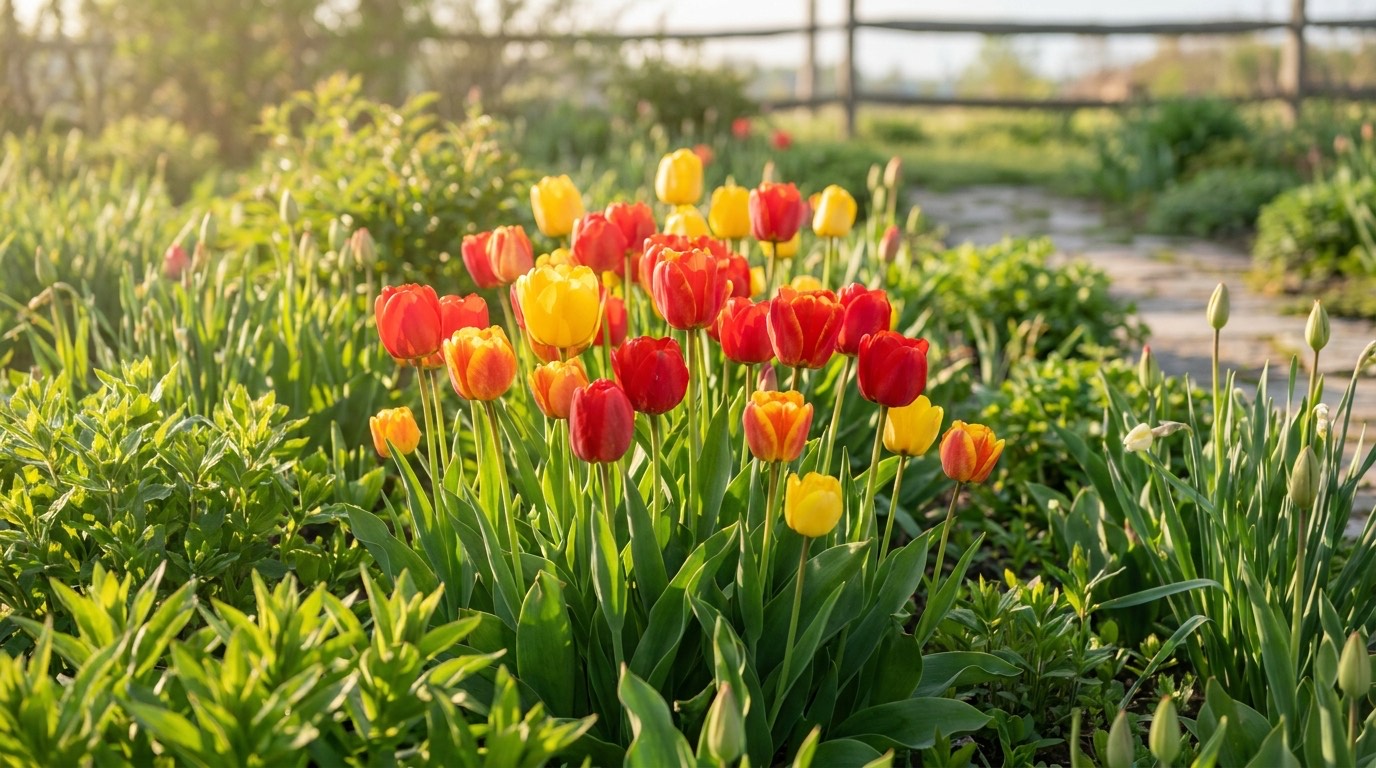
Spring bulbs are gardening's best trick: you do the work on a cool fall afternoon, forget about them all winter, and are rewarded with a riot of color just when you need it most. Tulips, daffodils, crocus, and hyacinths are all planted the same simple way, and the results look far more impressive than the effort involved.
Here's how to get it right.
The timing that trips people up
The most important thing to know: spring-flowering bulbs are planted in fall. They need a long spell of cold in the ground over winter to trigger blooming. Miss the fall window and you miss the spring show — so buy and plant bulbs in autumn, several weeks before the ground freezes.
When to plant
Plant spring bulbs in fall, roughly 6 weeks before your ground freezes hard — for most of the US that's September through November depending on your region. The soil should be cool but still workable. In warm-winter climates (zones 8+), tulips and hyacinths may need pre-chilling in the fridge for 6–8 weeks first, since the ground never gets cold enough. Not sure of your climate? See what is my USDA hardiness zone?.
Where to plant
Most spring bulbs want:
- Full to partial sun — a spot that's sunny in spring (before trees leaf out) is ideal.
- Well-draining soil — the one thing bulbs can't tolerate is sitting in soggy ground, which rots them. If your soil is heavy, work in compost or plant in raised beds or pots.
How to plant: the depth rule
The classic guideline: plant a bulb about three times as deep as it is tall. So a 2-inch tulip bulb goes about 6 inches deep. When in doubt, deeper is safer than too shallow.
- Dig a hole to the right depth (a bulb planter or trowel helps).
- Set the bulb pointy-end up, roots (the flatter, sometimes hairy end) down.
- Space bulbs a few inches apart — planting in clusters of 5–7 looks far better than a single row.
- Cover, firm the soil, and water once to settle them in.
- Then leave them — no winter watering needed.
Tip: For a fuller look, plant in generous groups and even layer different bulbs at different depths in the same hole (a "bulb lasagna") for a longer succession of blooms.
After they bloom
When spring flowers fade, resist tidying too soon:
- Deadhead the spent flower so the plant doesn't waste energy making seed.
- Leave the foliage until it yellows and dies back naturally — the leaves are recharging the bulb for next year. Cutting green leaves off early weakens or kills the bulb.
Daffodils, crocus, and many small bulbs are reliably perennial, coming back and multiplying for years. Tulips are often best treated as annuals in much of the US, as they tend to fade after the first spectacular year — many gardeners simply plant fresh bulbs each fall.
Growing bulbs in pots
Bulbs are excellent in containers. Plant them close together (almost touching) in a deep pot of well-draining mix in fall, keep the pot somewhere cold but not frozen over winter, and bring it into view as shoots appear. It's the easiest way to get a concentrated splash of spring color on a doorstep or balcony.
Spring bulbs in five points
- Plant in fall — they need winter cold to bloom.
- Well-draining soil is essential — soggy ground rots bulbs.
- Plant three times as deep as the bulb is tall, pointy-end up.
- Plant in clusters for a fuller display.
- Let the leaves die back naturally to feed next year's flowers.
Frequently Asked Questions
When should I plant tulip bulbs?
Plant tulips and other spring bulbs in fall, about 6 weeks before your ground freezes — generally September through November depending on your region. They need a long cold period in the ground over winter to bloom in spring. In warm climates, chill them in the fridge first.
How deep should I plant bulbs?
The general rule is to plant a bulb about three times as deep as it is tall. A 2-inch tulip bulb goes roughly 6 inches deep. Plant it pointy-end up, with the flatter root end down, and space bulbs a few inches apart.
Do tulips come back every year?
Some do, but many modern tulips fade after their first spectacular season, so in much of the US they're treated as annuals and replanted each fall. Daffodils, crocus, and many smaller bulbs are far more reliably perennial and multiply over the years.
Why didn't my bulbs flower?
Common reasons include planting too shallow, poor drainage rotting the bulbs, cutting off the leaves too early the previous year, or — for tulips in warm climates — not enough winter cold. Always let foliage die back naturally, and pre-chill bulbs where winters are mild.