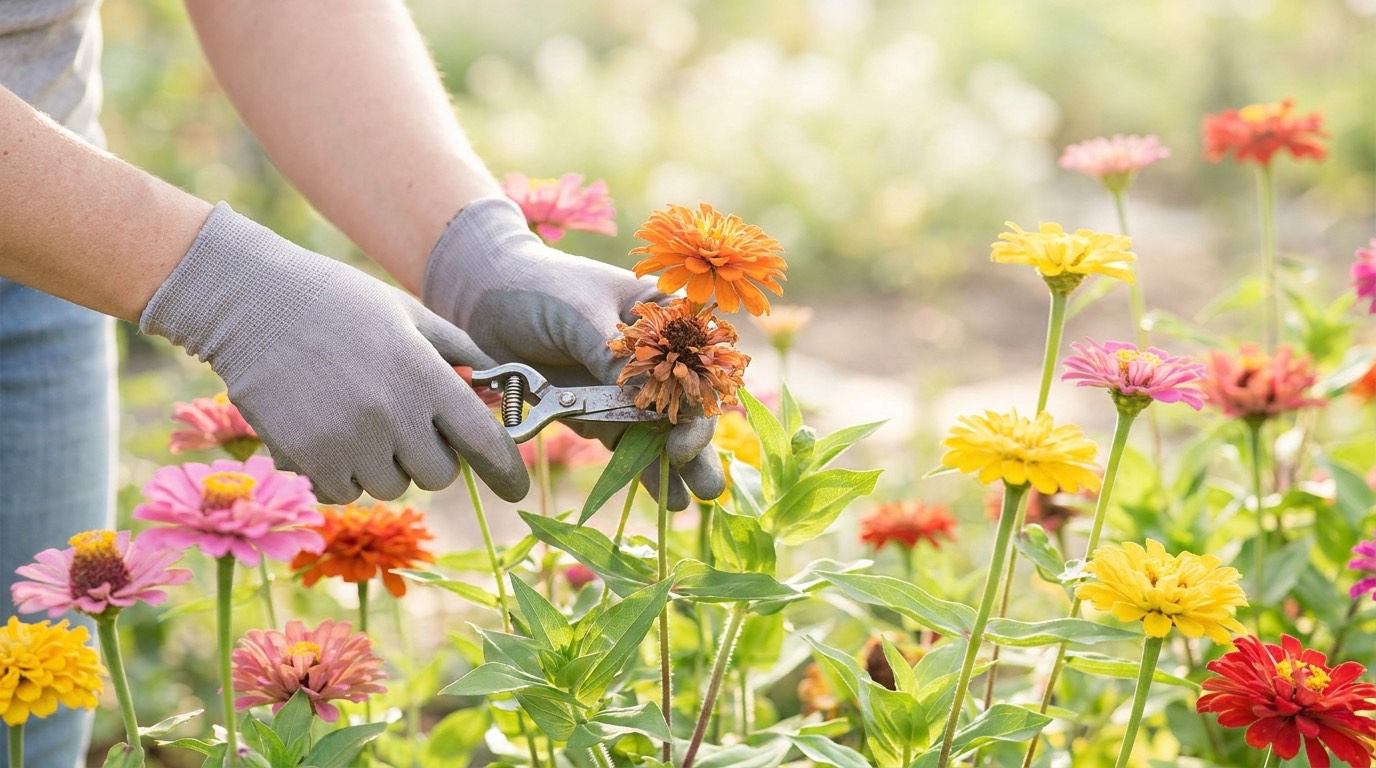
If your flowers put on a great show and then fizzle out after a few weeks, you're probably missing the single easiest trick in the flower garden: deadheading. It takes seconds, needs no tools, and can double or triple how long a plant blooms. Once you understand why it works, you'll do it without thinking every time you walk past a plant.
Here's the whole skill.
Why deadheading works
A plant's goal isn't to look pretty — it's to make seeds. Once a flower is pollinated and starts setting seed, the plant thinks its job is done and stops blooming. Remove the fading flower before it seeds, and the plant tries again, sending up fresh blooms to have another go. You're politely refusing to let it finish.
What deadheading is
Deadheading simply means removing spent, faded, or dying flowers from a plant. That's it. By taking off the old blooms before they turn to seed, you redirect the plant's energy from seed-making back into flowering — and keep the display tidy and fresh at the same time.
How and where to snip
- Find a flower that's past its best — wilted, browning, or dropping petals.
- Follow the stem down to the first set of healthy leaves or a new bud below the spent bloom.
- Pinch or cut just above that point. Use your fingernails for soft stems, or snips/scissors for tougher ones.
Don't just pull off the petals — remove the whole developing seed head behind the flower, or the plant still thinks it's making seeds.
Do it often
Deadheading isn't a one-time chore — it's an ongoing habit through the season:
- Walk the garden every few days and snip what's fading.
- For plants with masses of tiny flowers (like alyssum or petunias), shear the whole plant back by about a third when it looks tired; it'll rebound with fresh blooms.
- Keep it up right through late summer for the longest possible show.
Flowers that love deadheading
These reward you generously for the habit: roses, cosmos, zinnias, marigolds, dahlias, petunias, geraniums, coneflowers, salvia, and sweet peas. Many annuals will bloom nonstop from early summer to frost if you keep deadheading.
What to leave alone
Deadheading isn't always right:
- Self-cleaning plants (like impatiens and many modern petunias) drop spent blooms on their own — no need.
- Once-blooming plants won't rebloom no matter what, so deadhead only for tidiness.
- Plants you want to self-seed (poppies, calendula, love-in-a-mist) — leave some flowers to set seed so they return next year.
- Seed heads for winter interest and birds (coneflowers, sunflowers, sedum) — leave the last flush standing in fall to feed birds and add structure.
Deadheading in five points
- Remove fading flowers before they set seed to trigger more blooms.
- Cut back to the first healthy leaves or a new bud.
- Do it every few days through the season.
- Shear tired mass-bloomers back by a third for a fresh flush.
- Leave some for self-seeding, for birds, and on self-cleaning plants.
Deadheading vs. pruning vs. pinching
Three related terms worth knowing: deadheading removes spent flowers for more blooms; pinching removes growing tips early in the season to make young plants bushier and more floriferous; pruning is the bigger job of shaping and cutting back woody plants. All three encourage healthier, fuller growth — deadheading is just the quickest and the one you'll do most.
Frequently Asked Questions
Does deadheading really produce more flowers?
Yes, for most repeat-blooming annuals and perennials. Removing spent flowers before they set seed prompts the plant to bloom again, often extending the season by months. It won't make once-blooming plants rebloom, but it keeps them tidy.
Where exactly do I cut when deadheading?
Follow the spent flower's stem down to the first set of healthy leaves or a new bud, and pinch or cut just above that point. Remove the whole developing seed head, not just the petals.
Which flowers should you not deadhead?
Leave self-cleaning plants like impatiens (they drop blooms themselves), any flowers you want to self-seed for next year, and late-season seed heads like coneflowers and sunflowers that feed birds and add winter interest.