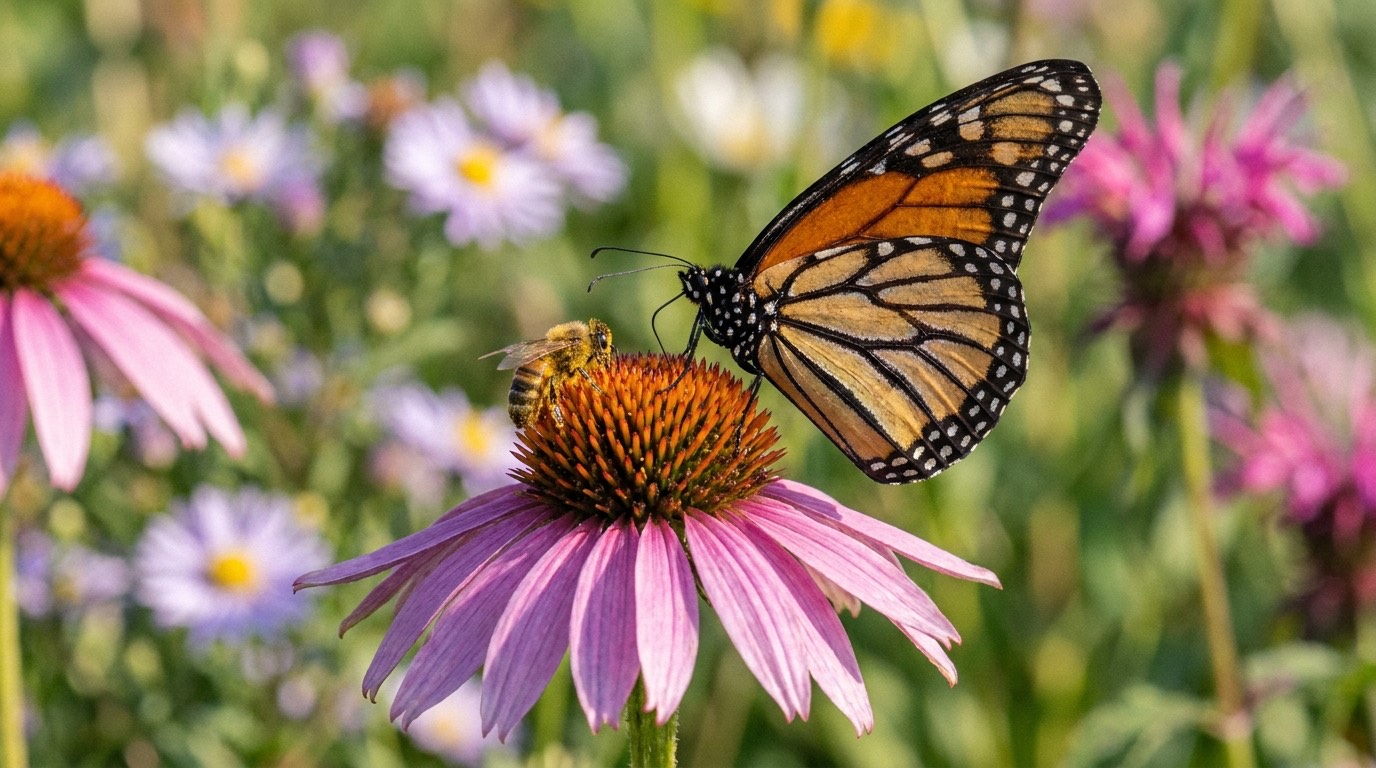
Pollinators do the quiet work that makes gardens produce — without bees, you get far fewer tomatoes, squash, cucumbers, and fruit. They're also in decline across the US, which means a pollinator-friendly yard isn't just prettier and more productive; it genuinely helps. The good news: attracting them is easy, cheap, and mostly a matter of planting the right flowers and holding back on sprays.
Here's how to turn any yard, bed, or balcony into a pollinator magnet.
The single most important rule
Stop using insecticides, especially on or near flowering plants. Even "safe" garden sprays kill bees and butterflies along with pests. A pollinator garden and a spray bottle can't coexist — and a healthy pollinator population keeps most pests in check on its own.
Plant a long season of blooms
Pollinators need food from early spring through fall, not just in June. Aim for something flowering in every season:
- Spring: crocus, native fruit trees, and early perennials.
- Summer: the peak — coneflowers, bee balm, zinnias, cosmos, sunflowers, lavender, salvia.
- Fall: asters, goldenrod, and sedum, when little else is blooming and pollinators are fueling up for winter.
A garden that's bare in spring or fall leaves pollinators hungry at the hardest times.
Choose the right kinds of flowers
- Single, open flowers (daisies, coneflowers, cosmos, calendula) beat dense "double" blooms, where the nectar is buried and hard to reach.
- Native plants are best of all — local bees and butterflies evolved with them. Ask a local nursery or extension office for natives for your region.
- Plant in clumps, not singles — a block of one flower is far easier for pollinators to find and work than scattered plants.
- Include host plants for butterflies: milkweed for monarchs, dill and parsley for swallowtails. Caterpillars need leaves to eat, not just nectar.
Give them water and shelter
- A shallow dish of water with a few pebbles to land on gives bees and butterflies a safe drink.
- Leave a patch of bare soil (many native bees nest in the ground) and a few hollow stems or a bee hotel.
- Tolerate a little mess — leaving stems and leaves over winter shelters overwintering insects.
Build a pollinator garden
- No insecticides — this matters more than anything else.
- Bloom in every season, spring through fall.
- Single, native flowers planted in clumps.
- Add host plants, water, and a little shelter.
Even a balcony counts
You don't need a yard. A few pots of nectar-rich flowers — zinnias, lavender, salvia, calendula — on a sunny balcony will draw bees and butterflies several stories up. Every flowering pot adds to the network of food across a neighborhood.
Frequently Asked Questions
What flowers attract the most bees and butterflies?
Native perennials like coneflowers, bee balm, and asters, plus easy annuals like zinnias, cosmos, and sunflowers. Choose single, open-faced flowers over dense double blooms, and plant them in clumps.
Do I need native plants for a pollinator garden?
They're the best choice because local pollinators evolved with them, but any nectar-rich, pesticide-free flowers help. A mix of natives and easy annuals works well for beginners.
How do I attract monarch butterflies?
Plant milkweed — it's the only plant monarch caterpillars can eat — along with nectar flowers like coneflowers and asters for the adults. Use milkweed species native to your region and never spray it.