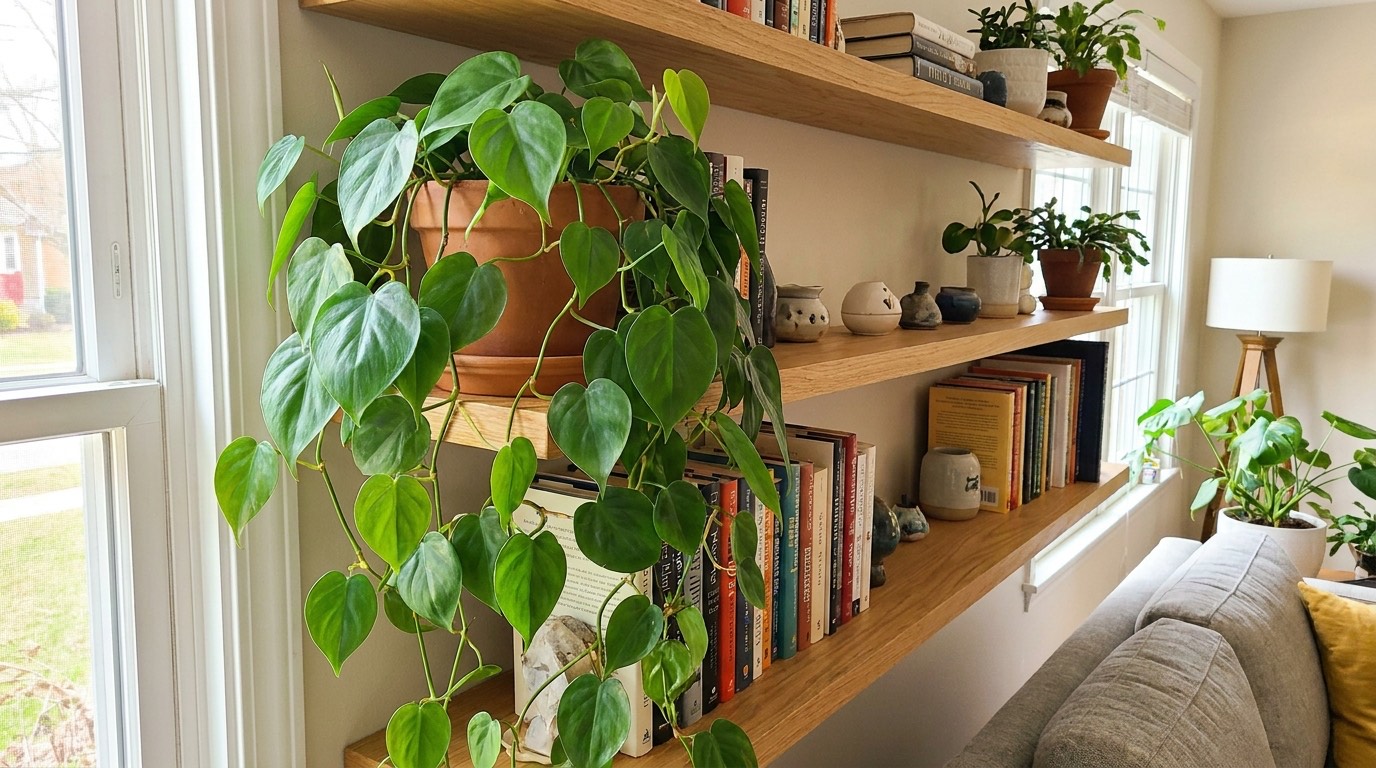
The heartleaf philodendron (Philodendron hederaceum) is one of the easiest and most rewarding trailing houseplants you can own. Its glossy, heart-shaped leaves tumble gracefully from a shelf or climb a support, it shrugs off low light and missed waterings, and it roots from cuttings almost effortlessly. If you like pothos, you'll love this — they're often confused, and cared for almost identically.
Here's how.
Philodendron vs. pothos
These two look similar and want the same care, but the heartleaf philodendron has softer, thinner, more heart-shaped leaves, while pothos leaves are thicker and often more variegated. Either way, the routine below applies to both.
Light
Heartleaf philodendrons are very adaptable:
- Bright, indirect light gives full, fast growth.
- Medium to low light is tolerated well — perfect for dimmer rooms.
- Avoid direct sun, which scorches the leaves.
If growth becomes leggy with long gaps between leaves, it's reaching for more light — move it brighter.
Watering
Water when the top inch of soil is dry — usually about once a week, less in winter. Water thoroughly, let it drain, and empty the saucer. Like most trailing aroids, it droops a little when thirsty and recovers quickly. Yellow, soft leaves mean overwatering; let it dry out more.
Soil, pot, and feeding
Use any well-draining potting mix in a pot with drainage. Feed with a diluted houseplant fertilizer once a month in spring and summer; skip winter. Repot every year or two when roots fill the pot — see how to repot a houseplant.
Keep it full, and make more
To keep the plant bushy rather than straggly, pinch or trim the tips — it branches from where you cut. And don't discard the cuttings:
- Cut a stem just below a node (the bump where a leaf meets the stem).
- Root it in a glass of water, node submerged.
- In 2–4 weeks, once roots are an inch or two long, pot it in soil — or tuck it back into the same pot to thicken it up.
Philodendron care in five points
- Almost any light works — brighter means fuller growth.
- Water when the top inch is dry, then drain fully.
- Pinch the tips to keep it bushy.
- Root cuttings in water for easy free plants.
- Feed monthly in the growing season only.
Common problems
- Leggy growth with sparse leaves — too little light; move it brighter and trim to encourage branching.
- Yellow leaves — usually overwatering; let the soil dry more. See why are my plant's leaves turning yellow?
- Brown leaf tips — dry air or inconsistent watering.
- Pale leaves — too much direct sun.
Frequently Asked Questions
How often should I water a heartleaf philodendron?
Water when the top inch of soil is dry, which is usually about once a week and less in winter. It droops slightly when thirsty and recovers quickly after watering. Soft, yellowing leaves are a sign of overwatering, so let it dry out more between drinks.
What's the difference between a philodendron and a pothos?
They look similar and need the same care, but heartleaf philodendron leaves are thinner, softer, and more distinctly heart-shaped, while pothos leaves are thicker and often more variegated. Both are easy, forgiving trailing plants.
How do I make my philodendron fuller?
Pinch or trim the growing tips to encourage branching, then root the cuttings in water and plant them back into the same pot to thicken it up. Giving it brighter indirect light also keeps growth compact rather than leggy.
Is a philodendron toxic to pets?
Yes, philodendrons are toxic to cats and dogs if chewed, causing mouth and stomach irritation. Hang it or place it out of reach of pets that like to chew on trailing leaves.