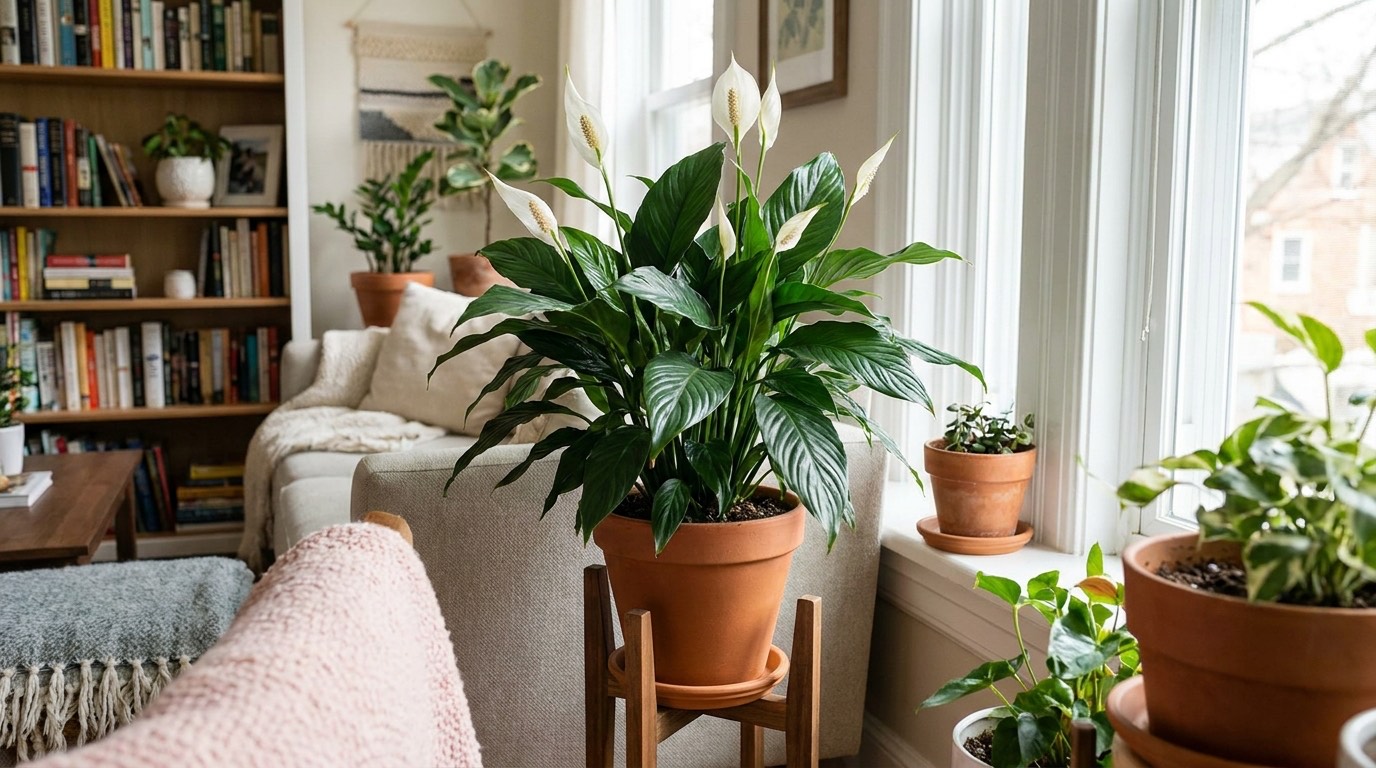
Few houseplants are as dramatic as a peace lily. One day it's upright and glossy; the next its leaves have collapsed over the side of the pot like it's fainted. The upside is that the peace lily is a communicator — that droop is it telling you something, and most of the time it's easy to fix.
Work through these in order, starting with the soil.
Feel the soil first — it decides everything
Before anything else, push a finger into the soil. Bone dry? You've almost certainly found your answer (see cause 1) — and the fix is quick. Wet and soggy? That's a very different, more serious problem (cause 2). This one check tells you which way to go.
The main causes
1. Thirsty — underwatered (most common, and the good news)
Peace lilies droop dramatically the moment they get too dry, and the soil will feel bone dry. This looks scary but is the easy case: they're built to bounce back.
The fix: Water thoroughly until it runs from the drainage holes. If the soil has gone hard and water runs straight through, sit the whole pot in a basin of water for 20–30 minutes to rehydrate it. The leaves usually perk back up within a few hours to a day. A peace lily that wilts and recovers a few times is fine, but try to water before it collapses.
2. Overwatered — root rot (the serious one)
If the soil is wet and the plant is drooping — often with yellowing leaves and a faint sour smell — the roots are suffocating and starting to rot. A rotting root system can't drink, so the plant wilts even though the soil is soaked.
The fix: Stop watering immediately. Make sure the pot has drainage and never sits in standing water. Let the soil dry out; in a bad case, slide the plant out, trim away any brown, mushy roots, and repot into fresh, well-draining soil. This is the one to catch early.
3. Too much direct sun
Peace lilies like bright, indirect light. Harsh direct sun scorches and stresses them, causing wilting and brown patches.
The fix: Move it a little back from the window, out of direct rays.
4. Recently repotted, or root-bound
A peace lily often sulks and droops for a week or two after repotting while it settles. At the other extreme, a badly root-bound plant dries out within a day of watering and wilts constantly.
The fix: After repotting, keep care steady and let it recover. If roots are circling the pot and it wilts almost daily, move it up one pot size.
5. Cold drafts or temperature stress
Sudden cold from a drafty window, door, or air-conditioning vent can make a peace lily droop.
The fix: Move it somewhere with stable, room-temperature conditions.
Diagnose a droop in one check
- Dry soil + droop = thirsty. Water well; it recovers in hours. The easy case.
- Wet soil + droop = root rot. Stop watering, check the roots. The serious case.
- Wilts within a day of watering every time? It's root-bound — repot up a size.
- Recently repotted? Give it two weeks to settle before worrying.
Frequently Asked Questions
Will my drooping peace lily recover?
If it drooped from thirst, almost always — water it well and it usually stands back up within a day. If it drooped from overwatering and root rot, recovery depends on how much healthy root is left, so act quickly to dry it out and trim rotten roots.
How often should I water a peace lily?
Rather than a fixed schedule, water when the top inch of soil feels dry — often about once a week, less in winter. Peace lilies actually prefer to tell you: many people water at the first sign of a slight droop, then before it fully collapses next time.
Why does my peace lily droop right after repotting?
Repotting disturbs the roots, and peace lilies are sensitive, so a week or two of drooping while it adjusts is normal. Keep light and watering consistent and don't fertilize until it has recovered.