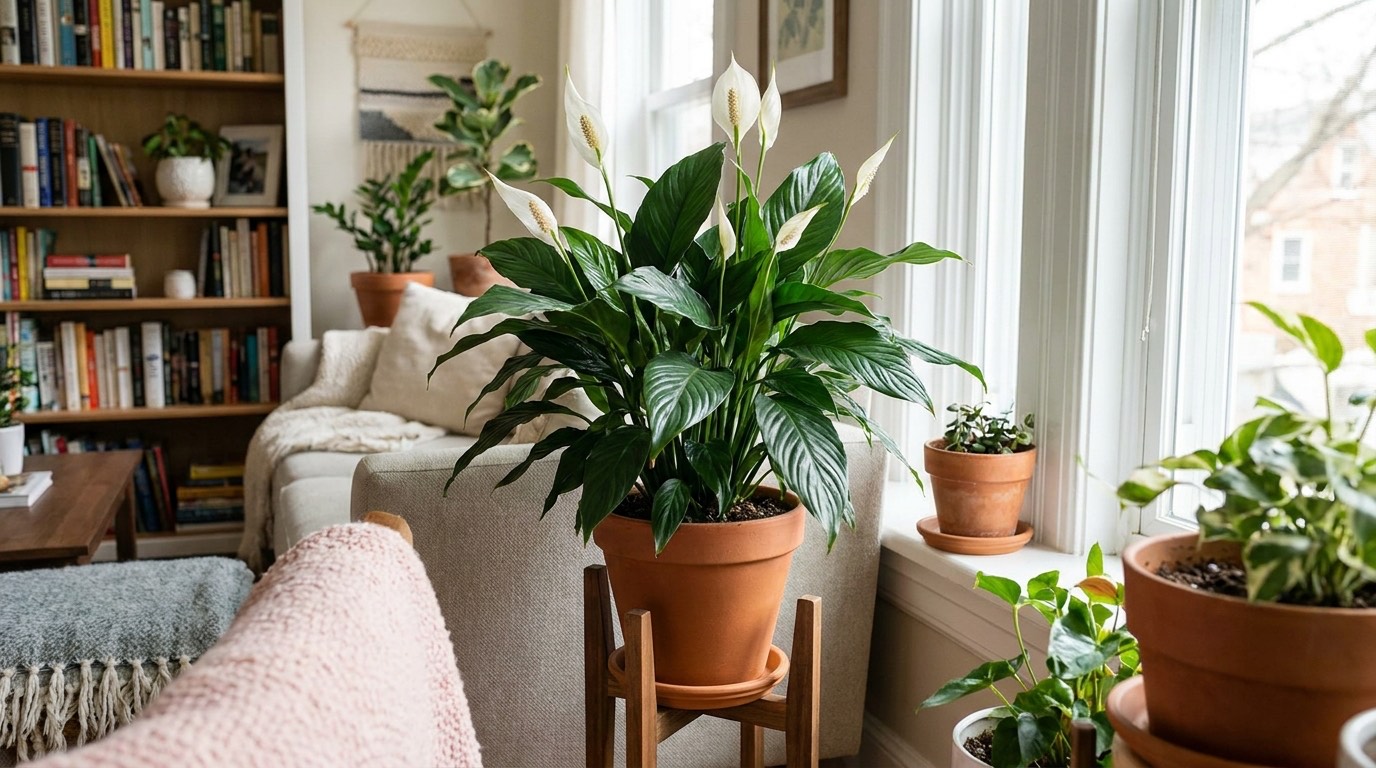
The peace lily (Spathiphyllum) is one of the few houseplants that reliably flowers indoors, sending up elegant white blooms above glossy dark leaves. It thrives in lower light, tolerates a range of conditions, and — best of all — it's wonderfully communicative: when it's thirsty, it droops dramatically, then springs back within hours of watering. It practically trains you to care for it.
Here's how.
The drooping is a feature
A wilting peace lily looks alarming, but it's just the plant's way of asking for water — and it recovers remarkably fast once watered. Use it as your cue rather than a strict schedule, and you'll rarely go wrong. (Just don't let it collapse repeatedly, which stresses it over time.)
Light
Peace lilies prefer low to medium indirect light — one of the reasons they work so well in offices and darker rooms. They tolerate quite low light, though they flower more in brighter (still indirect) light. Keep them out of direct sun, which scorches the leaves.
Watering
Water when the plant starts to droop, or when the top inch of soil is dry — usually about once a week. Water thoroughly until it drains, then empty the saucer.
Peace lilies, like spider plants, can get brown leaf tips from the fluoride and chlorine in tap water. If that's an issue, use filtered or rainwater, or let tap water sit out overnight.
Soil, humidity, and feeding
Use a well-draining potting mix in a pot with drainage. Peace lilies are tropical and appreciate some humidity — occasional misting or a spot in a bathroom or kitchen suits them, though they adapt to normal homes. Feed with a diluted houseplant fertilizer every 6–8 weeks in spring and summer to encourage blooms.
Getting it to flower
If your peace lily produces leaves but no flowers, it usually needs a little more (indirect) light. Move it closer to a window, keep it fed during the growing season, and be patient — blooming is seasonal. Old flowers that fade to green and brown can be snipped off at the base.
Peace lily care in five points
- Low to medium indirect light — more light means more flowers.
- Water when it droops or the top inch is dry; it recovers fast.
- Brown tips? Try filtered water.
- Feed every 6–8 weeks in the growing season for blooms.
- Keep it out of direct sun and enjoy some humidity.
Common problems
- Dramatic drooping — thirsty; water it and it bounces back within hours.
- Brown leaf tips — usually tap-water minerals or dry air; try filtered water.
- No flowers — too little light, or it isn't being fed; move it brighter and feed.
- Yellow leaves — often overwatering or an aging lower leaf. See why are my plant's leaves turning yellow?
Frequently Asked Questions
Why is my peace lily drooping?
Drooping is the peace lily's classic sign that it's thirsty. Water it thoroughly and it usually perks back up within a few hours. If the soil is wet and it's still drooping, the opposite may be true — overwatering and root rot — so check the soil first.
Why won't my peace lily flower?
The most common reason is too little light. Peace lilies tolerate low light but need brighter (indirect) light to bloom. Move it closer to a window, feed it during spring and summer, and give it time — flowering is seasonal.
Why does my peace lily have brown tips?
Brown leaf tips are usually caused by minerals like fluoride and chlorine in tap water, or by dry air and inconsistent watering. Try watering with filtered or rainwater and keep the soil evenly moist.
Is a peace lily toxic to pets?
Yes, peace lilies are toxic to cats and dogs if chewed, causing mouth and stomach irritation. Keep them out of reach of pets that like to nibble houseplants.