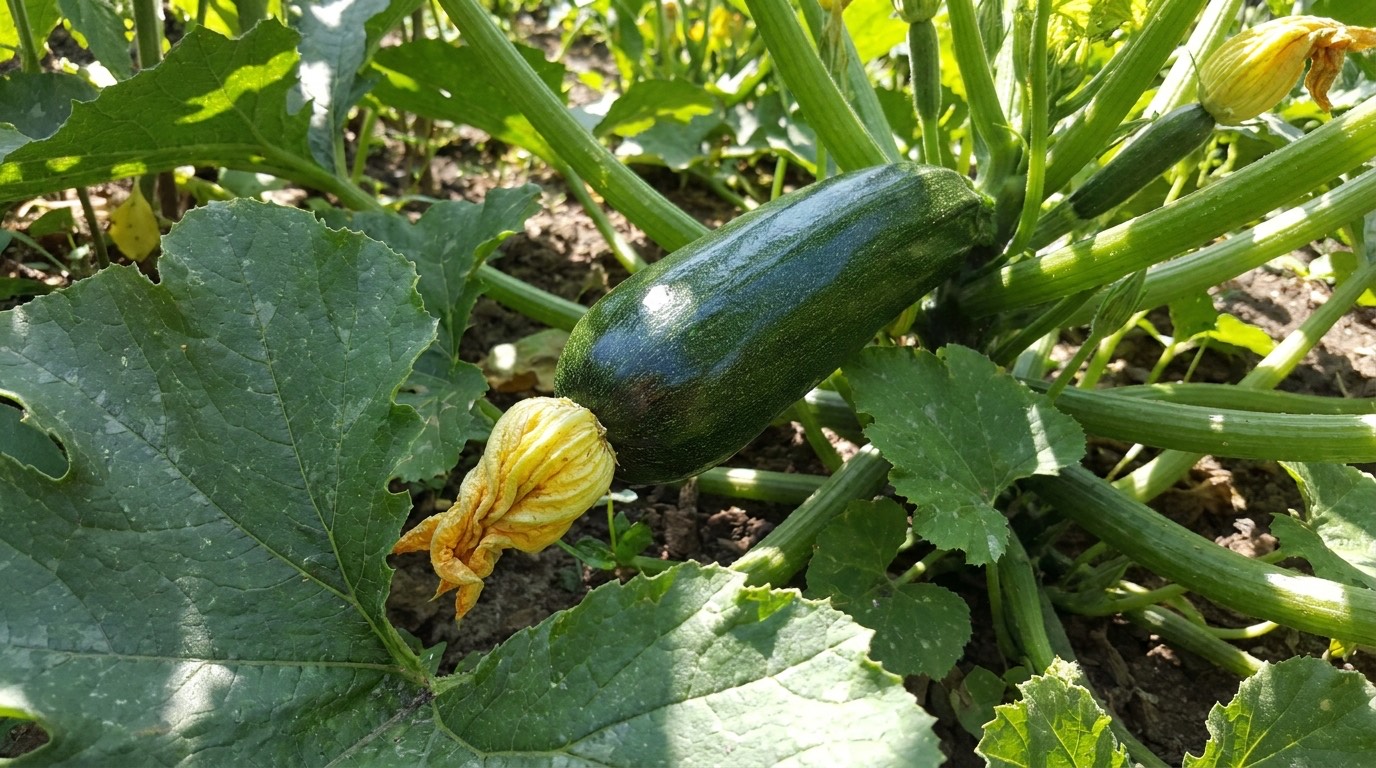
Zucchini is the crop that makes new gardeners feel like naturals. It grows fast, produces relentlessly, and asks for very little. In fact the classic beginner mistake isn't killing it — it's planting six and drowning in squash by August. One or two healthy plants will keep a household well supplied.
Here's how to grow it.
Warm and roomy
Zucchini is a warm-season squash that needs heat and space. Don't sow until 2 weeks after your last frost, when the soil is warm, and give each plant a good 2–3 feet — those big leaves spread wide. Cold soil and crowding are the two things it won't forgive.
Planting
Zucchini dislikes being transplanted, so direct-sow where it will grow:
- Once the soil is warm, plant seeds about 1 inch deep.
- Sow in groups and thin to the strongest one or two plants, spaced 2–3 feet apart.
- Water well; seedlings appear within a week.
Give it rich soil with plenty of compost — zucchini is a hungry, fast plant that eats up nutrients. One or two plants is genuinely enough for most families.
Watering and feeding
Those big leaves lose a lot of water, so water deeply and consistently — about 1–2 inches a week, more in heat. Water at the base, not over the leaves, to reduce disease, and mulch around the plant to hold moisture. See our watering guide.
A feed of balanced fertilizer or compost every few weeks keeps production going, though rich soil alone often does the job.
Understanding the flowers
Zucchini produces two kinds of flowers, and knowing this saves a lot of worry:
- Male flowers appear first, on thin straight stems. They provide pollen but no fruit — this is normal.
- Female flowers have a tiny zucchini at the base. When a bee moves pollen from male to female, that little fruit swells and grows.
If baby fruits shrivel and rot instead of growing, it's a pollination problem (common in cool, wet weather or where bees are scarce). Plant flowers nearby to draw pollinators — see how to attract bees and butterflies — or hand-pollinate by dabbing pollen from a male flower onto the center of a female one with a small brush.
Harvesting
Pick young and pick often. Zucchini are best at 6–8 inches long, when they're tender and full of flavor. At peak season, check the plant every day — they go from finger-sized to baseball-bat overnight.
Crucially, the more you harvest, the more the plant produces. Leave a few giant zucchini on the vine and the plant decides its job is done and slows right down. Cut fruit off with a knife or snips rather than twisting.
Growing zucchini in five points
- Plant in warm soil, one or two plants per household.
- Give each plant 2–3 feet of room.
- Water deeply at the base and feed for steady production.
- Early male-only flowers are normal; shriveled fruit means poor pollination.
- Harvest young and daily to keep it producing.
Common problems
- Baby fruit rots or shrivels when small — poor pollination. Attract bees or hand-pollinate.
- White powdery coating on leaves (powdery mildew) — very common late season. Improve airflow, water at the base, and remove badly affected leaves; the plant usually keeps producing.
- Sudden wilting and collapse — could be squash vine borer or bacterial wilt; check the base of the stem for damage.
- Plant slows down mid-summer — often because oversized fruit was left on; keep picking.
Frequently Asked Questions
Why is my zucchini flowering but not making fruit?
The first flowers on a zucchini plant are usually all male and won't produce fruit — that's completely normal. Female flowers, which have a tiny zucchini behind the bloom, come later. If small fruits form but then shrivel and rot, it's a pollination problem: encourage bees or hand-pollinate.
How often should I pick zucchini?
Check the plant every day during peak season. Zucchini grow astonishingly fast and are best picked young at 6–8 inches. Frequent harvesting keeps them tender and, importantly, signals the plant to keep producing more.
How many zucchini plants do I need?
For most families, just one or two plants. Zucchini is extremely productive, and a couple of healthy plants can produce more than enough all summer. Planting a whole row is how gardeners end up leaving bags of squash on neighbors' doorsteps.
What is the white powder on my zucchini leaves?
That's powdery mildew, a very common fungal issue late in the season. Improve air circulation by spacing plants well, water at the base rather than on the leaves, and remove heavily affected foliage. Plants often keep producing despite it.