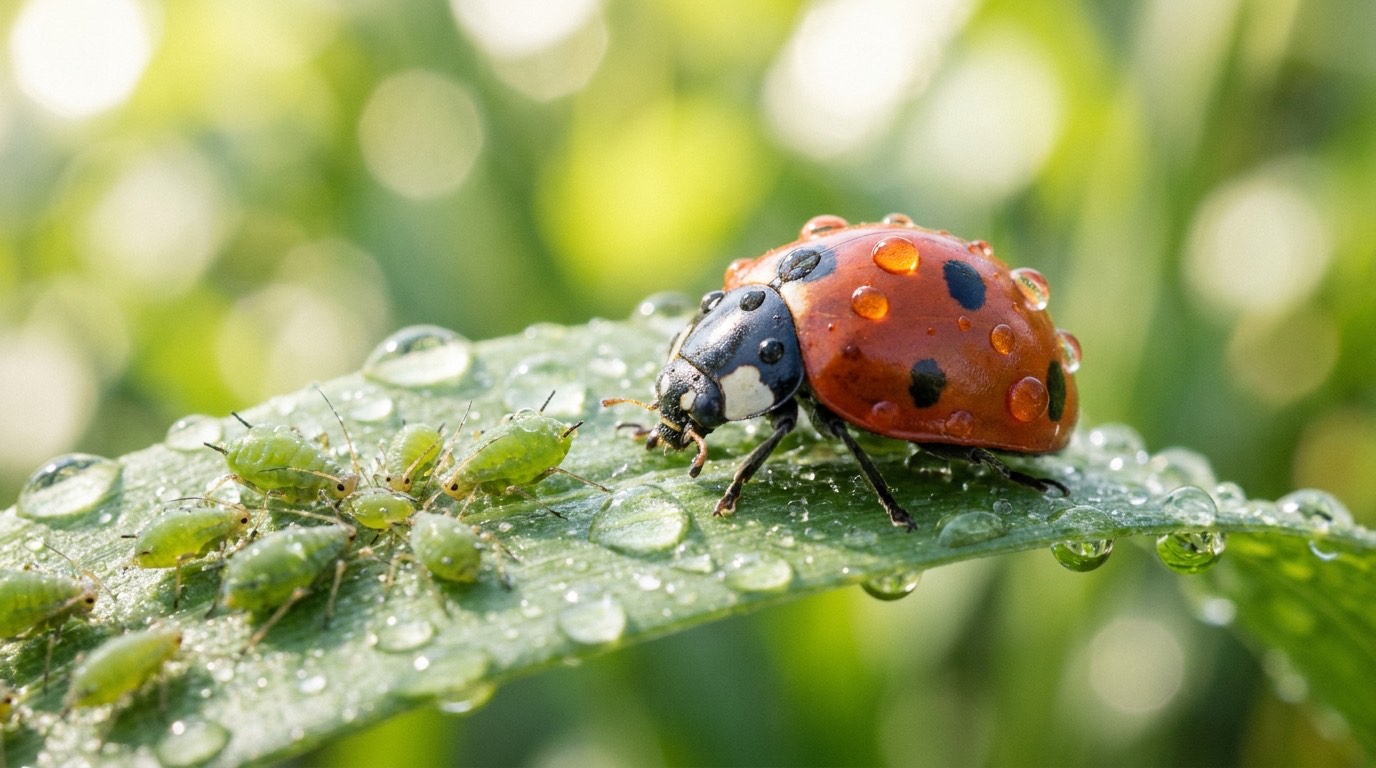
Sooner or later, something will chew a hole in your garden dreams — literally. Aphids, slugs, and their friends are part of growing, and panicking (or reaching straight for a spray) usually makes things worse. The goal isn't a pest-free garden — it's a balanced one, where predators keep problems in check and you step in only when you need to.
Here's how to identify the common offenders and deal with them, gentlest methods first.
Start gentle, spray last
Broad insecticides kill the good bugs — ladybugs, bees, and the predators that eat pests — along with the bad, often leaving you worse off. Work up the ladder: prevention → hand-removal → water/soap → targeted treatments, and treat chemical sprays as a genuine last resort.
Aphids
Tiny green, black, or white insects clustered on new growth and leaf undersides, leaving leaves curled and sticky. They're the most common garden pest of all.
How to stop them: Blast them off with a strong jet of water. Squish clusters by hand. Spray with insecticidal soap or a diluted dish-soap solution. Best of all, invite ladybugs — a single one eats dozens of aphids a day.
Slugs and snails
Ragged holes in leaves and slimy trails, worst in damp weather and overnight. Devastating to seedlings, lettuce, and hostas.
How to stop them: Hand-pick after dark with a flashlight (grimly effective). Set out shallow dishes of beer to trap them. Ring precious plants with crushed eggshells, grit, or copper tape. Water in the morning so beds are dry by nightfall.
Cabbage worms and caterpillars
Green caterpillars (often the larvae of those white cabbage butterflies) chewing big holes in brassicas — kale, cabbage, broccoli.
How to stop them: Pick them off by hand. Cover crops with lightweight floating row cover so the butterflies can't lay eggs. For heavy infestations, Bt (Bacillus thuringiensis) is a targeted, organic option.
Japanese beetles
Metallic beetles that skeletonize leaves in summer, feeding in groups on roses, beans, and many others.
How to stop them: Knock them into a bucket of soapy water in the early morning when they're sluggish. Skip the pheromone traps — they often attract more beetles to your yard than they catch.
Spider mites and whiteflies
Common on houseplants and in greenhouses. Spider mites cause fine stippling and webbing; whiteflies are tiny white insects that flutter up when disturbed.
How to stop them: Rinse plants, raise humidity (mites love it dry), and treat with insecticidal soap or neem oil, repeating weekly until they're gone.
Winning the pest battle
- Identify first — check leaf undersides and look for the actual culprit before treating.
- Encourage predators — ladybugs, lacewings, and birds do most of the work for free.
- Hand-removal and water sprays solve most problems.
- Row covers prevent damage before it starts.
- Keep plants healthy — strong plants shrug off pests weak ones can't.
Prevention beats cure
The best pest control is a healthy, diverse garden. Keep plants well-fed and watered so they can withstand some nibbling; grow a mix of plants and flowers to attract predators and confuse pests; rotate where you plant each year; and clear away debris where pests overwinter. A garden buzzing with bees, ladybugs, and birds mostly polices itself.
Frequently Asked Questions
What is eating holes in my plant leaves?
Ragged holes with slime trails mean slugs or snails; neat holes on brassicas point to cabbage worms; skeletonized leaves in summer suggest Japanese beetles; and clusters of tiny insects with curled, sticky leaves are aphids. Check leaf undersides and stems to confirm before treating.
How do I get rid of aphids naturally?
Blast them off with a strong spray of water, squish clusters by hand, and spray insecticidal soap on what remains. Attracting ladybugs and lacewings gives you long-term control, since they eat aphids constantly.
What is the safest pest control for a vegetable garden?
Start with prevention, hand-removal, water jets, and row covers, then insecticidal soap or neem oil for stubborn cases. These spare bees and predators. Avoid broad-spectrum insecticides, which kill beneficial insects and can make infestations worse.