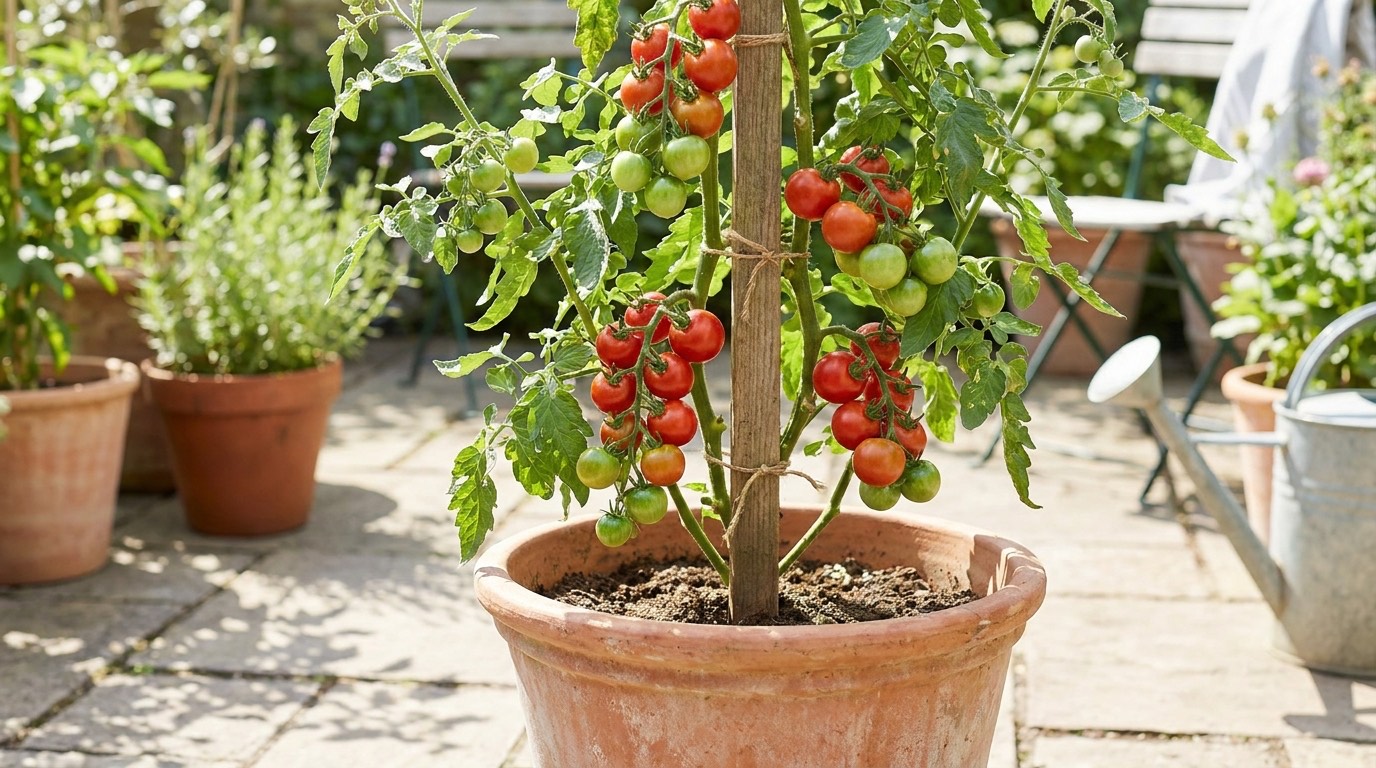
You don't need a garden to grow great tomatoes. A big pot on a sunny patio, balcony, or doorstep can produce a surprising harvest — and container growing lets you put the plant exactly where the sun is best. Get the pot size, soil, and watering right, and potted tomatoes rival anything from a garden bed.
Here's how.
Bigger pot, fewer problems
The single biggest mistake with container tomatoes is a pot that's too small. A cramped root ball dries out in hours, stresses the plant, and leads to poor fruit. Go as big as you reasonably can — it makes everything else easier.
Choose the right variety
Tomatoes come in two growth habits, and it matters for pots:
- Determinate (bush) tomatoes stay compact and set most of their fruit at once — ideal for containers. Look for varieties labeled "bush," "patio," or "container."
- Indeterminate (vining) tomatoes keep growing and fruiting all season but get tall and need sturdy support. They can be grown in pots, but need the biggest containers and a strong cage.
For a first try on a balcony, a bush or patio variety is the easiest win.
Pot size and soil
Size: Use at least a 5-gallon pot per plant — bigger is better. Half-barrels and large fabric grow-bags are excellent. Make sure it has drainage holes.
Soil: Never use garden soil in pots — it compacts and drains poorly. Fill with a quality potting mix enriched with compost. Tomatoes are hungry, so mixing in a slow-release fertilizer at planting helps.
Planting
Plant tomatoes deep — bury two-thirds of the stem, stripping off the lower leaves first. Tomatoes grow roots all along a buried stem, giving a stronger plant. Add a cage or stake at planting time, before the plant gets big. Wait until nights stay reliably above 50°F before putting pots outside.
For everything on starting the plants themselves, see how to grow tomatoes from seed to harvest.
Watering: the make-or-break
This is where potted tomatoes are won or lost. Containers dry out far faster than the ground, and tomatoes need steady moisture.
- In summer heat, expect to water every day, sometimes twice.
- Water deeply until it runs from the drainage holes.
- Consistency is everything — a cycle of bone-dry then flooded causes blossom end rot (the black sunken patch on the fruit's base) and split, cracked fruit.
A layer of mulch on top of the soil and a saucer beneath both help hold moisture. See our watering guide for the deep-watering method.
Feeding
Frequent watering flushes nutrients out of the pot, so container tomatoes need regular feeding. Once flowering begins, feed every 1–2 weeks with a fertilizer higher in potassium (the last number on the bag) to fuel fruit rather than leaves. See fertilizer basics.
Container tomatoes in five points
- Pick a bush or patio variety for the easiest results.
- Use a 5-gallon-plus pot with drainage and quality potting mix.
- Plant deep and add support at planting time.
- Water daily in heat — consistency prevents rot and splitting.
- Feed every 1–2 weeks once flowering starts.
Common problems
- Black sunken patch on the fruit base (blossom end rot) — caused by inconsistent watering. Keep moisture steady.
- Cracked, split fruit — irregular watering, often a heavy soak after a dry spell.
- Lots of leaves, little fruit — too much nitrogen; switch to a higher-potassium feed and make sure it gets full sun.
- Wilting despite watering — the pot may be too small and drying out; move to a bigger container.
Frequently Asked Questions
What size pot do I need for a tomato plant?
Use at least a 5-gallon container per plant, and larger if you can. Bush and patio varieties can manage in smaller pots, but big vining tomatoes need the largest containers you have. A bigger pot holds more moisture and nutrients, which means far fewer problems.
How often should I water tomatoes in pots?
Frequently — often once a day in summer, and sometimes twice in extreme heat. Containers dry out much faster than garden soil, and tomatoes need steady moisture. Water deeply until it drains from the bottom, and keep it consistent to prevent blossom end rot and cracking.
Can you grow tomatoes on a balcony?
Absolutely. As long as the spot gets 6–8 hours of direct sun, a balcony is a great place for container tomatoes. Choose a compact bush or patio variety, use a large pot with drainage, and stay on top of watering and feeding.
Why do my potted tomatoes get black spots on the bottom?
That's blossom end rot, and in containers it's almost always caused by uneven watering rather than a disease. Keep the soil consistently moist, mulch the surface, and never let the pot dry out completely between waterings.