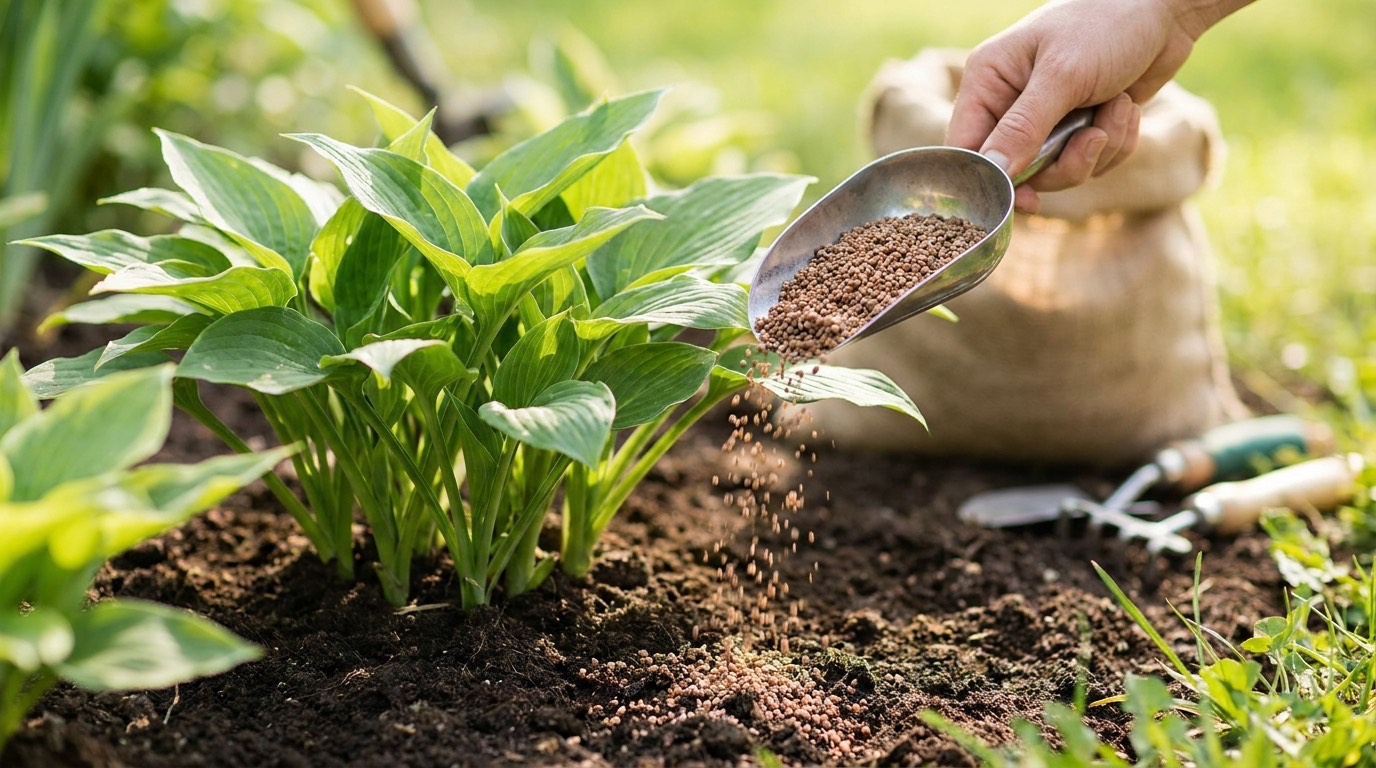
Stand in the fertilizer aisle and you'll see bags stamped with mysterious number trios — 10-10-10, 5-10-5, 4-6-3 — and shelves of products all promising bigger, better plants. It's genuinely confusing. But the system behind those numbers is simple once someone explains it, and understanding it saves you money and saves your plants from being over- or under-fed.
Here's the whole thing in plain English.
Feed the soil first, then the plant
Fertilizer is a supplement, not a foundation. Rich, compost-fed soil already contains most of what plants need. Think of fertilizer like a vitamin — helpful when something's lacking or a plant is a heavy feeder, but no substitute for healthy soil. When in doubt, add compost before you reach for a bag.
What the three numbers mean
Every fertilizer lists three numbers: N-P-K, the percentages of the three nutrients plants use most.
- N — Nitrogen: drives leafy green growth. Great for lawns, lettuce, and foliage; too much gives you lush leaves and little fruit.
- P — Phosphorus: supports roots, flowers, and fruit. Important for blooms and getting young plants established.
- K — Potassium: overall plant health and hardiness — helps flowering, fruiting, and resistance to stress and disease.
So a 10-10-10 is a balanced, all-purpose feed. A high-first-number blend (like 24-8-16) is a leaf-and-lawn booster. A higher middle-and-last blend (like a 5-10-10 "tomato" feed) pushes flowers and fruit.
Match the fertilizer to the job
- Leafy greens and lawns: higher nitrogen (first number).
- Tomatoes, peppers, and flowering/fruiting plants: lower nitrogen, higher potassium — too much N gives leaves instead of fruit.
- New transplants and root crops: a balanced feed helps them establish.
- Unsure? A balanced all-purpose fertilizer (like 10-10-10) is a safe default for most gardens.
Organic vs. synthetic
- Synthetic fertilizers are fast-acting and precise, but feed the plant directly and can burn roots or wash away if overused.
- Organic options (compost, manure, blood meal, bone meal, fish emulsion) release slowly and feed the soil life as well as the plant — gentler, longer-lasting, and harder to overdo.
For a beginner, organic and slow-release feeds are the more forgiving choice.
How and when to feed
- Feed during the active growing season (spring and summer), not when plants are dormant.
- Follow the label and, if anything, use less than it says — over-fertilizing is far more damaging than under.
- Water before and after applying granular fertilizer so it doesn't burn roots.
- Liquid feeds act fast (good mid-season); granular slow-release feeds last for weeks.
Fertilizer without the confusion
- N-P-K = Nitrogen (leaves), Phosphorus (roots/flowers), Potassium (overall health).
- Balanced (10-10-10) is a safe all-purpose default.
- Low nitrogen, higher potassium for tomatoes and flowers.
- Compost first — fertilizer supplements good soil, it doesn't replace it.
- Less is more — over-feeding harms plants and pollutes waterways.
Signs you're over-fertilizing
More is not better. Watch for a crust of fertilizer on the soil, brown, scorched leaf edges, wilting despite moist soil, or lots of leaves but no flowers or fruit (too much nitrogen). If you see these, flush the soil with water and hold off feeding. A slightly hungry plant is easy to fix; a burned one takes weeks to recover.
Frequently Asked Questions
What do the numbers on fertilizer mean?
They're the percentages of nitrogen (N), phosphorus (P), and potassium (K), always in that order. For example, 10-10-10 is 10% of each — a balanced blend. Nitrogen feeds leaves, phosphorus feeds roots and flowers, and potassium supports overall health.
What is the best fertilizer for vegetables?
For leafy greens, choose a higher-nitrogen feed; for tomatoes, peppers, and other fruiting crops, use a lower-nitrogen, higher-potassium feed. When unsure, a balanced all-purpose fertilizer plus plenty of compost works for most vegetable gardens.
Can you over-fertilize plants?
Yes, and it's more harmful than under-feeding. Too much fertilizer burns roots, scorches leaf edges, causes weak leafy growth with no fruit, and can pollute waterways. Always follow the label and lean toward using less.