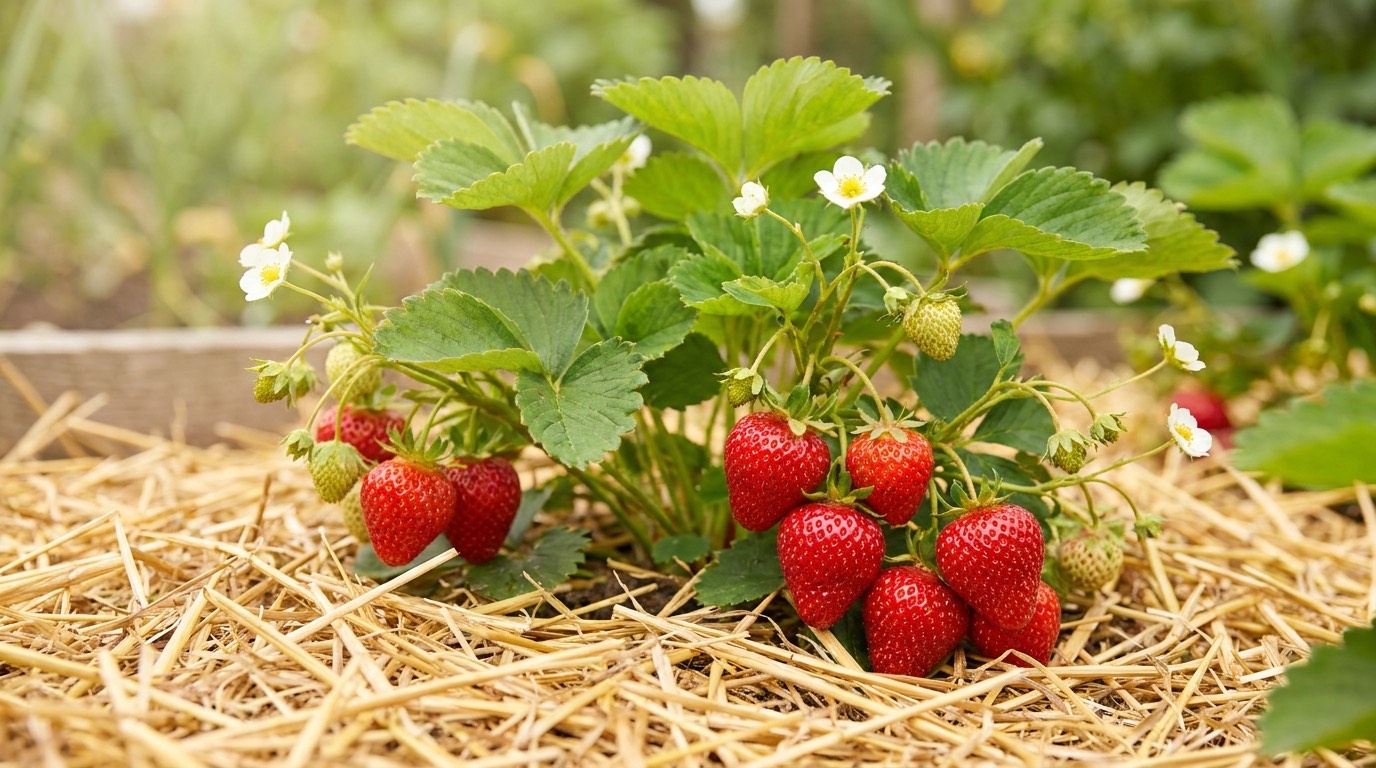
A sun-warmed strawberry picked straight from the plant is one of gardening's great rewards — sweeter and softer than anything a store can sell. And they're genuinely easy: strawberries are compact, happy in pots or beds, and come back year after year. One small patch can keep you in berries every summer.
Here's how to grow them.
Know your type before you buy
Strawberries come in three types, and it changes when you'll harvest. June-bearing gives one big flush in early summer (best for freezing and jam). Everbearing and day-neutral produce smaller amounts spread across the whole season (best for fresh snacking). For steady picking, choose everbearing or day-neutral.
Where and when to plant
Strawberries want full sun — at least 6 hours a day for sweet, abundant fruit. Give them rich, well-draining soil with compost worked in; they like it slightly acidic.
Plant in early spring as soon as the soil can be worked, or in fall in mild climates. They grow well in:
- Garden beds — space plants about 12–18 inches apart.
- Containers, pots, and hanging baskets — ideal, because it keeps the fruit up off the ground and away from slugs. See container gardening for beginners.
Planting depth matters
This is the one thing people get wrong: plant strawberries so the crown (the point where the leaves meet the roots) sits right at soil level. Bury it and the plant rots; leave the roots exposed and it dries out. Spread the roots down, and settle the crown flush with the surface.
Watering and feeding
Strawberries have shallow roots, so keep the soil consistently moist — about 1 to 1.5 inches of water a week, more in heat and for potted plants, which dry out fast. Water at the base to keep the berries and leaves dry.
Feed with a balanced fertilizer when growth starts in spring, and again after the first harvest. Don't overdo nitrogen or you'll get lush leaves and few berries — see fertilizer basics.
Mulch to keep berries clean
Tuck straw or another mulch under and around the plants (this is literally where "straw-berry" may come from). Mulch keeps the ripening fruit off the soil so it doesn't rot, holds in moisture, and suppresses weeds. In pots, the fruit simply trails over the edge.
The first-year tip: pinch early flowers
For June-bearing types especially, it's worth pinching off the flowers in the first few weeks after planting. It feels wrong, but it sends the plant's energy into strong roots and runners, giving you a much bigger harvest later. Everbearing types can be allowed to fruit after the first flush.
Runners and year-round care
Strawberries send out runners — long stems with baby plants at the tips. Let a few root to expand your patch, or trim them off to push energy into fruit. Plants stay productive for about 3–4 years; start fresh plants from runners before the old ones fade. In cold climates, mulch over the plants for winter and they'll return in spring.
Growing strawberries in five points
- Full sun and rich, moist soil for the sweetest fruit.
- Plant the crown right at soil level — not buried, not exposed.
- Mulch with straw to keep berries clean and dry.
- Pinch first-year flowers for a bigger harvest later.
- Root runners to renew the patch every few years.
Common problems
- Lots of runners, few berries — the plant is spreading instead of fruiting. Trim excess runners, and renew old plants.
- Berries rotting or half-eaten — slugs and damp soil. Mulch with straw, water in the morning, and pick ripe fruit promptly.
- Small or no fruit — too little sun, too much nitrogen, or first-year plants still establishing.
- Birds beating you to the ripe ones — drape netting over the plants as fruit colors up.
Frequently Asked Questions
How long do strawberry plants take to produce fruit?
It depends on the type and when you plant. June-bearing plants set for their big harvest the summer after planting, while everbearing and day-neutral types can fruit within a few months. Pinching off the first-year flowers on June-bearers delays fruit but gives a much larger harvest.
Can I grow strawberries in pots?
Yes — pots, hanging baskets, and containers are ideal for strawberries. Growing them raised up keeps the fruit clean and away from slugs. Just water more often, since containers dry out faster than garden beds, and make sure the pot has drainage.
Why is my strawberry plant not producing fruit?
Common causes are too little sun (they need at least 6 hours), too much nitrogen fertilizer encouraging leaves over berries, or plants that are still young and putting energy into roots and runners. Older plants over 3–4 years old also slow down and should be replaced.
Do strawberry plants come back every year?
Yes, strawberries are perennials that return each spring for about 3 to 4 productive years. Mulch them over winter in cold climates. As older plants decline, root their runners into new plants to keep the patch going.