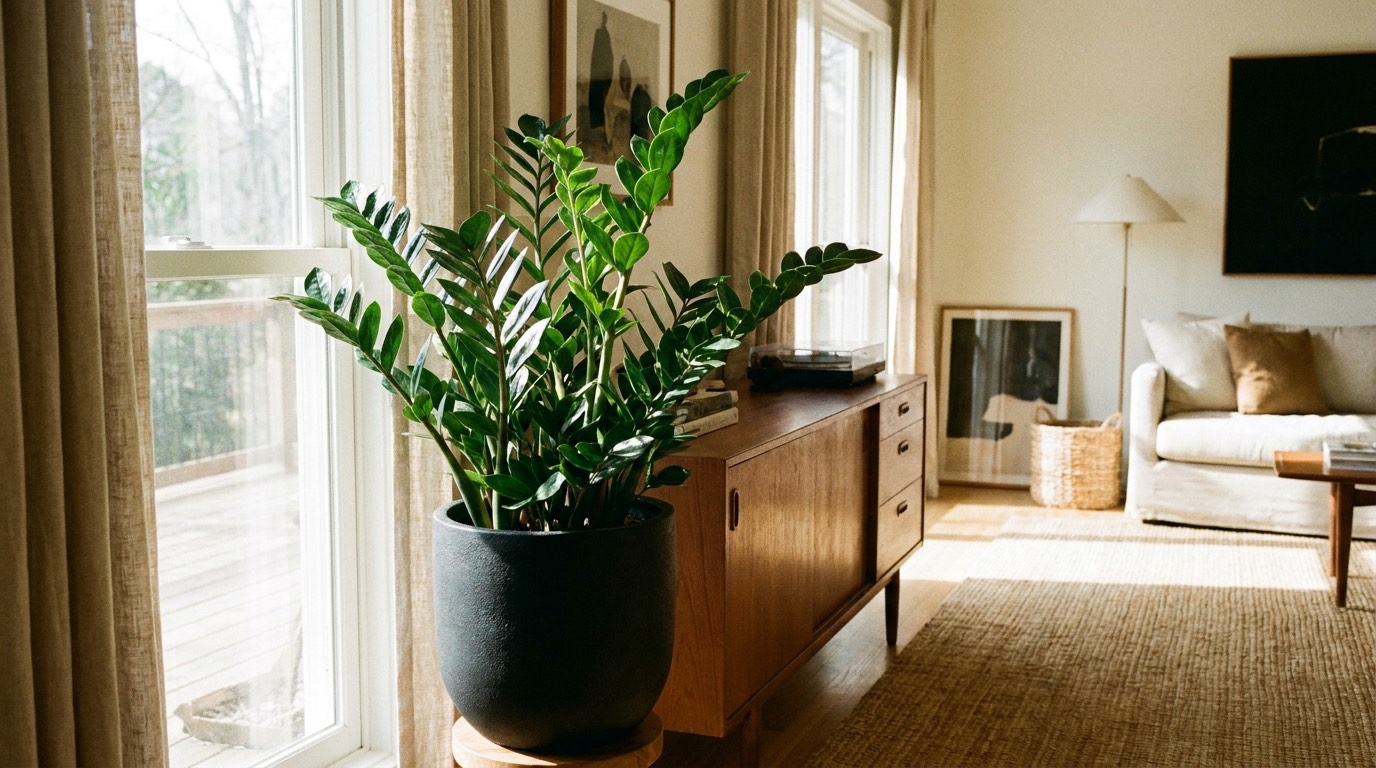
The ZZ plant (Zamioculcas zamiifolia) is one of the toughest houseplants you can own — it thrives on neglect and shrugs off low light. So when its glossy leaves start yellowing, it's genuinely surprising. In nearly every case, there's one cause behind it, and it's the opposite of what people instinctively do: too much water.
Here's how to be sure, and how to fix it.
The ZZ is built to store water
Underground, a ZZ plant grows fat potato-like rhizomes that hoard water, which is exactly why it survives being forgotten. That same design means it's very easily overwatered: give it more than it can store and the rhizomes rot, and the first thing you see above the soil is yellowing leaves. With a ZZ, yellow almost always means "too wet," not "too dry."
The main causes
1. Overwatering (the cause, nine times out of ten)
Widespread yellowing, sometimes with soft or mushy stems at the base and soil that's staying wet, means the rhizomes are waterlogged and beginning to rot.
The fix: Stop watering right away. Make sure the pot drains freely and never sits in water. Let the soil dry out completely — a ZZ is happy being watered only every 2–3 weeks, or even less in low light and winter. If stems are mushy, unpot it, cut away any soft, rotten rhizomes and roots, let it dry, and repot into fresh well-draining soil. Then water far less than you think you need to.
2. Underwatering (rare, but possible)
Because they're so drought-tolerant, ZZ plants only yellow from dryness in real extremes — bone-dry soil for many weeks, with wrinkled stems.
The fix: Give it a thorough drink, let the excess drain, and return to a sparing schedule. This is far less common than overwatering, so don't reach for the watering can unless the soil is genuinely bone dry.
3. Too much direct sun
ZZ plants prefer bright, indirect light and tolerate shade. Harsh direct sun can scorch and yellow the leaves.
The fix: Move it out of direct rays into bright, indirect light — or a lower-light spot, which it handles happily.
4. Natural aging
An occasional single old leaf yellowing and dropping, while the rest of the plant looks great, is just normal aging.
The fix: Nothing — remove the old leaf and carry on.
The ZZ rule of thumb
- Yellow leaves almost always mean overwatering. Dry it out first.
- Check the base for soft, mushy stems — the sign of rhizome rot.
- Water only when the soil is fully dry, every 2–3 weeks at most.
- When in doubt, don't water. A ZZ forgives drought, not sogginess.
Frequently Asked Questions
Will yellow ZZ leaves turn green again?
No — once a leaf yellows it won't recover, so you can remove it. What matters is that new growth comes in green and healthy once you've corrected the watering, which is the real fix.
How often should I water a ZZ plant?
Only when the soil has dried out completely — commonly every 2–3 weeks, and less in low light or winter. The ZZ stores its own water, so infrequent watering is exactly what it wants. Overwatering is the number one way people harm them.
My ZZ stems are turning yellow and mushy at the base — what now?
That's rhizome rot from overwatering. Unpot the plant, cut away any soft, brown rhizomes and roots with a clean knife, let it air-dry, and repot into fresh, fast-draining soil. Then water sparingly. Caught early, ZZ plants often bounce back.