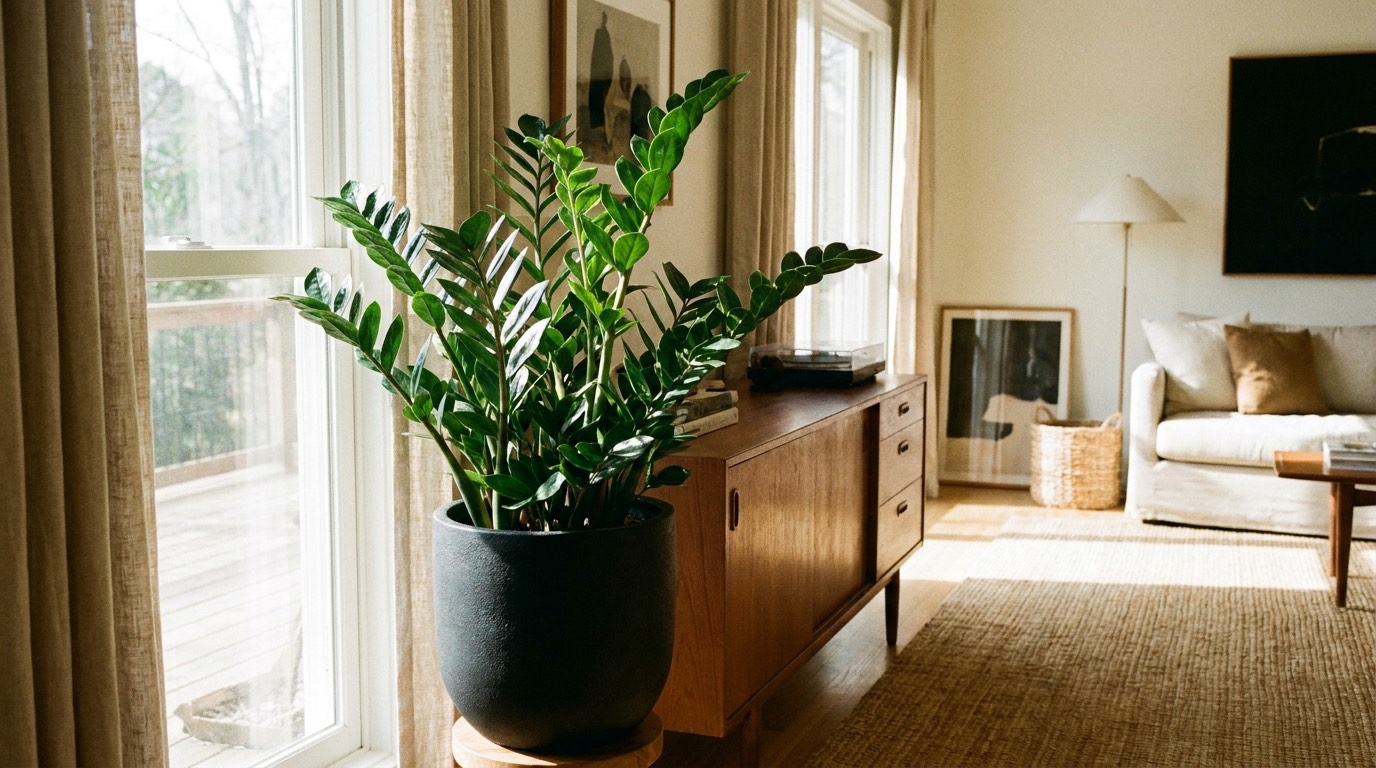
If you want a houseplant that looks polished and asks for almost nothing, the ZZ plant (Zamioculcas zamiifolia) is hard to beat. Its glossy, deep-green leaves grow in elegant upright wands, and it tolerates conditions that would kill fussier plants — low light, dry air, and long stretches without water. It's a favorite for offices and dim corners for exactly this reason.
Here's how to keep one happy.
Built-in water storage
The ZZ plant grows from thick underground rhizomes that store water, which is why it can go weeks between drinks. That same feature is why overwatering — not neglect — is the one thing that will kill it.
Light
ZZ plants are wonderfully flexible:
- Bright, indirect light gives the fastest, fullest growth.
- Low to medium light is tolerated well — they just grow more slowly.
- Avoid harsh direct sun, which can scorch the leaves.
This adaptability makes them ideal for windowless offices and dim rooms where little else survives.
Watering
Here's the whole secret: water only when the soil is completely dry, which is usually every 2–3 weeks, and even less in winter.
- Check that the soil is dry all the way down.
- Water thoroughly until it drains from the bottom.
- Empty the saucer and wait.
Overwatering causes the rhizomes to rot, so when in doubt, wait. A thirsty ZZ plant recovers instantly; a waterlogged one often doesn't.
Soil, pot, and feeding
Use a well-draining potting mix in a pot with a drainage hole. Feed lightly with a diluted houseplant fertilizer once or twice in spring and summer — it's not a heavy feeder. ZZ plants are slow growers and don't need frequent repotting; every 2 years, or when the rhizomes push against the pot, is plenty.
ZZ plant care in five points
- Any light works — bright indirect is best, low light is fine.
- Water only when bone dry, roughly every 2–3 weeks.
- Overwatering is the only real danger — err toward drought.
- Use a pot with drainage and well-draining mix.
- Feed lightly in the growing season, not in winter.
Common problems
- Yellowing leaves — almost always overwatering; let the soil dry out fully and check for soft, rotted rhizomes. See why are my plant's leaves turning yellow?
- Wrinkled stems or leaves dropping — underwatered, finally. Give it a thorough drink.
- Leggy, stretched growth — reaching for more light; move it somewhere brighter.
- Brown leaf tips — usually dry air or inconsistent watering.
Frequently Asked Questions
How often should I water a ZZ plant?
Only when the soil is completely dry, which is usually every 2 to 3 weeks and even less in winter. ZZ plants store water in their rhizomes, so they tolerate drought far better than overwatering. When unsure, wait a few more days.
Can a ZZ plant survive in low light?
Yes. ZZ plants tolerate low light better than most houseplants, which is why they thrive in offices and dim corners. They'll grow more slowly than in bright indirect light, but they stay healthy with very little.
Why are my ZZ plant's leaves turning yellow?
Yellowing is almost always a sign of overwatering. Let the soil dry out completely, make sure the pot drains freely, and check the rhizomes for softness or rot. Cut back on watering and the plant usually recovers.
Is a ZZ plant toxic to pets?
Yes, ZZ plants are toxic to cats and dogs if chewed or eaten, causing mouth irritation and stomach upset. Keep them out of reach of curious pets.