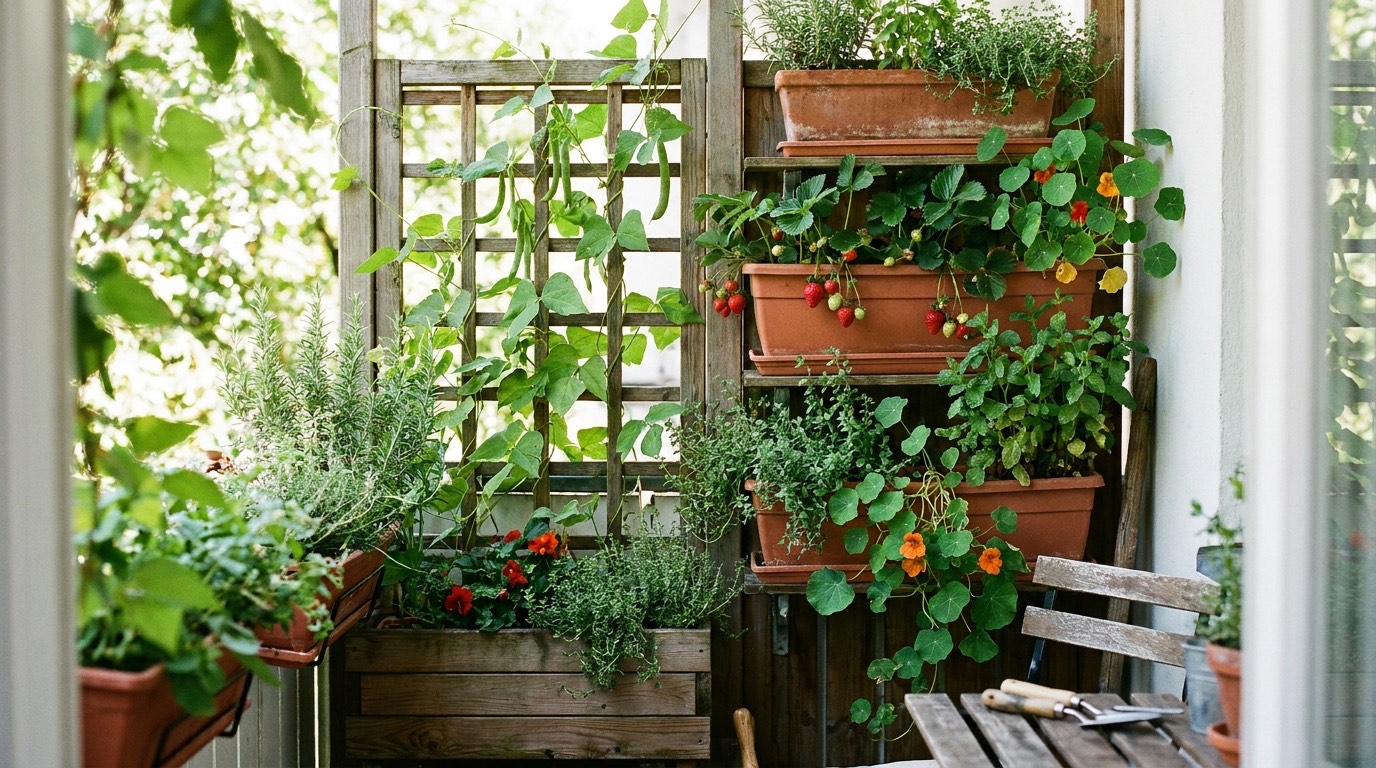
The most common reason people think they can't garden is space. But gardens don't only grow outward — they grow up. A bare wall, a railing, a fence, or a single trellis can hold a surprising amount of food and flowers, and vertical growing keeps plants off the ground where they get better air, more light, and fewer pests. If you've got a balcony, a patio, or just a sunny wall, you have room to garden.
Here's how to make the most of vertical space.
Check your sun first
Before you build anything, watch where the sun actually falls on your wall or balcony. A south- or west-facing spot gets the most; a north-facing one is shadier. Put sun-loving crops (tomatoes, peppers, most flowers) in the brightest zone and shade-tolerant greens and herbs where the light is weaker.
Ways to garden vertically
- Trellises and netting — the classic. Perfect for natural climbers: peas, beans, cucumbers, and vining flowers like morning glory and sweet peas.
- Wall-mounted pockets and pouches — fabric or felt planters that hang on a wall or railing, great for herbs, lettuce, and strawberries.
- Stacked and tiered planters — a small footprint that multiplies your growing area upward.
- Railing planters — hook over a balcony rail to use dead space.
- Hanging baskets — ideal for trailing tomatoes, strawberries, and flowers.
- Repurposed shelving or a ladder — line up pots on steps to catch light at every level.
Best plants for growing up
- Natural climbers: pole beans, peas, cucumbers, small squash, vining tomatoes.
- Trailing crops for baskets and high pockets: cherry tomatoes, strawberries, trailing herbs.
- Compact, shallow-rooted crops for wall pockets: lettuce, spinach, herbs, radishes.
- Vertical flowers: morning glory, sweet peas, nasturtiums, climbing roses.
Watering is the catch
The one real challenge of vertical gardening is water. Small containers and wall pockets hold little soil, dry out fast, and the top of a vertical setup dries quicker than the bottom.
- Check daily in warm weather — vertical planters can need water more than once a day in summer heat.
- Use larger containers where you can, and mix in water-retaining compost.
- A simple drip line on a timer is the single best upgrade for a vertical garden, removing the main way it fails.
Build it safe and sturdy
Wet soil is heavy. Make sure trellises are firmly anchored, wall fixings can hold a loaded planter, and balcony railings can bear the weight. Point drainage away from your neighbors below, and check that your building or HOA allows what you're hanging.
Grow up, not out
- Follow the sun — brightest spot for fruiting crops, shade for greens.
- Match the method to the plant — trellises for climbers, pockets for herbs, baskets for trailers.
- Water often — small containers dry fast; a drip timer helps hugely.
- Anchor everything securely — soaked soil is heavy.
Frequently Asked Questions
What vegetables grow well vertically?
Natural climbers are best: pole beans, peas, cucumbers, and vining tomatoes on a trellis, plus trailing cherry tomatoes and strawberries in hanging baskets. Compact greens and herbs suit wall pockets.
How do I start a vertical garden on a balcony?
Check your sun, then add railing planters, a wall of pockets, or a tiered planter suited to that light. Use potting mix and containers with drainage, plant climbers and trailers, and water daily in warm weather.
Do vertical gardens need more water?
Yes. The small soil volume in vertical planters dries out quickly, and the top dries faster than the bottom. Check daily in summer, and a drip line on a timer makes vertical gardens far more reliable.