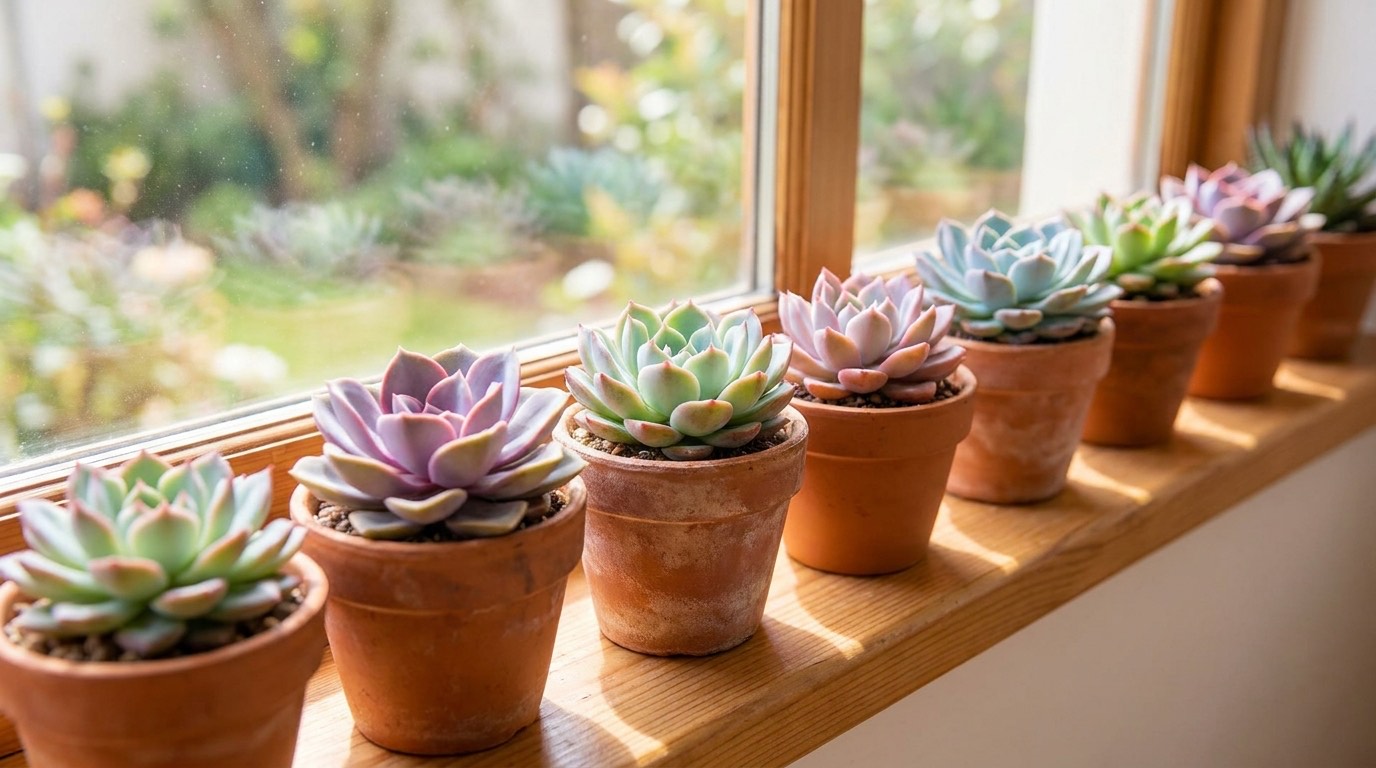
Succulents are sold as the ultimate low-effort plant, and outdoors in the right climate they are. Indoors, though, most people accidentally kill them — not by neglect, but by caring too much. Get two things right, light and watering, and a windowsill of succulents will stay plump and colorful for years.
Here's the routine.
Why succulents are different
Succulents evolved in dry places, storing water in their fleshy leaves and stems to survive drought. That means they want the opposite of most houseplants: bright light, a thorough soak, and then a long, complete dry-out. Watering them "a little every few days" is exactly what rots them.
Light: the make-or-break factor
Succulents need lots of light — more than almost any other indoor plant.
- A bright, south- or west-facing window with several hours of direct sun is ideal.
- In dim light they stretch — growing tall, pale, and leggy as they reach for the window. This is called etiolation, and it's the most common sign your succulent needs more light.
- Rotate the pot every week so it grows evenly instead of leaning.
If you don't have a bright enough window, a small grow light makes all the difference.
Watering: soak, then forget
The golden rule: water thoroughly, then wait until the soil is completely dry before watering again.
- When the soil is bone dry (and the leaves may look slightly less firm), water until it runs out the drainage hole.
- Empty the saucer — never let the pot sit in water.
- Wait. Depending on your home and season, that's often every 2–3 weeks.
Signs you're overwatering: leaves turning translucent, yellow, mushy, or dropping off at the touch. Signs you're underwatering (much easier to fix): leaves looking wrinkled, soft, and deflated. When unsure, wait — a thirsty succulent recovers overnight.
Soil and pots
This matters more than people expect. Use a gritty cactus/succulent mix (or regular potting soil cut with perlite or coarse sand) in a pot with a drainage hole. Terracotta is ideal because it dries the soil faster. A succulent in dense, water-holding soil without drainage is on borrowed time no matter how carefully you water.
Temperature and feeding
Normal room temperatures suit them. Most succulents like it warm and dislike cold drafts and frost. Feeding is optional — a diluted, low-strength fertilizer once or twice in spring and summer is plenty.
Propagating
Many succulents grow from a single dropped leaf. Lay a healthy leaf on top of dry succulent soil, keep it in bright light, and mist lightly every few days. In a few weeks tiny roots and a baby plant appear at the base.
Indoor succulents in five points
- Give them the brightest spot you have — stretching means too little light.
- Soak fully, then let the soil dry out completely.
- Underwatering is easy to fix; overwatering usually isn't.
- Use gritty mix and a pot with drainage.
- Feed lightly in summer, not in winter.
Common problems
- Stretched, pale, leggy growth — not enough light. Move to your brightest window or add a grow light.
- Mushy, translucent, yellowing leaves — overwatering and rot. Stop watering, and if the stem is soft, behead the healthy top and re-root it in dry mix.
- Wrinkled, shriveled leaves — thirsty. Water thoroughly.
- Brown spots after moving it — sunburn from too much sudden direct sun; acclimate gradually.
Frequently Asked Questions
How often should I water indoor succulents?
Only when the soil has dried out completely — often every 2 to 3 weeks, less in winter. Water thoroughly when you do, let it drain, and never leave the pot sitting in water. Overwatering is the main cause of succulent death.
Why is my succulent growing tall and stretched out?
That stretching (etiolation) means it isn't getting enough light. Succulents need bright light, ideally some direct sun. Move it to your sunniest window or use a grow light; the stretched growth won't reverse, but new growth will be compact.
Why are my succulent's leaves falling off and mushy?
Soft, translucent, mushy leaves that drop easily are a classic sign of overwatering. Stop watering, let the soil dry fully, and make sure the pot has drainage and gritty soil. Firm but wrinkled leaves mean the opposite — it's thirsty.
Do succulents need special soil?
Yes. They need a fast-draining gritty mix — either a bagged cactus/succulent soil or regular potting mix amended with perlite or coarse sand. Dense, moisture-holding soil keeps the roots too wet and leads to rot.