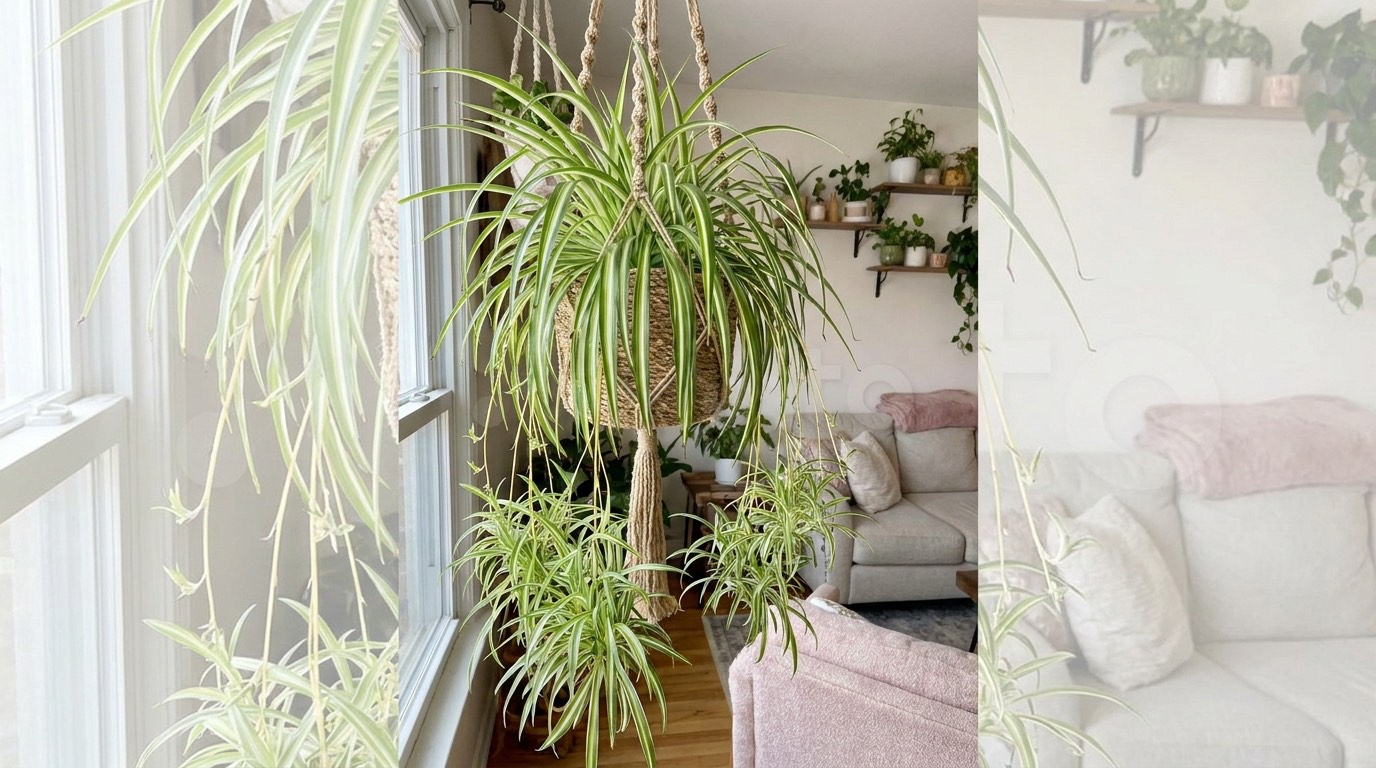
Spider plants are famously easy — which makes it all the more annoying when the tips of those arching leaves turn crispy and brown. It's the single most common spider-plant complaint, and it rarely means the plant is in danger. Most often, it's reacting to what's in your tap water.
Here's why, and how to keep new leaves clean.
Spider plants are unusually sensitive to tap water
Spider plants don't tolerate the fluoride, chlorine, and salts in tap water as well as most houseplants do. Those minerals build up in the leaves and burn the tips — the part of the leaf farthest from the roots, where they concentrate. It's not a disease; it's a slow chemical build-up.
The main causes
1. Minerals in tap water (the usual culprit)
Fluoride and chlorine in municipal water are the classic cause of brown tips on spider plants.
The fix: Water with filtered, distilled, or rainwater where you can. If that's not practical, fill your watering can and let the tap water sit out overnight before using it — this lets some chlorine dissipate (though it won't remove fluoride).
2. Salt build-up from fertilizer
Too much fertilizer leaves salts in the soil, and those also scorch the tips.
The fix: Feed lightly, no more than monthly in spring and summer, and every couple of months flush the soil — run water through the pot several times to rinse accumulated salts out the drainage holes.
3. Inconsistent or insufficient watering
Letting the plant swing between bone-dry and soaked stresses it and browns the tips.
The fix: Keep watering even — water when the top inch of soil is dry, and don't let it dry out completely for long stretches.
4. Dry air
Very dry indoor air, especially near heating in winter, can contribute to crispy tips.
The fix: Grouping plants together or setting the pot on a pebble tray raises local humidity a little. Spider plants aren't fussy about this, so it's a minor factor compared with water quality.
What about the tips that are already brown?
An already-brown tip won't turn green again. If it bothers you, trim it off — snip along the natural leaf shape with clean scissors, leaving a thin sliver of brown so you don't open a fresh wound. Then focus on keeping new growth clean by fixing the water.
Clean tips, the short version
- Tap water is usually the cause — switch to filtered, distilled, or rainwater.
- No filter? Let tap water sit out overnight before using it.
- Flush the soil occasionally to clear fertilizer salts.
- Trim brown tips to tidy up — they won't regreen, but new leaves will come in clean.
Frequently Asked Questions
Are brown tips harmful to my spider plant?
No — they're cosmetic. A spider plant with brown tips is almost always perfectly healthy overall and will keep growing and producing babies. It's only the very ends of older leaves that are affected.
Should I cut off the brown tips?
You can, purely for looks. Trim along the leaf's natural point with clean scissors. It won't fix the cause, so pair it with switching to filtered water to keep new leaves green.
Does letting tap water sit really help?
It helps with chlorine, which evaporates when water sits out overnight, but it won't remove fluoride. For fluoride-sensitive spider plants, filtered, distilled, or rainwater is the more reliable fix.