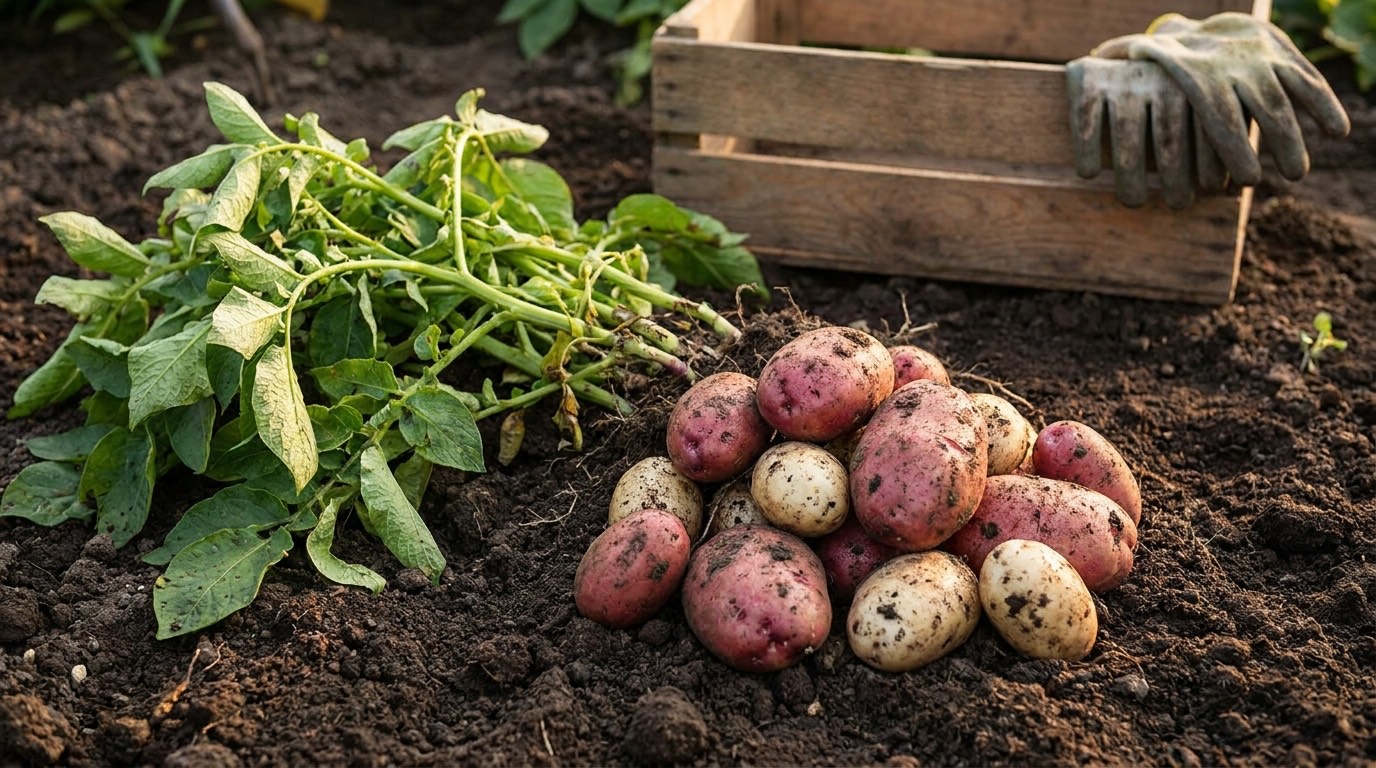
Potatoes might be the most rewarding crop for a beginner — not because they're difficult (they're not), but because harvesting them feels like digging for buried treasure. Plant a few chunks in spring, mound soil over them as they grow, and tip out a pile of homegrown potatoes months later. You can do it in a garden bed or a single grow-bag on a patio.
Here's how.
Start with seed potatoes
Don't plant potatoes from the grocery store — they're often treated to resist sprouting and can carry disease. Buy certified seed potatoes from a garden center instead. These are small potatoes grown specifically for planting, and they'll give you a healthy, productive crop.
Chitting (optional head start)
A few weeks before planting, you can "chit" your seed potatoes — set them in an egg carton in a cool, bright spot until short green sprouts form. It's not essential, but it gives them a head start. Cut larger seed potatoes into chunks, each with 1–2 sprouts ("eyes"), and let the cut surfaces dry for a day before planting.
Planting
Potatoes are a cool-season crop, planted in spring, about 2 weeks before your last frost:
- Plant chunks 4 inches deep and about 12 inches apart, cut side down, sprouts up.
- Choose a full-sun spot with loose, rich, well-draining soil.
- Water them in.
They dislike heavy, waterlogged soil, so loosen the ground well or grow them in a container.
Hilling: the key step
As the shoots grow to about 8 inches tall, "hill" them — mound soil (or straw) up around the stems, leaving just the top few inches of leaves showing. Repeat every couple of weeks as they grow.
Hilling does two important things: it gives the plant more underground stem to produce more tubers, and it keeps developing potatoes covered so they don't get exposed to light. Potatoes exposed to light turn green, and green potatoes are mildly toxic — so keep them buried.
Growing potatoes in a bag or container
This is perfect for patios and small spaces, and makes harvesting effortless:
- Use a 10-gallon grow-bag or large bin with drainage holes.
- Add about 6 inches of soil, set 2–3 seed potato chunks on top, and cover with a few inches of soil.
- As shoots grow, keep adding soil (hilling) until the bag is nearly full.
- At harvest, just tip the whole bag out and sift through for potatoes.
Watering
Keep the soil consistently moist, about 1–2 inches of water a week, especially once the plants flower — that's when the tubers are forming and sizing up. Container potatoes dry out fast, so check them often.
Harvesting
Two harvests are possible from one planting:
- New potatoes (small, thin-skinned, delicious): dig gently a few weeks after the plants flower.
- Main-crop potatoes (for storage): wait until the foliage yellows and dies back, then dig the whole plant. Let them dry (cure) for a few hours, then store somewhere cool and dark.
Growing potatoes in five points
- Use certified seed potatoes, not grocery-store ones.
- Plant chunks with 1–2 eyes, 4 inches deep, in spring.
- Hill soil up around the stems as they grow for more tubers.
- Keep tubers covered so they don't turn green and toxic.
- Harvest new potatoes after flowering, main crop once the tops die back.
Common problems
- Green patches on the tubers — they were exposed to light. Hill more thoroughly, and don't eat the green parts, which are toxic.
- Lots of leaves, few potatoes — often too much nitrogen, or not enough hilling.
- Scabby skins — usually a soil condition (scab); cosmetic and still edible, and worse in alkaline soil.
- Rotting tubers — waterlogged soil. Improve drainage or grow in bags.
Frequently Asked Questions
Can I grow potatoes from store-bought potatoes?
It's not recommended. Store potatoes are often sprayed to inhibit sprouting and can carry diseases that stay in your soil. Use certified seed potatoes from a garden center — they're bred for planting and give a healthier, more reliable crop.
Why do I need to hill potatoes?
Hilling — mounding soil up around the stems as they grow — gives the plant more buried stem to form tubers, increasing your yield. It also keeps developing potatoes covered so they don't get exposed to light, which turns them green and mildly toxic.
How do I know when potatoes are ready to harvest?
For new potatoes, dig gently a few weeks after the plants flower. For full-size storage potatoes, wait until the foliage yellows and dies back, then dig up the whole plant. Let them dry for a few hours before storing in a cool, dark place.
Can I grow potatoes in a container?
Yes — a 10-gallon grow-bag or bin is ideal and makes harvesting easy. Plant a few seed potato chunks in a shallow layer of soil, keep adding soil as the shoots grow, water regularly, and tip the whole thing out at the end to collect your crop.