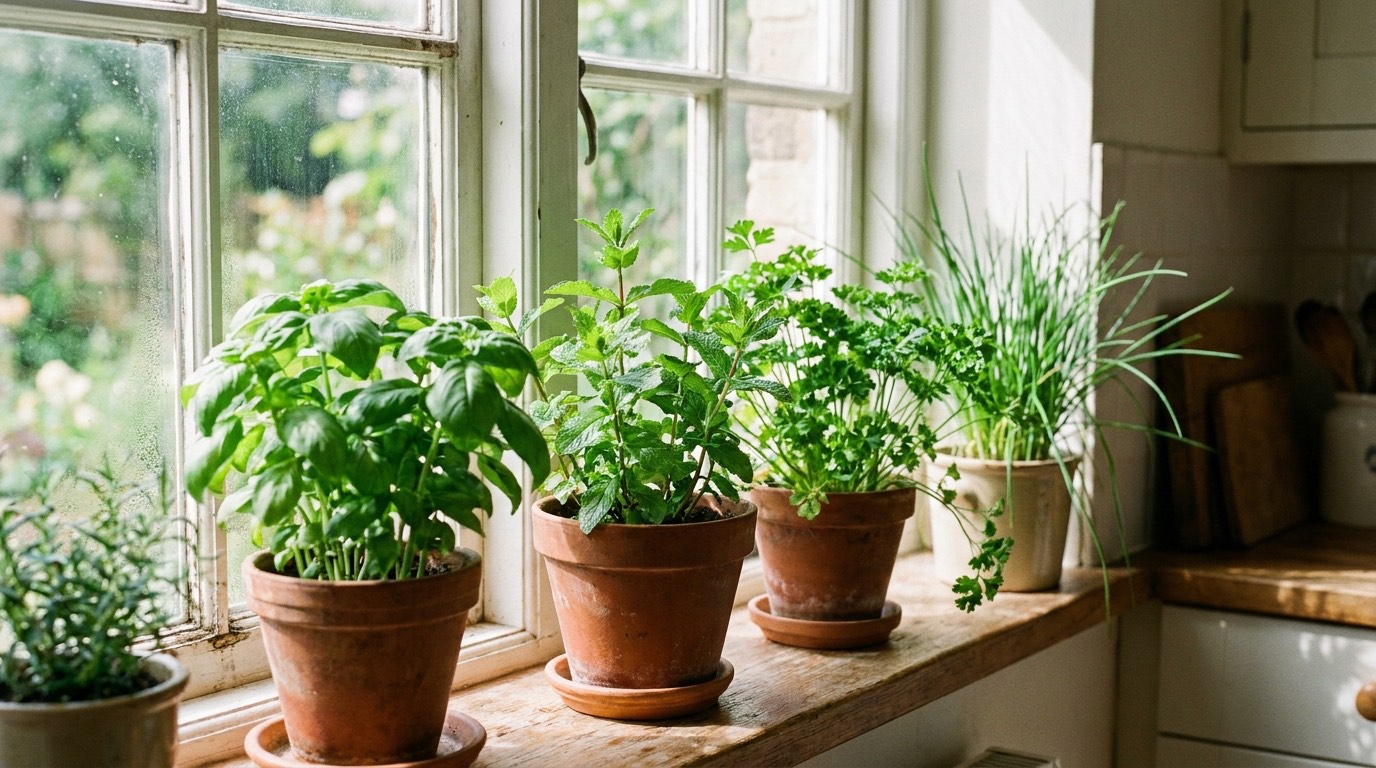
Herbs are the best value in the whole garden. A tiny plastic clamshell of basil costs a few dollars and wilts in days; one plant on your windowsill gives you months of leaves for the same price. Most herbs are also genuinely easy — they evolved on lean, sunny hillsides, so they thrive on a bit of neglect. A cluster of pots by the kitchen door will change how you cook.
Here's how to grow the herbs worth having, indoors or out.
Buy plants, not just seeds
Many herbs are slow or fiddly from seed. For instant results, buy small herb plants from a nursery (or pot up a supermarket living-herb pot into a bigger container). Basil, cilantro, and dill are easy from seed; rosemary, thyme, oregano, and mint are far easier bought as plants.
The easiest herbs to start with
- Basil — loves warmth and sun; pinch often. The classic summer herb.
- Mint — almost too easy; always grow it in its own pot or it takes over a bed.
- Chives — tough, perennial, and happy in a pot for years.
- Parsley — steady and productive; tolerates part shade.
- Rosemary, thyme, oregano, sage — woody Mediterranean herbs that want sun and sharp drainage, and hate wet feet.
- Cilantro and dill — fast but short-lived; sow a little every few weeks.
Sun, soil, and pots
Most culinary herbs want at least 6 hours of sun and light, free-draining soil. The number-one killer is overwatering, so:
- Use pots with drainage holes and a regular potting mix.
- Group the thirsty, leafy herbs (basil, parsley, cilantro, mint) together, and the dry-loving Mediterranean herbs (rosemary, thyme, oregano, sage) together — they want different watering.
- Outdoors, herbs are perfect for the edges of beds, containers, and window boxes.
Growing herbs indoors
Herbs on a windowsill need the brightest spot you have — ideally a south- or west-facing window with 6+ hours of light, or a small grow light in winter. Rotate pots so they don't lean, let the soil dry slightly between waterings, and don't overwater (indoor herbs die wet far more often than dry).
Water and feed
Water when the top inch of soil is dry — most herbs prefer this to constant moisture, and the Mediterranean ones especially like to dry out. Feed lightly; herbs grown too rich actually lose flavor. That's the whole routine.
Keep herbs alive and productive
- Sun and drainage matter more than anything — most herbs die from too much water.
- Harvest often — regular pinching keeps plants bushy and stops them flowering.
- Keep mint contained in its own pot.
- Match watering to the herb — leafy herbs stay moist, woody herbs dry out.
How to harvest so plants keep giving
The trick with leafy herbs like basil is to pinch from the top, just above a pair of leaves — this makes the plant branch and grow bushier, giving you more. Never strip a plant bare; take up to about a third at a time. For chives and grassy herbs, snip from the outside. Pinch off any flower buds on basil and cilantro to keep the leaves coming, unless you want them to seed.
Frequently Asked Questions
What herbs are easiest to grow for beginners?
Basil, mint, chives, and parsley are the most forgiving. Mint and chives are nearly impossible to kill (keep mint in its own pot), and basil and parsley grow quickly with sun and regular picking.
Can I grow herbs indoors year-round?
Yes, with enough light. A bright south- or west-facing window works for many herbs; in winter a small grow light keeps them from getting leggy. Avoid overwatering, which is the main cause of indoor-herb death.
Why does my basil keep dying?
Usually cold or overwatering. Basil hates temperatures below about 50°F and soggy soil. Give it warmth, full sun, water only when the topsoil is dry, and pinch off flower buds to keep it growing.