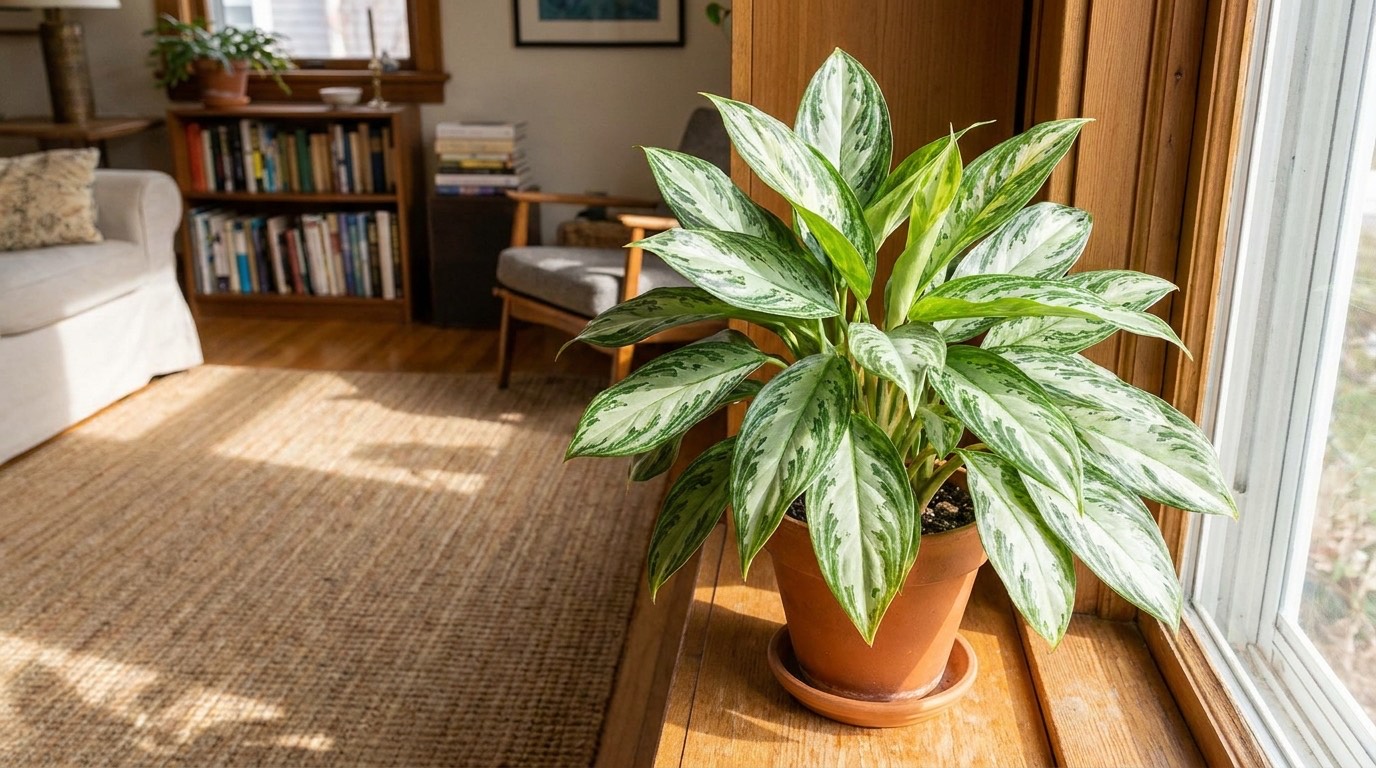
The Chinese evergreen (Aglaonema) is proof that a low-light plant doesn't have to be plain. Its broad leaves come patterned in silver, cream, green, and even pink or red, bringing color to rooms too dim for most houseplants. It's compact, slow to outgrow its spot, and forgiving of the occasional missed watering — a genuinely easy plant with real personality.
Here's how to care for one.
Color follows light
A useful rule: the darker green an aglaonema variety is, the more shade it tolerates; the more pink, red, or cream in the leaves, the more (indirect) light it needs to keep that color vivid. Choose the variety to match your spot.
Light
Chinese evergreens prefer low to medium indirect light:
- Deep-green varieties tolerate genuinely low light, making them excellent for dim rooms.
- Colorful (pink, red, variegated) varieties need brighter indirect light to hold their coloring.
- Keep all of them out of direct sun, which scorches the leaves.
Watering
Water when the top inch of soil is dry — usually about once a week, less in winter. Water thoroughly, let it drain, and empty the saucer. Chinese evergreens like to stay lightly moist but never soggy, so let that top inch dry between waterings. Overwatering leads to yellow leaves and rot.
Soil, humidity, and feeding
Use a well-draining potting mix in a pot with drainage. They're tropical and enjoy some humidity, but adapt well to normal homes. Keep them warm — they dislike cold drafts and temperatures below about 60°F, which can cause dark blotches on the leaves. Feed with a diluted houseplant fertilizer every 6–8 weeks in spring and summer. They're slow growers, so repot only every 2–3 years.
Chinese evergreen care in five points
- Low to medium indirect light — darker leaves tolerate more shade.
- Water when the top inch is dry, keeping it lightly moist.
- Keep it warm — it dislikes cold drafts and chills.
- Colorful varieties need brighter (indirect) light to hold their color.
- Feed every 6–8 weeks in the growing season.
Common problems
- Yellow leaves — usually overwatering; let the top inch dry more. See why are my plant's leaves turning yellow?
- Dark blotches or curling — cold damage; move it somewhere warmer and away from drafts.
- Faded or dull color — colorful varieties needing more (indirect) light.
- Brown leaf tips — dry air, or minerals in tap water; try filtered water.
Frequently Asked Questions
How much light does a Chinese evergreen need?
It depends on the variety. Deep-green Chinese evergreens tolerate low light well and suit dim rooms, while colorful pink, red, or variegated types need brighter indirect light to keep their coloring vivid. Keep all of them out of direct sun.
How often should I water a Chinese evergreen?
Water when the top inch of soil is dry, usually about once a week and less in winter. They like to stay lightly moist but never soggy. Let the top inch dry between waterings, since overwatering leads to yellowing leaves and root rot.
Why does my Chinese evergreen have dark spots on the leaves?
Dark blotches or patches are often a sign of cold damage. Chinese evergreens are tropical and dislike temperatures below about 60°F and cold drafts. Move the plant somewhere warmer and away from windows and doors in winter.
Is a Chinese evergreen toxic to pets?
Yes, Chinese evergreens are toxic to cats and dogs if chewed, causing mouth and stomach irritation. Keep them out of reach of pets that like to nibble on houseplants.