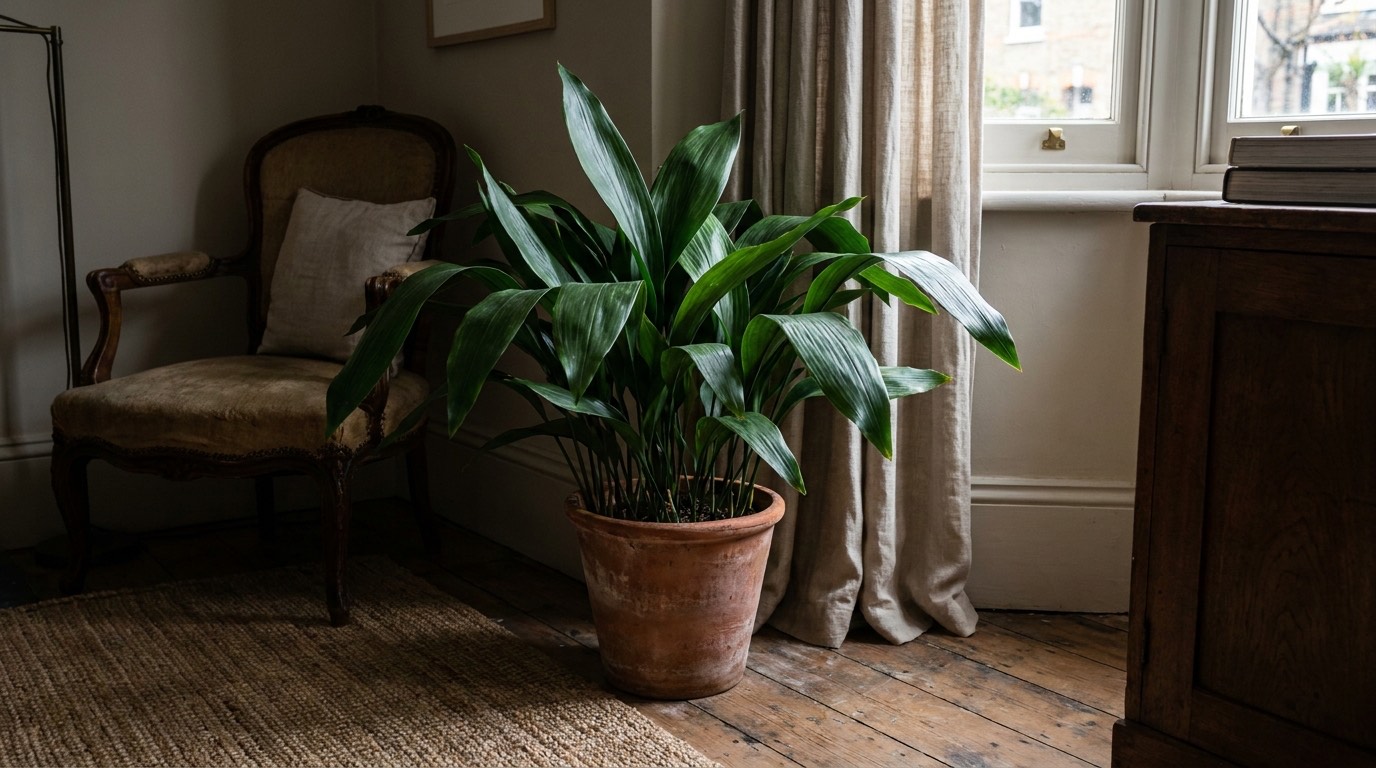
The cast iron plant (Aspidistra elatior) earned its name honestly: it's one of the toughest houseplants in existence. A Victorian parlor favorite, it survives deep shade, temperature swings, drafts, dry air, and the kind of erratic watering that kills fussier plants. Its broad, arching dark-green leaves bring a lush, timeless look to exactly the dim corners where nothing else will grow.
Here's how to care for one — which mostly means leaving it alone.
The plant for your worst corner
If you have a dark hallway, a north-facing room, or a shadowy spot you'd written off, the cast iron plant is the answer. It genuinely tolerates conditions most houseplants can't — its only real weakness is impatience, since it grows slowly.
Light
The cast iron plant is a low-light champion:
- It thrives in low to medium indirect light and tolerates deep shade better than almost any houseplant.
- Keep it out of direct sun, which scorches and bleaches the leaves.
It won't grow fast in dim conditions — nothing does — but it stays healthy where others fade.
Watering
Water when the top 1–2 inches of soil are dry — usually every 1–2 weeks, less in winter. Water thoroughly, let it drain, and empty the saucer. The cast iron plant is very drought-tolerant, so when in doubt, wait. Overwatering is the one thing that can harm it.
Soil, pot, and feeding
Use a well-draining potting mix in a pot with drainage. It's a slow grower that likes to be left alone, so it rarely needs repotting — every 2–3 years is plenty. Feed lightly with a diluted houseplant fertilizer once or twice in spring and summer; it's not a heavy feeder. Wipe the broad leaves occasionally to remove dust and keep them glossy.
Cast iron plant care in five points
- Tolerates deep shade — ideal for dark corners.
- Water when the top 1–2 inches are dry; it's very drought-tolerant.
- Keep it out of direct sun.
- It grows slowly — be patient and don't overwater.
- Feed lightly in summer and wipe the leaves of dust.
Common problems
- Brown, scorched, or bleached leaves — too much direct sun; move it to shadier light.
- Yellowing leaves — usually overwatering; let it dry out more. See why are my plant's leaves turning yellow?
- Brown leaf tips — dry air or inconsistent watering.
- Very slow or no growth — normal for this plant, especially in low light; it's not a fast grower.
Frequently Asked Questions
Can a cast iron plant really grow in a dark room?
Yes — the cast iron plant tolerates deep shade better than nearly any other houseplant, which is why it thrives in dark hallways and north-facing rooms. It grows slowly in low light, but it stays healthy where most plants would decline.
How often should I water a cast iron plant?
Water when the top 1–2 inches of soil are dry, usually every 1 to 2 weeks and less in winter. It's very drought-tolerant, so it's much safer to underwater than overwater. When unsure, wait a few more days.
Why are my cast iron plant's leaves turning brown?
Brown or bleached leaves are usually caused by too much direct sunlight, which this shade-loving plant can't handle. Move it to lower, indirect light. Brown tips specifically can also come from dry air or inconsistent watering.
Is a cast iron plant safe for pets?
Yes — the cast iron plant is considered non-toxic to cats and dogs, making it a safe choice for pet households as well as dark rooms.