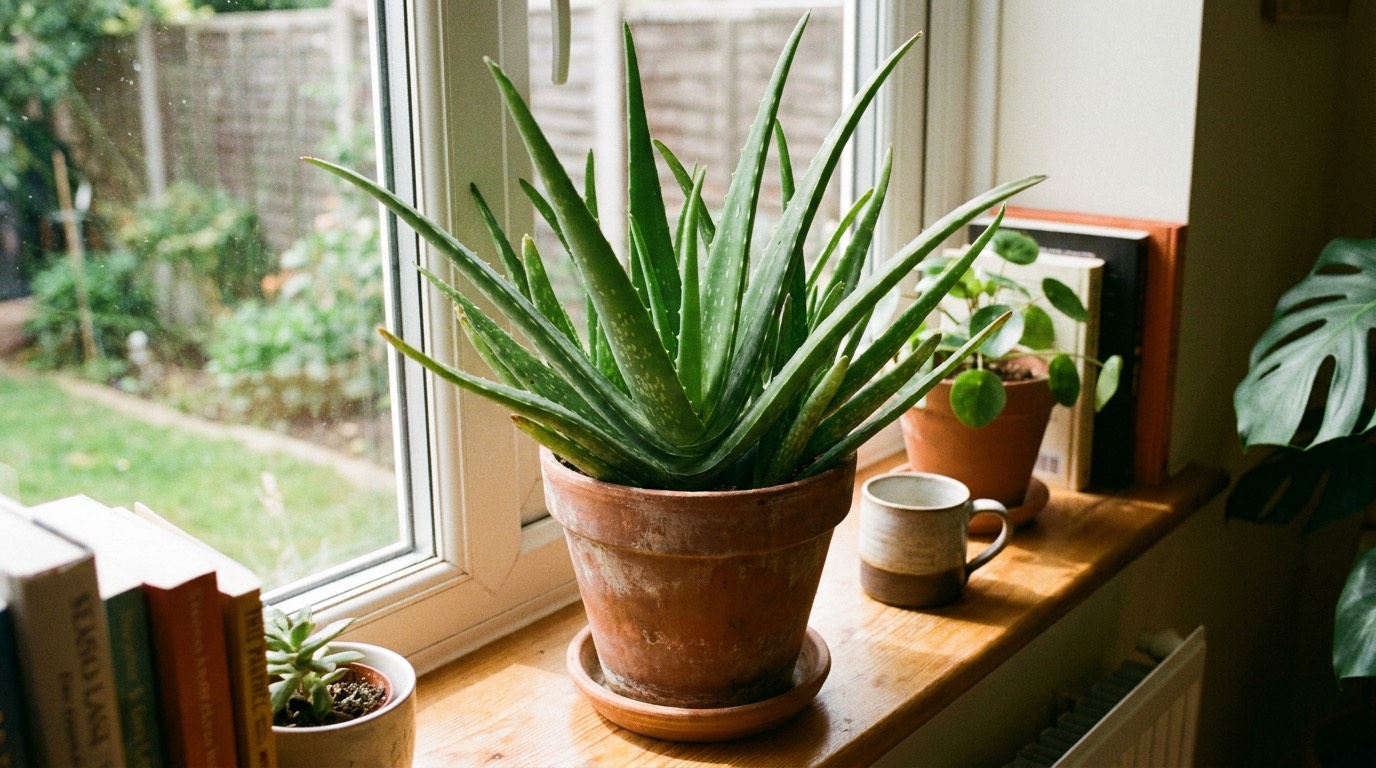
Aloe vera is a tough, forgiving succulent — so when its plump green leaves start turning brown, it's usually a sign that one thing is out of balance, not that the plant is doomed. The key to diagnosing it is texture: brown-and-mushy means one thing, brown-and-crispy means the opposite.
Here's how to read your aloe and put it right.
Feel the browning before you do anything
Soft, mushy, translucent brown points to too much water — the most dangerous case. Dry, crispy, or reddish-brown points to too much sun or too little water. That single squeeze test tells you which direction to correct, and they need opposite fixes.
The main causes
1. Overwatering and root rot (brown and mushy)
The most common way people kill an aloe. Aloe stores water in its leaves and needs very little; in soggy soil the roots rot, and the leaves turn brown, soft, and mushy from the base.
The fix: Stop watering. Make sure the pot has drainage holes and never sits in a saucer of water. Let the soil dry out completely. In a bad case, unpot the plant, cut away any brown, mushy roots, let it dry for a day, and repot into fast-draining cactus/succulent soil. Water only when the soil is bone dry, roughly every 2–3 weeks.
2. Sunburn (brown or reddish, dry patches)
Aloe loves bright light but can scorch if moved suddenly into intense, direct sun — especially behind hot glass — turning brown or rusty-red with dry patches.
The fix: Move it out of the harshest midday rays, or acclimatize it to strong sun gradually over a couple of weeks rather than all at once. Bright, mostly indirect light with some gentle direct sun is ideal.
3. Underwatering (thin, curling, brown tips)
Left bone dry for far too long, aloe leaves go thin, curl inward, and brown at the tips.
The fix: Give it a thorough drink until water runs from the drainage holes, then return to the "only when fully dry" routine. Aloe recovers quickly from a drink once it's plumped back up.
4. Cold or transplant stress
Sudden cold (below about 50°F) or the shock of repotting can brown the leaves temporarily.
The fix: Keep aloe above 50°F and away from cold drafts. After repotting, hold off watering for a few days and let it settle.
Read the brown, then act
- Soft + mushy = overwatered. Dry it out, check for root rot. The urgent case.
- Crispy + reddish = too much sun. Move it back or acclimatize gradually.
- Thin + curling = too dry. Water thoroughly, then resume sparingly.
- When in doubt, water less. Aloe survives drought far better than wet feet.
Frequently Asked Questions
Should I cut off the brown leaves?
If a leaf is mostly brown, mushy, or shrivelled, remove it at the base with a clean knife — it won't recover and can invite rot. A leaf that's only browned at the tip can be left, or trimmed just for looks.
How often should I water aloe vera?
Only when the soil is completely dry — often every 2–3 weeks, and even less in winter. Aloe is built for drought, so the most common mistake is watering too often. When unsure, wait.
Why is my aloe brown and mushy at the base?
That's the signature of overwatering and the start of root or stem rot. Stop watering immediately, check the roots, cut away anything mushy, and repot into fast-draining soil. Caught early, the plant can often be saved.