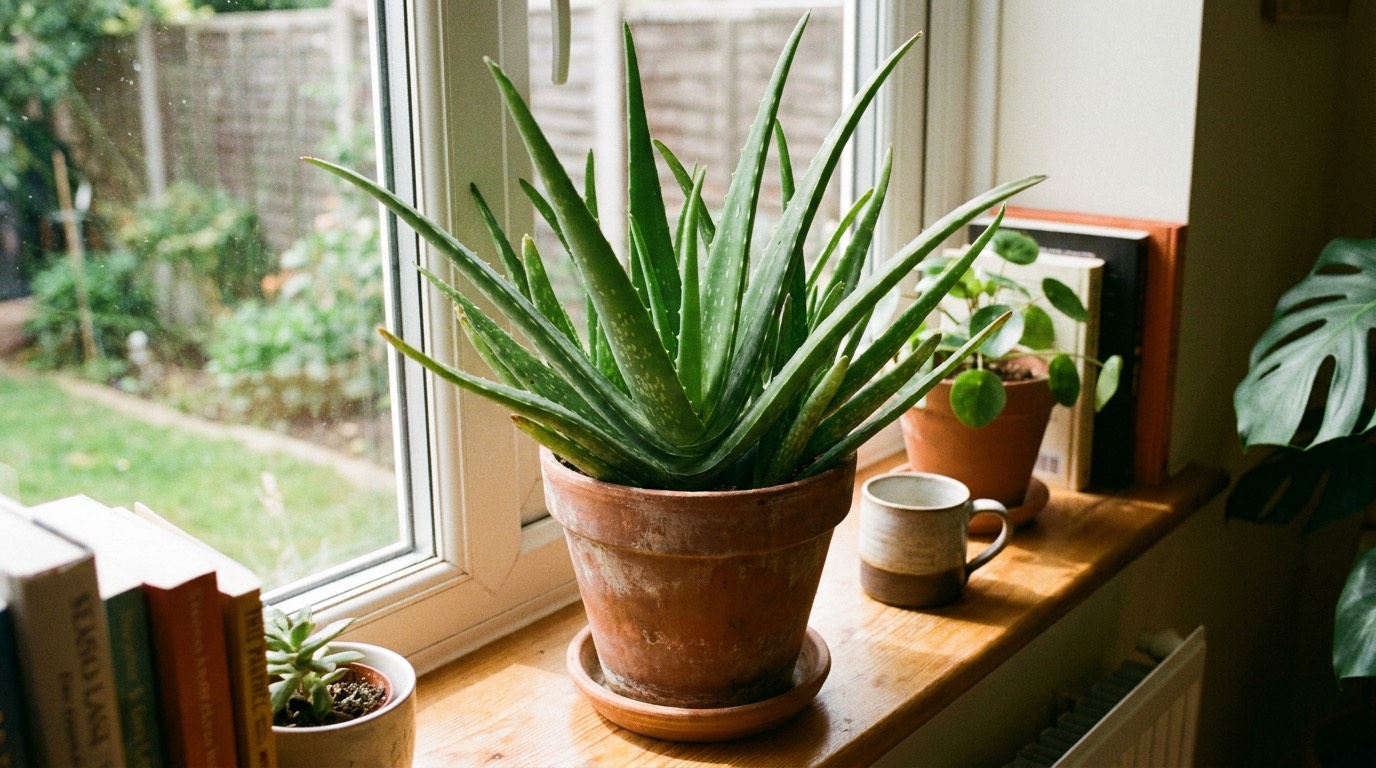
Aloe vera earns its spot on the windowsill twice over: it's a handsome, sculptural succulent, and the gel inside its leaves soothes minor burns and scrapes. It's also genuinely easy — as long as you remember that it's a desert plant that wants bright light and very little water. Treat it like a cactus, not a leafy houseplant, and it'll thrive for years.
Here's how.
Think desert, not jungle
Aloe stores water in its thick, fleshy leaves to survive drought, so it wants the opposite of most houseplants: lots of light, a thorough soak, then a long, complete dry-out. Frequent little waterings are exactly what rots it.
Light
Aloe vera needs plenty of light — more than most houseplants:
- A bright, south- or west-facing window with some direct sun is ideal.
- In too little light it grows pale, leggy, and floppy, with leaves splaying outward instead of standing upright.
- Introduce strong sun gradually, as a plant moved suddenly into intense light can sunburn.
Watering
The golden rule: water deeply, then wait until the soil is completely dry before watering again — often every 2–3 weeks, and less in winter.
- When the soil is bone dry, water until it drains from the bottom.
- Empty the saucer — never let it sit in water.
- Wait until fully dry again.
Overwatering is the main killer. Signs include soft, mushy, translucent leaves. Signs of thirst (easy to fix) are thin, curling, or puckered leaves.
Soil and pots
Use a gritty cactus/succulent mix in a pot with a drainage hole — terracotta is ideal because it dries the soil faster. Dense, moisture-holding soil without drainage will rot the roots no matter how careful you are.
Pups: free new plants
Healthy aloe plants produce "pups" — baby offsets around the base. Once a pup has a few leaves and some roots, you can gently separate it and pot it up on its own.
Aloe vera care in five points
- Give it the brightest spot you have — leggy, floppy growth means too little light.
- Water deeply, then let the soil dry out completely.
- Overwatering is the main danger — err toward drought.
- Use gritty cactus mix and a pot with drainage.
- Pot up the pups for free new plants.
Common problems
- Pale, leggy, splaying leaves — not enough light; move it to your sunniest window.
- Soft, mushy, translucent leaves — overwatering and rot; stop watering and let it dry fully.
- Thin, curling leaves — thirsty; give it a thorough soak.
- Brown or red leaves — often sunburn from sudden intense sun, or occasionally stress; acclimate it gradually.
Frequently Asked Questions
How often should I water aloe vera?
Only when the soil has dried out completely — usually every 2 to 3 weeks, and less in winter. Water thoroughly when you do, let it drain, and never leave the pot sitting in water. Overwatering, which causes mushy leaves and rot, is the main cause of aloe death.
Why is my aloe vera drooping or floppy?
Floppy, splaying leaves usually mean too little light. Aloe needs bright light with some direct sun to stay compact and upright. Move it to your sunniest window. Mushy, drooping leaves, on the other hand, point to overwatering.
Why is my aloe vera turning brown?
Browning is often sunburn from being moved suddenly into intense direct sun, so acclimate it gradually. It can also signal stress from overwatering or cold. Check the soil and light conditions to find the cause.
Can I use the gel from my aloe plant?
Yes — the clear gel inside mature aloe vera leaves can soothe minor burns and skin irritation. Slice open a lower, outer leaf and apply the gel. Avoid the yellow sap (latex) just under the skin, which can irritate.