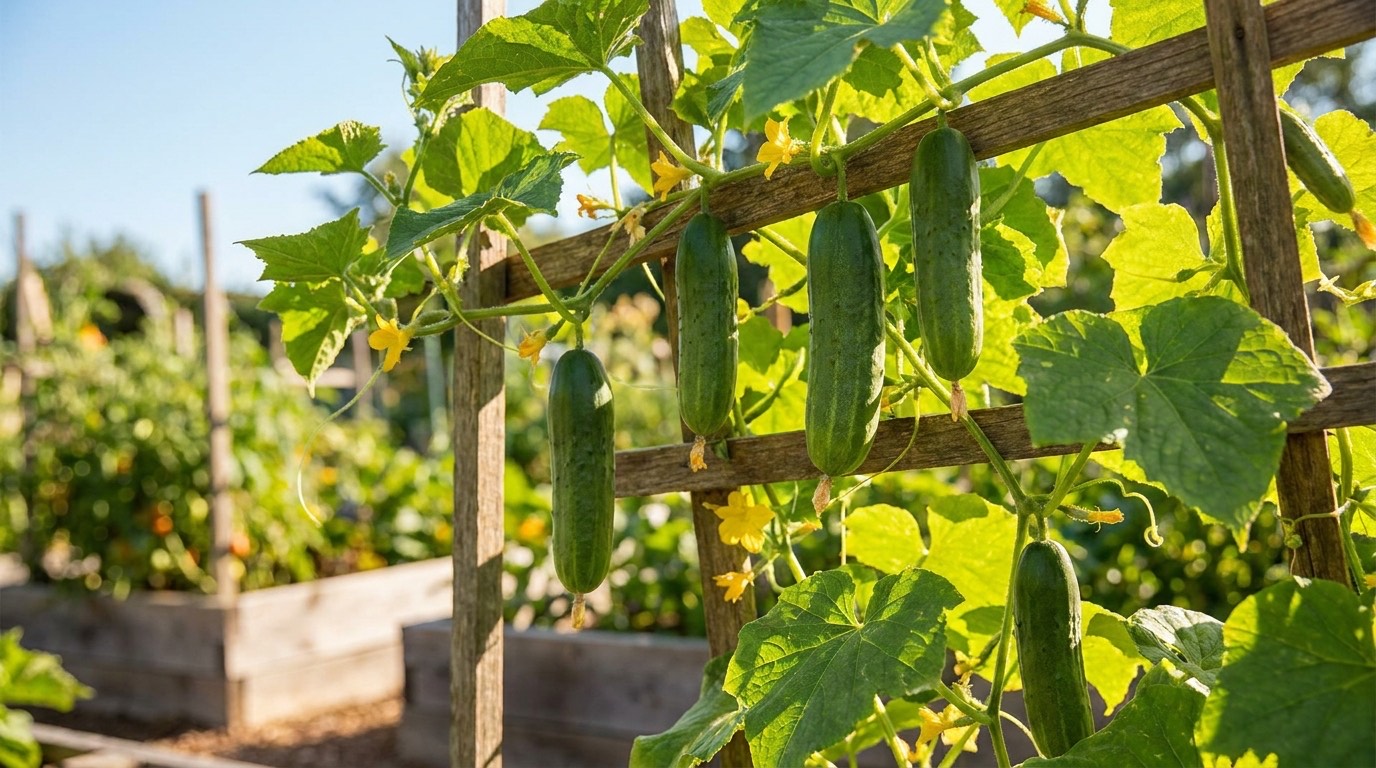
You grew a beautiful crop of cucumbers, took a bite, and — bitter. It's one of the most common and frustrating surprises for a new gardener. The good news: bitterness is almost never a disease or something you did badly. It's a stress response, and once you know what stresses a cucumber, it's easy to prevent.
Here's exactly what's going on, and what to do about it.
Where the bitterness comes from
Cucumbers naturally produce compounds called cucurbitacins, mostly in the skin and the stem end of the fruit. In a happy, unstressed plant these stay low and you never taste them. Stress the plant, and it makes far more — concentrated right where you'd expect: just under the skin and in the end nearest the vine.
The main causes
1. Inconsistent watering (the big one)
By far the most common trigger. Cucumbers are over 95% water, and a plant that swings between bone-dry and soaked gets stressed and turns bitter. A dry spell followed by a heavy soak is the classic cause.
The fix: Water deeply and consistently — about an inch a week, more in heat — and keep it steady. Mulch around the base to hold moisture, and water at the soil rather than the leaves. See our full cucumber growing guide for the complete watering routine.
2. Heat and sun stress
Long stretches of very hot weather (above roughly 90°F) push cucurbitacin levels up, even if you're watering well.
The fix: Keep moisture steady through heatwaves, mulch heavily, and in brutal climates use light afternoon shade cloth during the worst of it.
3. Poor or hungry soil
Cucumbers are heavy feeders. Thin, depleted soil stresses them.
The fix: Plant in rich soil with plenty of compost, and feed lightly through the season.
4. Variety
Some old varieties are simply more prone to bitterness. If you've fixed watering and still get bitter fruit, the genetics may be against you.
The fix: Next season, grow a variety labeled "burpless," "bitter-free," or "non-bitter" — most modern hybrids have had the bitterness largely bred out.
How to rescue cucumbers you've already picked
Don't throw them out — the bitterness is concentrated, so you can often remove most of it:
- Cut off about an inch from the stem end (the end that attached to the vine) — this is where bitterness is highest.
- Peel the skin, where the rest of the cucurbitacins sit.
- Taste a slice. If it's mild now, the rest of the cucumber is good to eat.
(The old trick of cutting off the end and rubbing the two pieces together to draw out "foam" is folklore — peeling and trimming the stem end is what actually works.)
Sweet cucumbers in four habits
- Water consistently — steady moisture is the single biggest factor.
- Mulch to buffer against dry spells and heat.
- Feed the soil so plants aren't stressed and hungry.
- Choose a "burpless" variety if bitterness keeps coming back.
Frequently Asked Questions
Are bitter cucumbers safe to eat?
In the small amounts found in a mildly bitter garden cucumber, yes — they're unpleasant but not harmful. Very intensely bitter cucumbers (rare, and usually inedible from the first bite) can upset your stomach, so don't force down anything that tastes strongly bitter.
Can bitter cucumbers become sweet again?
The bitterness already in a picked cucumber won't go away, but you can remove most of it by peeling and trimming the stem end. New fruit will taste fine once you fix the underlying stress — usually watering.
Does bitterness mean the whole plant is ruined?
No. It's a stress response, not a disease. Correct the watering and heat stress and the next cucumbers off the same plant can be perfectly sweet.