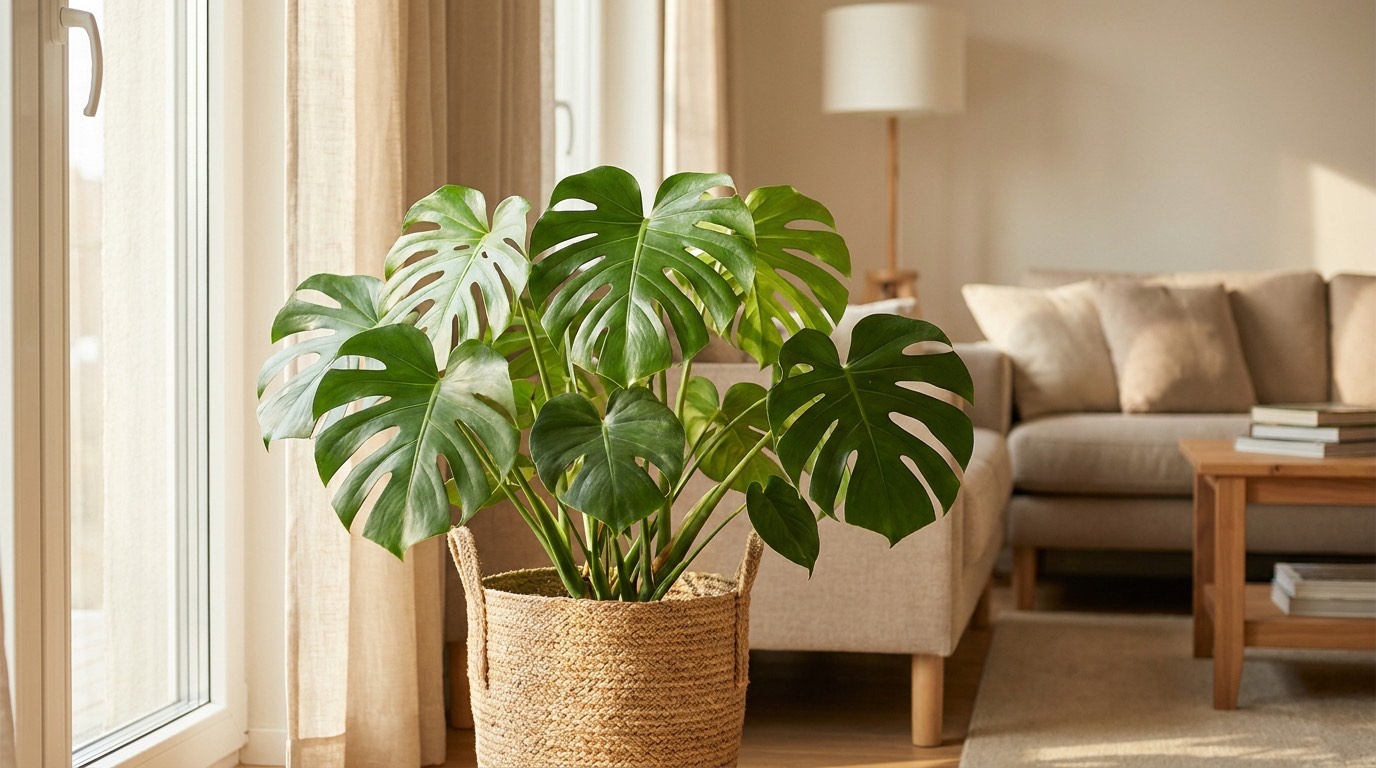
You bought a monstera for those dramatic, hole-punched leaves — and yours keeps pushing out plain, solid, heart-shaped ones. It's one of the most common questions new monstera owners ask, and the reassuring answer is that a holeless monstera is usually a perfectly healthy one that just needs time and light.
Here's what drives those splits, and how to encourage them.
The holes have a name — and a schedule
Those splits and holes are called fenestrations, and a monstera develops them as it matures. Young plants and young leaves are naturally solid; the fenestrations appear on later, larger leaves once the plant is established. So the first question isn't "what's wrong?" — it's "how old is this plant?"
The main causes
1. The plant is still young (most common — and normal)
A monstera simply doesn't fenestrate until it reaches a certain maturity. A small plant, or one grown recently from a cutting, will put out solid leaves for a while — sometimes a year or two — before the holes begin. Each new leaf tends to be a little more split than the last.
The fix: Patience. Keep it healthy and growing, and the fenestrations will come. This is the single most common reason, and nothing is wrong.
2. Not enough light (the biggest thing you can change)
Light is the number one factor you control. In dim conditions a monstera stays in "juvenile" mode and keeps making small, solid leaves. Bright, indirect light is what triggers larger, fenestrated growth.
The fix: Move it to the brightest spot you can without direct scorching sun — near an east or a bright north/south window, or a few feet back from a strong one. More light is the fastest way to encourage splits.
3. Not enough support
In the wild, monsteras climb, and climbing plants produce bigger, more fenestrated leaves. A plant left to sprawl often stays juvenile.
The fix: Give it a moss pole or coir pole to climb. Attaching the stems to a support genuinely encourages larger, more split leaves.
4. Underfed or stressed
A hungry or stressed plant channels its energy into survival, not into producing large showy leaves.
The fix: Feed with a balanced houseplant fertilizer through spring and summer, keep watering consistent (water when the top inch or two dries), and follow the basics in our monstera care guide.
How to earn the holes
- Age first. Young plants and young leaves are solid — that's normal.
- Light is your lever. Bright, indirect light pushes fenestrated growth.
- Give it a moss pole to climb — climbing triggers bigger, split leaves.
- Feed and water steadily so it has the energy to make large leaves.
Frequently Asked Questions
At what age does a monstera get holes?
There's no exact age, but many monsteras begin fenestrating once they're a couple of years old and have put out several larger leaves. Good light speeds it up; poor light delays it, sometimes indefinitely.
Will an existing solid leaf ever grow holes?
No — a leaf hardens into its final shape when it unfurls and won't develop holes later. Fenestration only shows up on new leaves, so improving light and support pays off on future growth, not existing leaves.
Does a moss pole really help monstera fenestrate?
Yes. Monsteras are natural climbers, and giving them something to climb encourages the larger, more fenestrated leaves they'd produce in the wild. Combined with bright light, it's the most effective push.