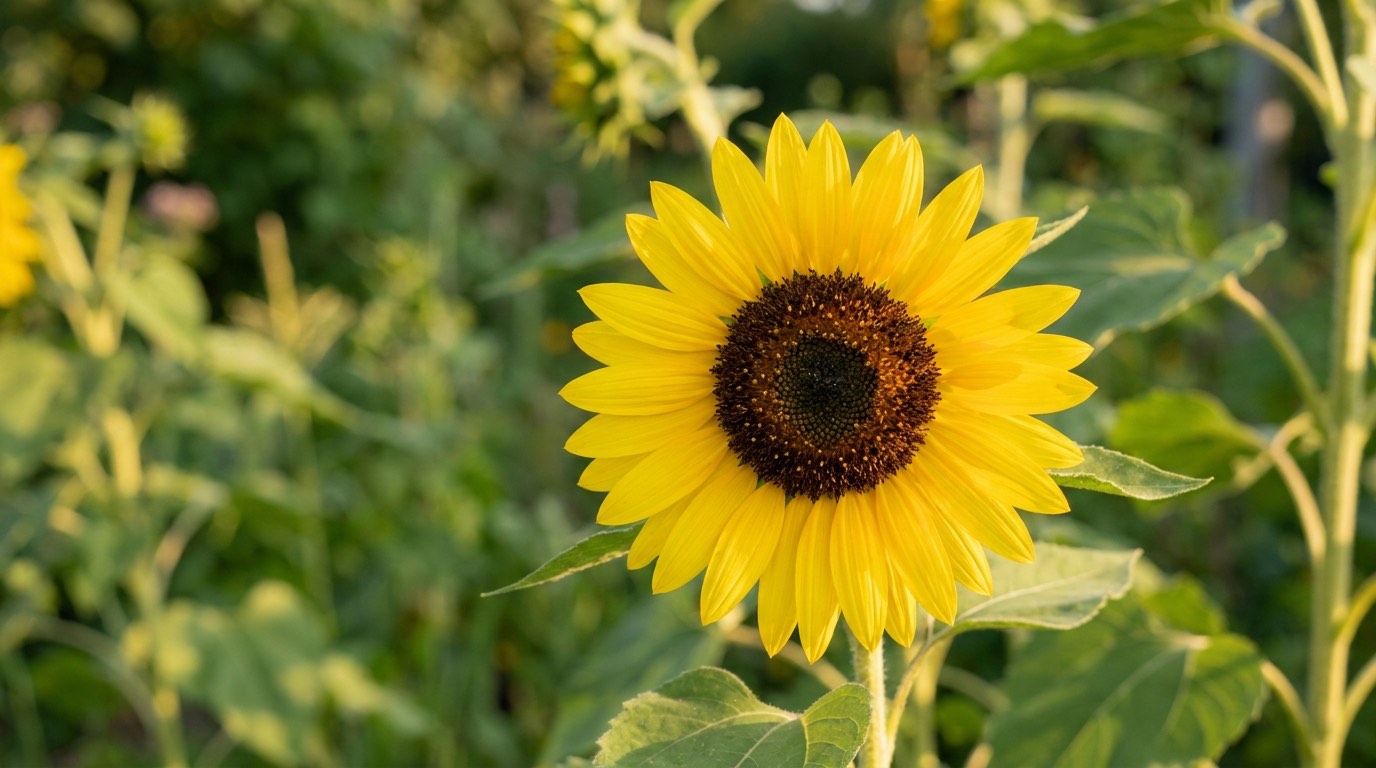
If you want a quick, confidence-building win — or a project with kids — sunflowers are unbeatable. The seeds are big and easy to handle, they sprout within days, and in a single summer they rocket from a seed to a flower taller than you. They ask for almost nothing but sun.
Here's how to grow them.
Sow where they'll grow
Sunflowers have long taproots and dislike being transplanted, so direct-sow the seeds straight into the ground (or a large pot) where the plants will stay. Starting them in the soil they'll grow in gives the strongest, sturdiest plants.
Choose your type
"Sunflower" covers a huge range, so check the seed packet:
- Giant varieties (like Mammoth) reach 8–12 feet with dinner-plate blooms — dramatic, but they need staking and shelter from wind.
- Branching varieties produce many smaller flowers over a long period — the best choice for cutting and for a longer show.
- Dwarf varieties stay 1–3 feet tall and are perfect for pots and small spaces.
When and where to plant
Sunflowers are warm-season annuals. Sow after your last frost, once the soil has warmed, straight into the ground. They need exactly what their name suggests: full sun, at least 6–8 hours a day. They aren't fussy about soil as long as it drains.
- Plant seeds about 1 inch deep.
- Space according to the variety — giants need 1–2 feet between plants, smaller types less.
- Keep the soil moist until they sprout, which takes about a week.
- For a long display, sow a new batch every 2–3 weeks through early summer.
Care as they grow
Sunflowers are refreshingly low-maintenance:
- Water regularly while they're young to establish deep roots; once established they're quite drought-tolerant, though steady water gives bigger blooms.
- Stake tall varieties early, especially in windy or exposed spots — a heavy flower head on a tall stem can topple.
- They generally don't need feeding in decent soil; too much fertilizer can cause weak, floppy stems.
Support the pollinators (and watch the birds)
Sunflowers are magnets for bees and, later, seed-eating birds — part of their charm. If you want to protect developing seeds from birds, cover the maturing heads with a light mesh bag. Otherwise, leaving them standing is a gift to wildlife. See how to attract bees and butterflies.
Saving seeds for next year
One of the best parts of growing sunflowers is free seeds:
- Let a flower head mature fully on the plant — the back turns brown and the seeds plump up.
- Cut the head and let it dry somewhere airy.
- Rub the seeds out, dry them completely, and store in a paper envelope for next spring — or roast them to eat.
Growing sunflowers in five points
- Direct-sow after frost — they hate being transplanted.
- Full sun, 6–8 hours, in any well-draining soil.
- Water young plants well; established ones tolerate drought.
- Stake tall varieties before they topple.
- Save seeds from a dried head for next year and for the birds.
Common problems
- Seedlings vanish overnight — birds and squirrels love the seeds. Protect young sprouts with netting until established.
- Tall plants flopping over — wind and heavy heads. Stake early and choose sheltered spots.
- Few or small flowers — usually too little sun or overly rich soil pushing leaves over blooms.
- Yellowing lower leaves late season — often normal aging as the plant puts energy into seeds.
Frequently Asked Questions
How long do sunflowers take to grow?
From sowing to bloom is usually 70–100 days depending on the variety, so a seed planted in late spring flowers by mid-to-late summer. Dwarf types are often faster, while giant varieties take the longest to reach their full height.
Do sunflowers need full sun?
Yes — the clue is in the name. Sunflowers need at least 6–8 hours of direct sunlight a day for strong stems and big blooms. In too little sun they grow tall and spindly, lean toward the light, and produce smaller flowers.
How tall do sunflowers grow?
It ranges enormously by variety. Dwarf sunflowers stay 1–3 feet, standard types reach 5–8 feet, and giant varieties can top 12 feet. Always check the seed packet and pick a size that suits your space — and stake the tall ones.
Can I grow sunflowers in a pot?
Yes, if you choose a dwarf or compact variety and a large, sturdy pot with drainage. Full-size and giant sunflowers have deep roots and get too tall and top-heavy for containers, but dwarf types thrive on a sunny patio or balcony.