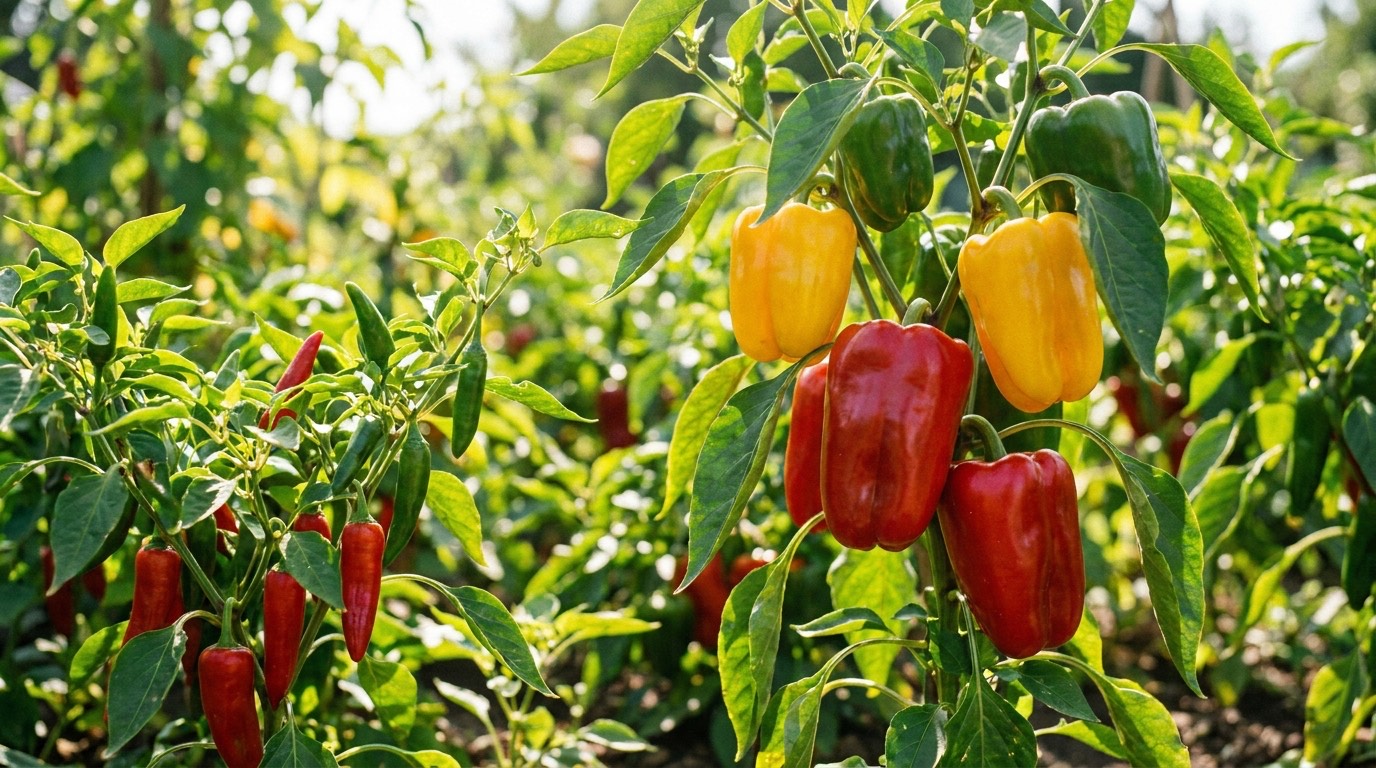
Peppers are the quiet overachievers of the vegetable garden. One healthy plant can hand you dozens of glossy fruits, they're gorgeous enough to grow in a flower bed or a pot, and — bells or blazing chiles — they're grown almost exactly the same way. They do ask for two things Americans in cooler regions have to plan around: a long, warm season and a head start indoors.
Here's how to grow peppers from a seed on the windowsill to a plant loaded with fruit.
Short on time? Buy transplants
Peppers are slow from seed, so if you're not set up for indoor seed-starting, just buy young plants ("transplants") from a nursery in late spring. You'll get a full harvest with none of the six-to-ten-week head start indoors.
Start seeds indoors early
Peppers need a long warm season, so most US gardeners start them indoors 8 to 10 weeks before the last spring frost — earlier than tomatoes.
- Sow seeds about ¼ inch deep in damp seed-starting mix.
- Keep them warm — 80–85°F is ideal for germination, warmer than most seeds. A seedling heat mat makes a real difference, and peppers can be slow and uneven to sprout.
- Once up, give them bright light 14–16 hours a day under a grow light so they don't stretch.
Don't rush them outside — peppers hate the cold and will sulk for weeks if planted too early.
Plant out into warm soil
Wait until all danger of frost has passed and nights stay reliably above 55–60°F — peppers are even fussier about cold than tomatoes. Harden the plants off over a week first, then:
- Choose the sunniest spot you have (6–8 hours minimum).
- Work in compost, and space plants about 18 inches apart.
- Unlike tomatoes, plant peppers at the same depth they grew in their pots — don't bury the stem.
A black plastic or fabric mulch that warms the soil can boost pepper harvests noticeably in cooler zones.
Water and feed for fruit
- Water evenly and moderately. Peppers like consistent moisture but dislike soggy roots. Uneven watering causes blossom end rot, the same sunken patch tomatoes get.
- Go easy on nitrogen. Too much gives you a big leafy plant and few peppers. Once flowers appear, switch to a lower-nitrogen, higher-potassium feed (a tomato fertilizer works).
- Mulch to hold moisture and steady the supply.
Support and pinch
Many pepper plants get top-heavy once loaded with fruit. A single stake or a small cage keeps branches from snapping. Some gardeners pinch off the very first flower buds so the young plant puts energy into growing bigger before it fruits — optional, but it can mean a bigger overall harvest.
The keys to a big pepper harvest
- Start early and keep them warm — 80–85°F to germinate, no cold outdoors.
- Full sun and warm soil — wait for nights above 55–60°F to plant out.
- Even water, low nitrogen once flowering starts.
- Pick regularly to keep the plant producing.
Harvesting
You can pick most peppers at any stage. Green bell peppers are simply unripe — leave them on the plant and they'll ripen to red, yellow, or orange, growing sweeter (and slightly slower to keep producing). Hot peppers usually get hotter as they ripen and change color. Cut fruit off with scissors or pruners rather than tugging, which can snap branches. The more you pick, the more the plant makes.
Frequently Asked Questions
Why won't my peppers turn red?
Green bell peppers are unripe — most just need more time on the plant to turn red, yellow, or orange, which can take several extra weeks. Cool weather and short days late in the season slow ripening; pick and ripen indoors if frost threatens.
How much sun do peppers need?
At least 6 hours of direct sun a day, and 8 is better. In too little sun, peppers grow leafy and set little fruit.
Why are my pepper flowers falling off?
Blossom drop is usually caused by temperature stress — nights below about 60°F or days above 90°F — or by inconsistent watering and too much nitrogen. It usually corrects itself when conditions settle.