Homegrown carrots are sweeter and more tender than anything from a store, and a packet of seeds costs almost nothing. The catch is that carrots are particular about one thing — their soil — and getting that right is the difference between long, straight roots and a tangle of stubby, forked ones. Sort the soil, and the rest is easy.
Here's how.
It's all about the soil
A carrot is a root growing straight down, so it needs loose, deep, stone-free soil to do it. Rocks, clods, and heavy clay make roots fork and twist as they hit obstacles. Fresh manure causes the same problem. Get the bed light and fluffy, and you're 90% of the way to great carrots.
Prepare the bed
Before sowing, work the soil deeply:
- Loosen it 10–12 inches down and remove stones, roots, and clods.
- If your soil is heavy clay, mix in compost or sand to lighten it — or grow carrots in a deep container or raised bed filled with loose mix, which sidesteps the problem entirely.
- Don't add fresh manure, which causes forking and hairy roots. Well-rotted compost is fine.
See how to improve your garden soil for building that loose, rich texture.
Sowing
Carrots must be direct-sown — they hate being transplanted, which damages the root:
- Sow seeds directly in the ground in early spring (a few weeks before the last frost) or late summer for a fall crop.
- The seeds are tiny; sow them thinly, about ¼ inch deep, in rows.
- Keep the soil constantly moist until they germinate — this is the trickiest part, as carrot seeds are slow (up to 2–3 weeks) and dry soil kills them. A light cover of fine soil or a board laid over the row until sprouting helps hold moisture.
Thinning: don't skip it
This step feels brutal but it's essential. Once seedlings are a couple of inches tall, thin them so they stand about 2–3 inches apart. Crowded carrots compete and stay small and twisted. Snip the extras at soil level with scissors rather than pulling, to avoid disturbing the ones you keep.
Watering and care
- Water consistently — even moisture gives smooth, unsplit roots, while a drought-then-soak cycle causes cracking.
- Keep the bed weeded, especially while young, since carrots are slow starters and weeds outcompete them.
- If the tops of the roots poke above the soil and turn green, mound a little soil over them.
Harvesting
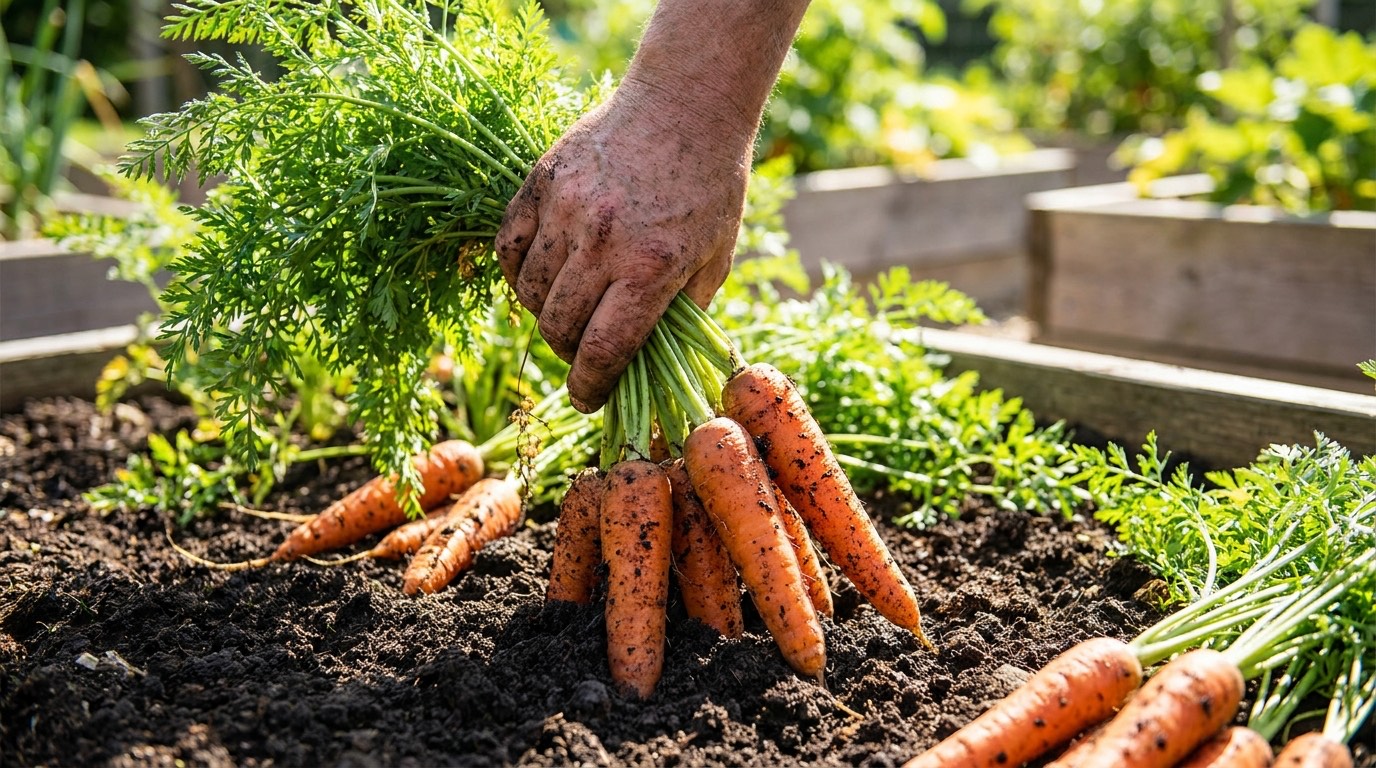
Carrots are usually ready 60–80 days after sowing, but you can pull them any time they're big enough to eat. Baby carrots pulled young are wonderfully sweet. To harvest, loosen the soil beside the root with a fork before pulling, so it doesn't snap. A light frost actually makes carrots sweeter, so a fall crop is often the best.
Growing carrots in five points
- Loose, deep, stone-free soil is the whole secret to straight roots.
- Direct-sow only — carrots hate being moved.
- Keep seeds moist through their slow germination.
- Thin seedlings to 2–3 inches apart, or you'll get small twisted roots.
- Water consistently to prevent cracking; harvest after a light frost for sweetness.
Common problems
- Forked, twisted, or stubby roots — rocky or heavy soil, or fresh manure. Loosen the soil deeply, remove stones, and never use fresh manure.
- Small, crowded roots — you didn't thin enough. Thin ruthlessly next time.
- Split or cracked roots — irregular watering, often a heavy soak after dry soil. Keep moisture steady.
- Green tops on the roots — sun exposure; mound soil over the shoulders.
Frequently Asked Questions
Why are my carrots forked and twisted?
Forking is caused by roots hitting obstacles — stones, clods, heavy clay — or by fresh manure in the soil. Loosen the bed deeply, remove any rocks, and use only well-rotted compost. Growing carrots in a deep container of loose soil avoids the problem entirely.
Can I grow carrots in containers?
Yes, and it's a great way to guarantee good soil. Use a deep pot (at least 10–12 inches) filled with loose, stone-free potting mix, sow thinly, thin the seedlings, and keep the soil consistently moist. Shorter, round carrot varieties are especially well suited to pots.
How long do carrots take to grow?
Most carrots are ready about 60–80 days after sowing, though you can pull them earlier as sweet baby carrots. They germinate slowly — up to 2–3 weeks — so keep the seedbed moist and be patient during that stage.
Do I really need to thin carrot seedlings?
Yes. If seedlings are left crowded, the roots compete for space and stay small, pale, and twisted. Thinning them to 2–3 inches apart gives each carrot room to size up. Snip the extras at soil level rather than pulling, to avoid disturbing the neighbors.