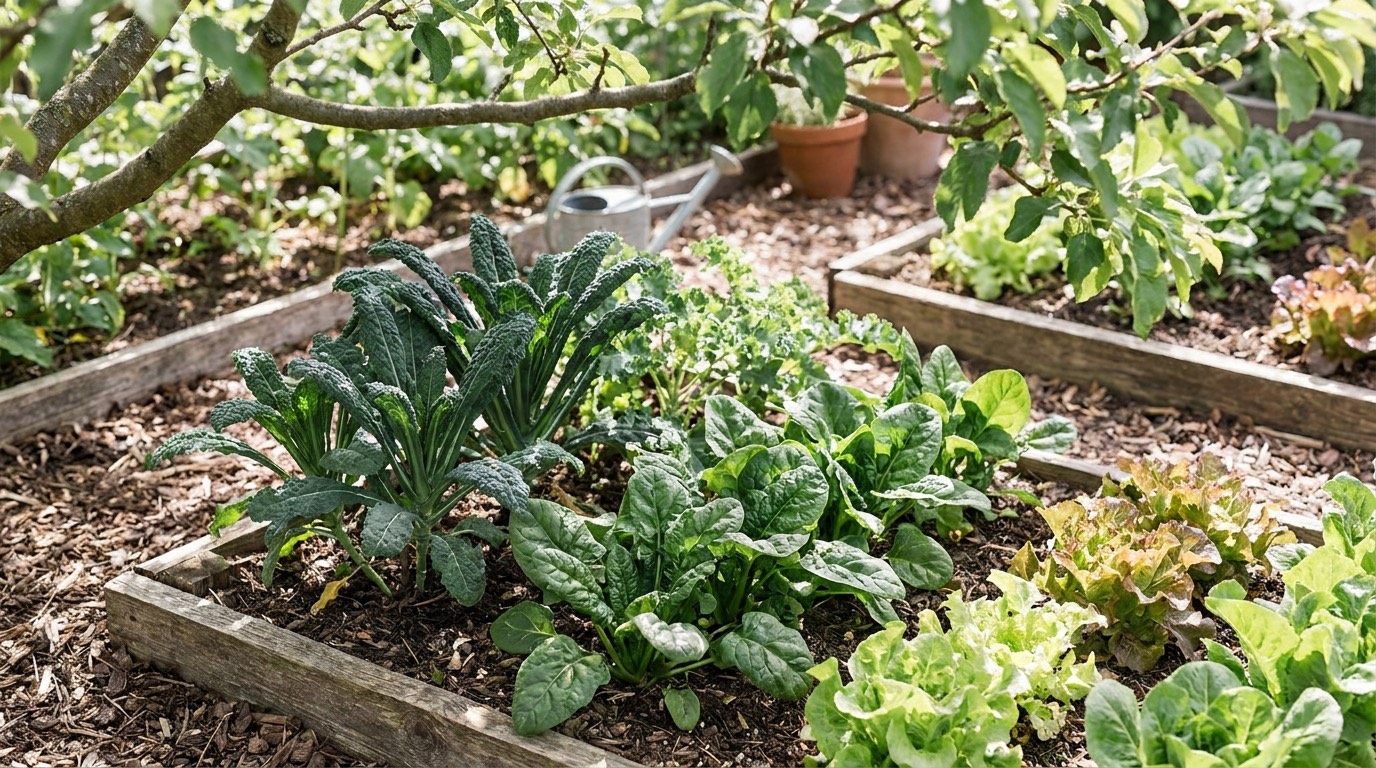
"You need full sun to grow food" is the advice that stops a lot of would-be gardeners with north-facing yards, tall fences, or big trees. It's only half true. While fruiting crops like tomatoes and peppers really do need lots of sun, a surprising number of vegetables and herbs are perfectly happy — sometimes happier — with just a few hours a day. If your space is shady, you can still grow real food.
Here's how to make the most of a low-light garden.
Grow leaves and roots, not fruits
The simple rule: the part of the plant you eat tells you how much sun it needs. Leaves (lettuce, spinach, kale) need the least — as little as 3–4 hours. Roots (carrots, beets, radishes) need a bit more. Fruits (tomatoes, peppers, squash) need the most — 6+ hours — and are the ones to skip in shade.
Know your shade
Not all shade is equal — figure out which kind you have:
- Partial shade / part sun (about 3–5 hours of direct sun, often morning sun): the sweet spot where many crops thrive.
- Dappled shade (filtered light through trees all day): workable for leafy greens and herbs.
- Full/deep shade (little to no direct sun): too dark for vegetables — grow shade-loving foliage plants or ferns instead.
Watch your space across a day before you plant. Morning sun with afternoon shade is ideal for many crops, since it avoids the harshest heat.
The best vegetables for shade
Leafy greens (least sun needed): lettuce, spinach, arugula, kale, Swiss chard, Asian greens, mustard. Bonus — shade keeps them cooler, so they're slower to bolt and stay tender longer.
Herbs: parsley, cilantro, chives, mint (in a pot), and chervil all tolerate part shade.
Root crops (a bit more sun): radishes, beets, carrots, and turnips will produce with about 4–5 hours, just a little slower and smaller.
Brassicas: broccoli, cauliflower, and cabbage can manage in part shade, taking longer to mature.
Tips for a productive shade garden
- Expect slower growth — shade crops mature more slowly, so be patient and sow a bit earlier.
- Reflect light in — a light-colored wall, fence, or even white gravel bounces extra light onto plants.
- Watch watering carefully — shady soil stays damp longer (water less) but tree-root competition can also dry it out fast (water more). Check the soil rather than guessing.
- Feed a little more — plants work harder for light, so keep them well-nourished with compost.
- Use containers — pots let you move plants to chase the sunniest spots as the seasons shift.
Food from a shady yard
- Grow leaves and roots, skip fruiting crops.
- 3–5 hours of sun grows a real harvest of greens and herbs.
- Shade slows bolting — greens stay sweet and tender longer.
- Reflect light in and check soil moisture (it behaves oddly in shade).
- Use pots to chase the sun.
Make peace with slower and smaller
A shade harvest looks a little different: greens instead of beefsteak tomatoes, and plants that take a few extra weeks. But a steady supply of fresh salad, spinach, and herbs from a spot you were told was "useless" is a genuine win — and it's more than most people with sunny yards actually grow.
Frequently Asked Questions
What vegetables grow best in shade?
Leafy greens are the top performers — lettuce, spinach, kale, arugula, and Swiss chard grow with as little as 3 to 4 hours of sun. Herbs like parsley, cilantro, chives, and mint also do well, and root crops like radishes and beets manage with a bit more light.
How many hours of sun do vegetables need?
It depends what you eat: leafy crops need only 3 to 4 hours, root crops about 4 to 5, and fruiting crops like tomatoes and peppers need 6 or more. Match the crop to the light you actually have.
Can tomatoes grow in shade?
Not really — tomatoes are fruiting crops that need at least 6 to 8 hours of direct sun to produce well. In shade they grow leggy and set little fruit. Grow leafy greens and herbs there instead, and save tomatoes for your sunniest spot or a container you can move.